Join us on a literary world trip!
Add this book to bookshelf
Grey
Write a new comment Default profile 50px
Grey
Subscribe to read the full book or read the first pages for free!
All characters reduced
Talk Therapy - Let's Talk Fun Strategies to Develop Children's Language Conversation Therapy for Growing Children - cover

Talk Therapy - Let's Talk Fun Strategies to Develop Children's Language Conversation Therapy for Growing Children

Asomoo Ebooks

Publisher: BookRix

  • 0
  • 0
  • 0

Summary

Talk therapy For children from 3 to 8 years old Do this and your child will speak correctly.
Many fathers and mothers think "My child does not want to talk" or "My child is taking a long time to start talking" and there is a doubt if this is normal and if it is not, then what should be done? and in this book I will explain what needs to be done if your child is taking longer than expected to develop his speech ability.
 
Here we will teach you several exercises, tricks to teach speaking and recommendations for you to practice with your child and you will see how your child will begin to speak. Do this and your child will speak correctly.
Available since: 11/09/2024.
Print length: 44 pages.

Other books that might interest you

  • When Working Together Doesn't Work - An Enneagram Guide to Productive Relationships with Coworkers - cover

    When Working Together Doesn't...

    Joey Stabile Schewee

    • 0
    • 0
    • 0
    Why is it so difficult to collaborate with that one coworker? Why can't your boss understand where you're coming from? We all want to experience a healthy, flourishing work environment, but interpersonal conflicts and miscommunications often make work feel frustrating, overwhelming, and maybe even toxic. 
      
    With the Enneagram as her guide, Joey Schewee provides a holistic, empowering approach to relating to one another in the workplace, as she helps you foster behavioral consciousness through awareness of motivational differences. She provides practical explanations of a dynamic wisdom for immediate application using anecdotes gained from fifteen years of consulting in professional environments. Drawing from her work with thousands of employees and hundreds of teams, Schewee introduces new concepts such as processing centers, reference points, and focus shifts, Enneagram advancements shared in this book for the first time. 
      
    In When Working Together Doesn't Work, you'll learn how differing motivations or types can affect employee cohesiveness and productivity; how managers can engage individuals by type, so that employees feel understood and valued; and how to significantly reduce the perception of personal slights and pave the way for understanding, trust, and collaboration.
    Show book
  • The Mystery and Romance of Alchemy and Pharmacy - cover

    The Mystery and Romance of...

    C. J. S. Thompson

    • 0
    • 0
    • 0
    Dr. v. Oefele states of pharmacy before the time of Hippocrates, that although the practice of medicine was not separated from pharmacy among the Greeks and Romans, there was such a separation among the ancient Egyptians, from whom the distinction was handed down to the Copts, and by them to the Arabians; and, in fact, that the term pharmacist is probably of Egyptian origin, being derived from Ph-ar-maki, which signifies the preparation of medicine from drugs. The Egyptian pharmaki who were engaged in that occupation belonged to the higher social ranks of writers or academically-educated persons, comprising also the priests, physicians, statesmen, and military commanders. The Jews were indebted to Egypt for their primary ideas of medicine, but they cast away the ideas of demonology and magic which clouded what was good in the practice of Egypt. The Talmud recommends onions for worms, and wine, pepper, and asafœtida for flatulency. The Talmudists are responsible for calling the earth, air, fire, and water elementary bodies. In the middle ages the Jews rendered service to the healing art, and had a large share in the scientific work connected with the Arab domination of Spain. In China the use of drugs goes back to a very remote age, and alchemy was practised by the Chinese long previous to its being known in Europe. For two centuries prior to the Christian era, and for four or more subsequent, the transmutation of the base metals into gold, and the composition of the elixir of immortality, were questions ardently studied by the Chinese.
    Show book
  • The Republic - cover

    The Republic

    Plato

    • 0
    • 0
    • 0
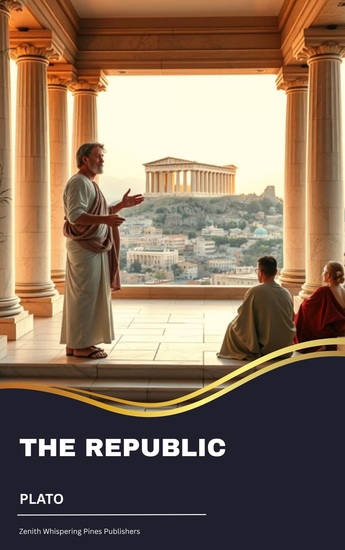
    What is justice—and who should rule?
    In this timeless philosophical dialogue, Plato explores the nature of justice, the structure of an ideal society, and the responsibilities of leadership. Through Socrates' probing conversations, readers confront enduring questions about morality, education, freedom, and truth—culminating in the famous Allegory of the Cave, one of the most powerful metaphors in all of philosophy.
    
    Hailed as "the cornerstone of Western political thought," The Republic has shaped ideas about government, ethics, and human nature for over two thousand years. Its arguments remain provocative, challenging readers to rethink power, virtue, and the pursuit of the good life.
    
    If you seek clarity on society's deepest questions and ideas that still define our world, this essential classic is indispensable.
    
    Open the book—and enter the dialogue that still governs how we think about justice and truth.
    Show book
  • Imperial China - Foundations of a Great Civilization (3 in 1) - cover

    Imperial China - Foundations of...

    Jun Liu

    • 0
    • 0
    • 0
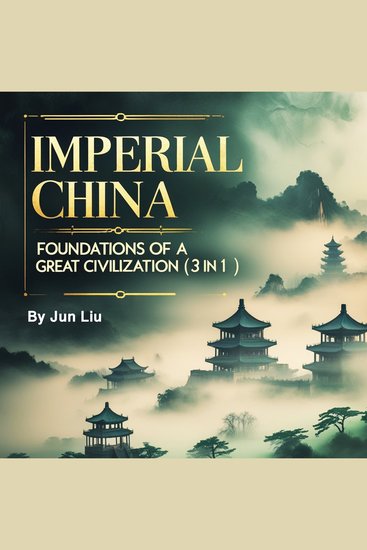
    This book offers an in-depth exploration of three of the most influential dynasties in Chinese history: the Han, Qin, and Tang Dynasties. This book delves into the powerful legacies of these dynasties, each of which shaped China’s cultural, political, and social development in profound ways. The Qin Dynasty, under the leadership of Emperor Qin Shi Huang, is known for unifying China and initiating monumental infrastructure projects such as the Great Wall and the Terracotta Army. The Han Dynasty, a golden age in Chinese history, expanded China’s borders, solidified Confucian ideals, and fostered the flourishing of trade along the Silk Road. Finally, the Tang Dynasty, often regarded as the most prosperous period in China’s imperial history, saw significant advancements in arts, culture, and governance. 
    In the Qin Dynasty, China was unified for the first time under a single ruler, marking the beginning of imperial rule. Emperor Qin’s centralization of power, creation of a standardized legal system, and the construction of defensive walls set the stage for the future of Chinese civilization. Although short-lived, the Qin Dynasty’s impact on Chinese governance and infrastructure would echo through the centuries.  
    Meanwhile, the Han Dynasty succeeded the Qin, ushering in an era of stability, economic prosperity, and cultural development. The Han established a strong bureaucracy and military, advanced in science and technology, and integrated Confucianism as the official philosophy, influencing Chinese society for over two millennia. 
    The Tang Dynasty, which followed the collapse of the Sui Dynasty, is celebrated for its cultural achievements, including the flourishing of poetry, painting, and literature. The Tang Empire expanded China's territory to its greatest extent, and its cosmopolitan capital, Chang'an, became a vibrant hub for international trade and cultural exchange.
    Show book
  • Tunisgrad: Victory in Africa - cover

    Tunisgrad: Victory in Africa

    Saul David

    • 0
    • 0
    • 0
    A Waterstones and BBC History Magazine Best Book of the Year 
    The Aspects of History Book of the Year 2025 
    'Terrific – full of drama … it has profoundly altered my understanding of the Second World War' PATRICK BISHOP 
    FROM THE SUNDAY TIMES BESTSELLING AUTHOR OF SBS COMES AN EPIC HISTORY OF THE ALLIED VICTORY IN NORTH AFRICA DURING THE SECOND WORLD WAR. 
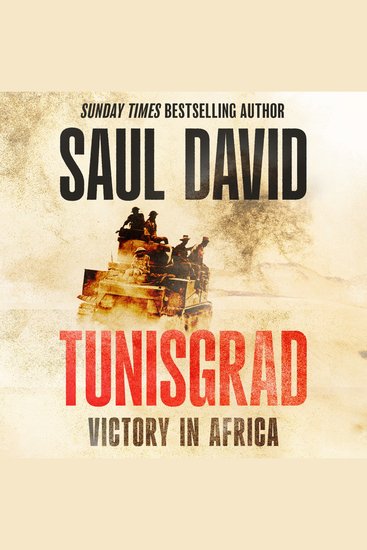
    On 8 November 1942, British and American troops invaded French North Africa as part of Operation Torch, the largest amphibious operation of the war to date. The Germans responded by flooding troops into Tunisia and the stage was set for one of the most decisive clashes of the war. 
    For months the outcome hung in the balance. The Allies failed to capture Tunis before Christmas, and early in the New Year the legendary German commander Erwin Rommel ( the ‘ Desert Fox ’) inflicted a series of crushing defeats on inexperienced American troops in the mountain passes of central Tunisia. But once the two Allied armies – the First and the Eighth – had joined hands in southern Tunisia in early April, the defeat of Axis forces was inevitable. The end came on 13 May when the remnants of the First Italian Army surrendered to British troops in northern Tunisia, leaving the Allies ‘ masters of the North African shores ’. 
    It was, with Guadalcanal in the Pacific and Stalingrad in Russia, one of three Axis defeats in early 1943 that changed the course of the war. Historians have recognized the significance of the others, but not Tunisia which they have either ignored or characterized ( as the Americans did at the time ) as a sideshow. Yet it ended Axis sea power in the Mediterranean, destroyed more than 2,400 Axis aircraft ( 40 per cent of the Luftwaffe ’ s strength ), and resulted in the surrender of over 250,000 German and Italian troops, more than were captured at Stalingrad. Such was the scale of their defeat that the German public wryly dubbed it ‘ Tunisgrad ’. 
    It was the first campaign fought by the Anglo-American alliance, and would determine how and where the Allies would fight for the rest of the war. It was where America first brought to bear the full weight of its industrial strength, and where the Allies learned, after early setbacks, how to defeat the Germans with a combination of air, land and sea power. It featured many of the great commanders of the Second World War, including ‘ Ike ’ Eisenhower, George S. Patton Jr, Omar N. Bradley, Harold Alexander, Bernard Montgomery and Erwin Rommel. But the campaign ’ s chief significance is that it extinguished any lingering hopes in Italy that the war could be won and led, inexorably, to the dissolution of the Axis in Europe. By destroying the Axis it marked, for Hitler, the beginning of the end. 
    Tunisgrad is the first comprehensive 360-degree history, told from the perspective of all the combatants, and ranging in focus from politicians and senior commanders to ordinary servicemen fighting in and over the mountains of Tunisia, and across the Mediterranean. Using a variety of first-hand sources, it restores the campaign to its rightful place as a defining moment of the war 
    Saul David's latest work, Tunisgrad, is a comprehensive exploration of the conflicts that shaped the 20th century. As the Sunday Times bestselling author, David's non-fiction account of modern wars is an up-coming top pick for history enthusiasts. 
    For fans of Al Murray (Arnhem), Joseph Wheelan (Bitter Peleliu), Geoffrey Wawro (A Mad Catastrophe), Bob Drury (Throne of Grace), and Antony Beevor (D-Day). 
    HarperCollins 2025
    Show book

  • The General And The Legion - How Julius Caesar Built Ruled And Relied on The Roman War Machine - cover

    The General And The Legion - How...

    Davis Truman

    • 0
    • 0
    • 0
    This audiobook is narrated by an AI Voice.   
    In the annals of military history, few names evoke the same awe and legacy as Julius Caesar. The General and the Legion is a gripping exploration of how one man's political genius, military brilliance, and strategic human insight transformed a republic into an empire, one loyal legion at a time. 
    From the chaotic streets of Roman politics to the thunder of marching boots across Gaul, this powerful narrative dissects Caesar's meteoric rise and the disciplined force that enabled it. This book peels back the layers of the myth to reveal the man who led not just Rome's war machine. He embodied it. 
    Inside, you'll discover: 
    •	Caesar's evolution in the political arena and how it shaped his command style. 
    •	The inner workings of Roman military life and the culture of the legions. 
    •	How Caesar earned, kept, and at times manipulated the fierce loyalty of his soldiers. 
    •	Insights into military pay, morale, and the subtle strategies behind soldier satisfaction. 
    A unique look at Caesar's famed clemency and diplomatic mind, tools as deadly as his sword. The art of reward, favor, and empire-building through personal loyalty. Perfect for history lovers, military strategists, and leadership enthusiasts alike, The General and the Legion reveals how Caesar conquered and why his soldiers followed him to the ends of the earth—and beyond.
    Show book