Join us on a literary world trip!
Add this book to bookshelf
Grey
Write a new comment Default profile 50px
Grey
Subscribe to read the full book or read the first pages for free!
All characters reduced
The Sea-Gull - cover

The Sea-Gull

Anton Pavlovich Chekhov

Publisher: DigiCat

  • 0
  • 0
  • 0

Summary

Anton Pavlovich Chekhov's "The Sea-Gull," written in 1895, is a poignant exploration of the complexities of artistic aspiration and human relationships. This play is characterized by Chekhov's distinctive literary style, which combines realism with a delicate blend of humor and melancholy. Set in a Russian estate, the narrative reveals the tensions between the characters—writers, actors, and lovers—through their intricate dialogues and intersecting dreams. The play's themes of unrequited love, disillusionment, and the nature of art resonate deeply within the context of late 19th-century Russian literature, marking a shift from conventional melodrama towards a more nuanced portrayal of the inner lives of individuals. Chekhov, a physician by profession and a playwright by passion, drew upon his own experiences and observations of society to craft this masterpiece. His understanding of human psychology and his keen insight into the artistic struggle were instrumental in shaping the characters' poignant dilemmas. Chekhov's commitment to realism and his departure from traditional theatrical conventions underscore his belief in the complexity of human emotions and motivations. "The Sea-Gull" is highly recommended for readers keen on delving into the intricacies of human relationships and artistic expression. Chekhov's masterful dialogue and rich character development make this play a timeless exploration of the human condition.
Available since: 09/16/2022.
Print length: 45 pages.

Other books that might interest you

  • Geographical Locations - Sand Grains - cover

    Geographical Locations - Sand...

    Mike Blake

    • 0
    • 0
    • 0
    Geographical Locations: Sand GrainsA medium short poem.Apart from the obvious location of where you find yourself in the World,also the location you are seeking to find.*****MORE POEMS BY THE AUTHOR: **To see more Poems by the same Author please follow the link below: https://www.amazon.com/-/e/B00SG40RM8To contact the Author: Please add me Mike Miko on Facebook & then message me, thanks. https://www.facebook.com/mike.cco1I will then contact the Author your behalf. or on Twitter: miko_1_dollarInstagram:  wild_poetrys  //  wild.poetry.websTikTok: @Wild_Poetryswww.wild-poetry.comNew Poets Corner: https://www.facebook.com/New.Poets.Corner
    Show book
  • I Remember - I Am Eternally Divine - cover

    I Remember - I Am Eternally Divine

    Travis Huntley

    • 0
    • 0
    • 0
    I Remember is a book of poetry inspired while traveling, spending time in nature and from my life's experiences. As a multiracial man in America, I feel I was given the opportunity to experience discrimination and prejudice from people of all walks of life. To learn I needed to love to accept myself first so I can witness firsthand society's most crucial issues of division and polarity. From the systemic illusion of separation from nature and humankind as a whole, due to the fact that most of us have yet to remember who we really are. Although the media is persistently promoting fear and division. The intention of this book is to share a sense of awareness of who we are beyond the body while inspiring the reader to love and have compassion for themselves and others at a greater capacity. Regardless of what one may have learned from their parents, culture, media, movies etc. I Remember is resurfacing to remind the masses we are all equal expressions of the Divine and now have a role to play in co-creating “The More Beautiful World our Hearts Know is Possible.”
    Show book
  • The Odes of Anacreon - cover

    The Odes of Anacreon

    Anacreon

    • 0
    • 0
    • 0
    Anacreon (582 BCE–485 BCE) was a Greek lyric poet born in Teos, an Ionian city on the coast of Asia Minor. He likely moved to Thrace in 545 BCE with others from his city when it was attacked by Persians. He then moved to Samos, to Athens, and possibly again to Thessaly, seeking a safe place to write his poems as his patrons (including Polycrates, tyrant of Samos, and Hipparchus, brother of Athenian tyrant Hippias) kept being murdered. It is unknown where Anacreon died, though he lived to the unusually advanced age of 85. 
    Few of Anacreon's works survive, but those that do focus on wine, love (homosexual and heterosexual), and the overall pleasures of the legendary Roman symposium. Anacreon used various techniques in his writings, including self-deprecation and irony. The collection of miscellaneous Greek poems from the Hellenistic Age and beyond known as the Anacreontea was "mistakenly labeled" with Anacreon's name. Despite later appreciation for Anacreon's true poems, his works were not appreciated during his lifetime.
    This work is a collection of the Odes of Anacreon, translated into English by Thomas Moore.
    Show book
  • Treasure - cover

    Treasure

    Jemima Foxtrot

    • 0
    • 0
    • 0
    "religion's been cruel to people like usthe darkwood sluts      the good time girlsbut god as my witnesssome of us           we're just trying to wrangle our powerback from the species that took it"
    Jemima Foxtrot's Treasure is a shining work of alchemy and liberation which explores power dynamics, sex work, desire, and female friendship with a fresh and playful perspective. Foxtrot investigates shimmering sexualities, the economies of desire, the theft of childhood and pathways towards reclaiming it. Her language is lush: intimate, intricate, full of fertile earth's possibility. The poems of Treasure live up to its name: showing us where the gold is—the joy—how to feed it into the soil of our lives.
    "Treasure is an aptly chosen title for this collection, both as a noun (that quantity of precious ore dug from the stuff of experience) and as a verb (the imperative to seek out, sing, and cherish joy through the sharing of it). Foxtrot is a savvy, sometimes savage, sensualist; her poetic speakers alert to injustice, but alive to pleasure in every way that counts. These are superbly tactile poems, poems of being-in-the-body, and being-in-the-world; they are full of wit, vigour and feminist jouissance. These are also formally exciting poems, poems that showcase a beautifully bold and oddly tender lyric defiance." Fran Lock, Hyena, T.S. Eliot Prize Shortlist
    Show book
  • Notes After Terawih - cover

    Notes After Terawih

    Ziks

    • 0
    • 0
    • 0
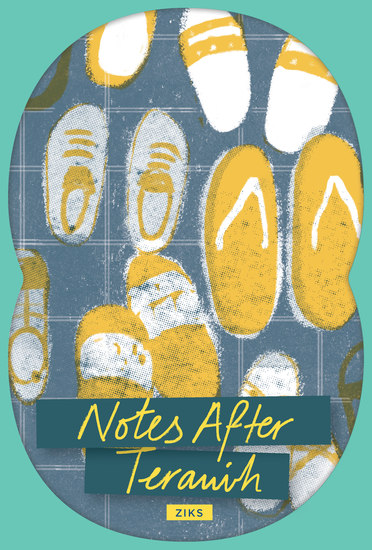
    ‘Tarawih’ (Arabic) comes from the root word that means to take a rest, and take rest I did.Notes After Terawih is a series of word sketches I drew based on my distracted observation during night prayers, or terawih prayers, done in a single mosque during Ramadhan. Thousands of us here in Singapore engage in terawih for thirty nights in a row – that’s a huge multitude of experiences. Yet, all these experiences are tucked within the walls of the mosque and ultimately remain in Ramadhan... As a new kid in this terawih thing, I decided to take some notes. None of these were written on the spot. Instead, they were recalled and typed on my phone as I headed home for the night.
    Show book
  • Poetry From A Dark Night Of The Soul - cover

    Poetry From A Dark Night Of The...

    Zachary Phillips

    • 0
    • 0
    • 0
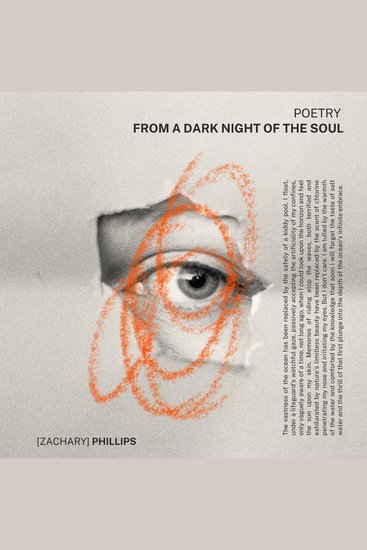
    This is the story of a dark night of the soul, of traversing the depths of despair, and of rebirth.It shows the reality of hitting rock bottom. Not by a self-reported narrative written after the fact, but through unfiltered poetic expression written in real time during breakdown and recovery.The poems within this collection were written over a 24-month period and are presented in chronological order. They show the inner tumult and turmoil of a man desperately trying, and failing, to hold together the crumbling status quo of his prior existence.They show the short-lived hopes, the shattered dreams, and the impact of ill-advised interventions that made everything worse.They also show that there is light at the end of every tunnel.That like a caterpillar entering a cocoon, sometimes what feels like destruction is in fact a necessary part of the transformation process, and perhaps that, like a seed, the engulfing darkness may in fact be the dirt from which you can bloom.
    Show book