Join us on a literary world trip!
Add this book to bookshelf
Grey
Write a new comment Default profile 50px
Grey
Subscribe to read the full book or read the first pages for free!
All characters reduced
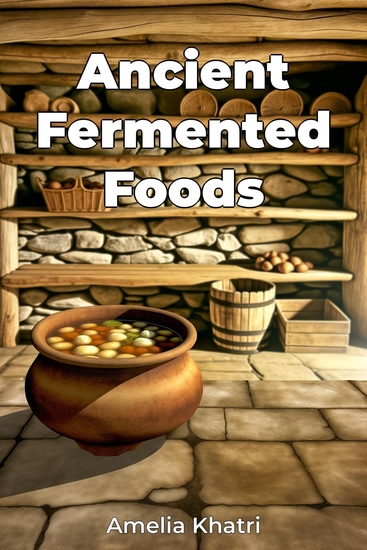
Ancient Fermented Foods - cover

Ancient Fermented Foods

Amelia Khatri

Translator A AI

Publisher: Publifye

  • 0
  • 0
  • 0

Summary

Ancient Fermented Foods reveals how humanity’s relationship with microbes shaped civilizations, arguing that fermentation—not just fire or tools—fueled societal growth. Blending archaeology, history, and nutrition, the book traces fermented foods like 9,000-year-old Chinese beverages, Korean kimchi, and Roman garum (fish sauce) as cornerstones of survival. These foods preserved harvests, enabled trade, and became cultural touchstones, from Mesopotamian temple-brewed beer to Scandinavian fermented fish.Beyond practicality, fermentation co-evolved with human biology: microbes in foods like sourdough and kefir likely influenced gut health and immunity long before modern probiotics. The book progresses from ancient accidents—like spoiled milk becoming cheese—to sophisticated practices that supported urbanization. Fermentation turned toxic plants into edible staples (think fermented cassava) and transformed grains into digestible nutrients, fueling population booms.Modern science validates these traditions, showing how fermentation unlocks vitamins and combats food insecurity. The narrative bridges eras, pairing Babylonian beer recipes with studies on kimchi’s antioxidants, while highlighting Himalayan gundruk makers and Ethiopian injera bakers as living links to this heritage.Unique for merging granular history with actionable insights, Ancient Fermented Foods avoids nostalgia, framing fermentation as dynamic innovation. It balances academic rigor with vivid storytelling, describing tangy kefir or umami-rich soy sauce to engage both food enthusiasts and history buffs. By connecting temple rituals, sailor diets, and today’s probiotic trends, the book positions microbial alchemy as a timeless driver of human ingenuity—one that still flavors our lives.
Available since: 01/27/2025.
Print length: 59 pages.

Other books that might interest you

  • Tiny Gardens Everywhere - The Past Present and Future of the Self-Provisioning City - cover

    Tiny Gardens Everywhere - The...

    Kate Brown

    • 0
    • 0
    • 0
    From the eighteenth century to the twenty–first, the surprising history and inspiring contemporary panorama of urban gardening: nurturing health, hope, and community. 
    This manifesto for the next food revolution by acclaimed environmental historian Kate Brown speaks to nature lovers, food activists, social–justice warriors, urban planners, WOOFers, and the climate–concerned. 
    Ever since wage labor in cities replaced self–provisioning in the countryside, gardeners have reclaimed lost commons on urban lots. They composted garbage into topsoil, creating the most productive agriculture in recorded human history, without use of fossil fuels. The ecological diversity they fostered made room for human difference and built prosperity, too: in Nazi Berlin, working–class gardeners harbored dissidents and Jews; in Washington, DC, Black southern migrants built communities around gardens and orchards, the produce funding homeownership. 
    Grafting contemporary experience and concerns onto every historical chapter, Brown creates a mesmerizing hybrid past and present, archive and experience, showing how down–to–earth gardeners can reap abundant harvests while fostering mutual aid and political engagement.
    Show book
  • A Life In Letters - cover

    A Life In Letters

    Simone Weil, Annette Devaux,...

    • 0
    • 0
    • 0
    Now in the pantheon of great thinkers, Simone Weil (1909–1943) lived largely in the shadows, searching for her spiritual home while bearing witness to the violence that devastated Europe twice in her brief lifetime. The letters she wrote to her parents and brother from childhood onward chart her intellectual range as well as her itinerancy and ever-shifting preoccupations, revealing the singular personality at the heart of her brilliant essays. 


    The first complete collection of Weil's missives to her family, A Life in Letters offers new insight into her personal relationships and experiences. The letters abound with vivid illustrations of a life marked by wisdom as much as seeking. The daughter of a bourgeois Parisian Jewish family, Weil was a troublemaking idealist who preferred the company of miners and Russian exiles to that of her peers. An extraordinary scholar of history and politics, she ultimately found a home in Christian mysticism. 


    A Life in Letters depicts Simone Weil's thought taking shape amid political turmoil, as she describes her participation in the Spanish struggle against fascism and in the transatlantic resistance to the Nazis. An introduction and notes by Robert Chenavier contextualize the letters historically and intellectually, relating Weil's letters to her general body of writing.
    Show book
  • Every Day Counts : The Power of Small Steps to Greatness - cover

    Every Day Counts : The Power of...

    Malik LEFFAD

    • 0
    • 0
    • 0
    In a world where everything seems to move at top speed, where instantaneity is king, this book is a breath of fresh air for all those who seek to grow and evolve at their own pace. "Every Day Matters" is much more than a simple guide to personal development: it's an invitation to rediscover the power of small gestures, daily decisions, and the cumulative impact of our actions on our life's journey. 
    The author takes us on an introspective journey, peppered with inspiring anecdotes, touching testimonials and universal life lessons. Discover proven strategies for defining meaningful goals, establishing routines that promote growth and overcoming the inevitable obstacles life puts in our path. Each chapter is designed to provide you with practical tools, deep insights and actionable exercises that will help you move forward, step by step, toward your ideal vision of yourself. 
    This book is for you if :You feel like you're stagnating despite your best efforts.You're looking for a sustainable and authentic means of personal growth.You want to understand how small, everyday gestures can lead to major transformations.You need inspiration to keep going, even when the going gets tough. 
    Join a growing community of readers who have chosen to embrace the "small steps" philosophy, and discover how every day can be a new opportunity to grow, learn and flourish.
    Show book
  • The Enlightenment in America - Ideas and Revolution - cover

    The Enlightenment in America -...

    Nova Ashford

    • 0
    • 0
    • 0
    The Enlightenment, a period of intellectual and philosophical advancement in Europe during the 17th and 18th centuries, laid the groundwork for many of the principles that would shape modern democratic societies. Its influence reached far beyond Europe, significantly impacting the American colonies and their path to independence. Understanding the roots of Enlightenment thought requires exploring the major intellectual movements that preceded it, including the Renaissance, the Scientific Revolution, and the Reformation. 
    At the heart of the Enlightenment was a growing emphasis on reason, individualism, and skepticism toward traditional authority. The Renaissance, which spanned the 14th to the 17th centuries, marked a resurgence in classical learning and a renewed focus on humanism—the belief in the value and agency of human beings. Renaissance thinkers, such as Leonardo da Vinci and Michelangelo, laid the groundwork for later intellectual revolutions by advocating for a more secular view of the world, emphasizing human capability and creativity. This shift from a purely religious worldview to one that incorporated human reason would directly influence Enlightenment thinkers who challenged the authority of both the church and monarchy. 
    The Scientific Revolution, which began in the 16th century with figures like Copernicus, Galileo, and Newton, was a key precursor to Enlightenment thought. The scientific discoveries of this era demonstrated the power of reason and observation in understanding the natural world. These discoveries not only transformed scientific inquiry but also encouraged a new way of thinking about society and governance. The methods of empirical observation and logical reasoning that characterized the Scientific Revolution were adopted by Enlightenment philosophers, who sought to apply them to human behavior, politics, and ethics.
    Show book
  • Submarines and the World Wars: The History of Submarine Warfare in World War I and World War II - cover

    Submarines and the World Wars:...

    Editors Charles River

    • 0
    • 0
    • 0
    During World War I, German U-boats operated solo except on one occasion. Initially, the British and nations supplying England with food and materiel scattered vessels singly across the ocean, making them vulnerable to the lone submarines. However, widespread late war re-adoption of the convoy system tipped the odds in the surface ships' favor, as one U-boat skipper described: “The oceans at once became bare and empty; for long periods at a time the U-boats, operating individually, would see nothing at all; and then suddenly up would loom a huge concourse of ships, thirty or fifty or more of them, surrounded by a strong escort of warships of all types.” 
    World War I proved the value of submarines, ensuring their widespread employment in the next conflict, and one critical innovation in World War II's Atlantic U-boat operations consisted of wolf-pack tactics, in which Admiral Karl Dönitz put great faith: “The greater the number of U-boats that could be brought simultaneously into the attack, the more favorable would become the opportunities offered to each individual attacker. 
    Meanwhile, submarines exercised a decisive impact on the outcome of the Pacific Theater in World War II. The U.S. submarine fleet, largely though not exclusively under the overall command of Vice Admiral Charles Lockwood, strangled the supply lines and shipping traffic of the Empire of Japan. Their commerce raiding crippled both Japan's ability to keep its frontline units supplied and to manufacture the weapons, vessels, and vehicles needed to successfully carry on the struggle. Though constituting only 1.6% of the total U.S. Navy’s tonnage in the Pacific, the submarine fleet inflicted massive losses on the Imperial Japanese Navy and Japan's crucial merchant marine. Submarines sank 55% of the merchant shipping lost, or approximately 1,300 vessels
    Show book
  • Before Alexander - Prequel - cover

    Before Alexander - Prequel

    Leo Sparx

    • 0
    • 0
    • 0
    For readers who enjoy a dark and mysterious plot with their sexy books, comes the prequel story to this kinky m/m ( m/m/m) series inspired by the Edgar Allan Poe story, “The Fall of the House of Usher.” 
    This prequel story answers the questions posed by the House of Otter series but can be read before or after the complete trilogy. 
    On the shore of a small beach town, decades before the mysterious House of Otter spoke to Alexander, it called to a different furry young gay man. This starry-eyed, down-on-his-luck queer hustler is confronted by a powerful millionaire in the sand who leads him from the ocean to a new way of life. 
    Leaving a trail of money, extravagance, jockstraps, and large toys in their path across continents, the Daddy and boy pair awaken sexual magic which has been lying dormant in an abandoned mansion. 
    When they reach their luxurious destination they are met with more furry otters and colorful sexy jockstraps. Danger looms around the collection of gay men as the beach bum with a fetish for exhibitionism, unexpectedly finds himself participating in an ancient sexual ritual. 
    Will the cycle be completed in time? How will these events, which occurred long before Alexander joined the House of Otter, impact the future for this young man and those who come after him? In whichever order you decide to read them, the House of Otter series is not complete without the questions only this prequel story can answer. 
    It’s Edgar Allan Poe but with a queer, kinky, and paranormal twist! 
    This MM BDSM Dark Erotic Romance takes consent seriously. No otter boys were harmed (unless they wanted to be) in the writing of this book.*
    Show book