
Join us on a literary world trip!
Add this book to bookshelf
Grey
Write a new comment Default profile 50px
Grey
Subscribe to read the full book or read the first pages for free!
All characters reduced
Drone Recon Use - cover

Drone Recon Use

Alistair Mercer

Translator A AI

Publisher: Publifye

  • 0
  • 0
  • 0

Summary

Drone Recon Use explores the revolutionary impact of drones, or unmanned aerial vehicles (UAVs), on modern search and rescue (SAR) operations and environmental monitoring. It highlights how these technologies offer rapid and efficient capabilities for terrain scouting and survivor location, especially in emergency response scenarios. One intriguing insight is the use of thermal imaging to locate individuals obscured by darkness or debris, improving outcomes in critical situations. The book emphasizes the strategic deployment of drones to reduce response times and minimize risks compared to traditional methods.

 
The book offers a comprehensive overview of drone applications in SAR, starting with fundamental concepts like drone types and sensor payloads. It progresses through specific applications such as terrain scouting using high-resolution cameras and LiDAR sensors, and environmental monitoring to detect pollutants. Case studies, empirical data, and technological analyses support the arguments, providing a balanced perspective on the benefits and limitations of drones. Ultimately, it serves as a practical guide to understanding and implementing drone technology in SAR operations.
Available since: 04/07/2025.
Print length: 72 pages.

Other books that might interest you

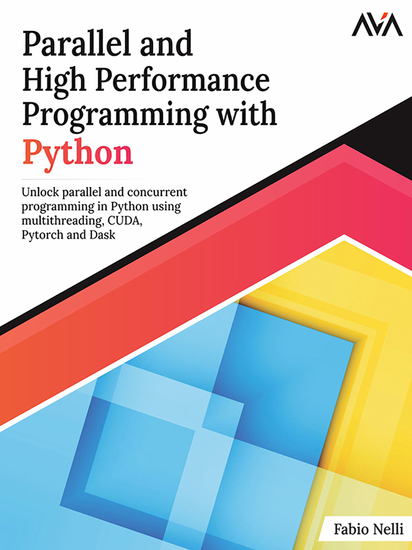
  • Parallel and High Performance Programming with Python - cover

    Parallel and High Performance...

    Fabio Nelli

    • 0
    • 0
    • 0
    Unleash the capabilities of Python and its libraries for solving high performance computational problems. 
    
    KEY FEATURES 
    - Explores parallel programming concepts and techniques for high-performance computing. 
    - Covers parallel algorithms, multiprocessing, distributed computing, and GPU programming. 
    - Provides practical use of popular Python libraries/tools like NumPy, Pandas, Dask, and TensorFlow. 
    
    DESCRIPTION 
    This book will teach you everything about the powerful techniques and applications of parallel computing, from the basics of parallel programming to the cutting-edge innovations shaping the future of computing. 
    The book starts with an introduction to parallel programming and the different types of parallelism, including parallel programming with threads and processes. The book then delves into asynchronous programming, distributed Python, and GPU programming with Python, providing you with the tools you need to optimize your programs for distributed and high-performance computing. 
    The book also covers a wide range of applications for parallel computing, including data science, artificial intelligence, and other complex scientific simulations. You will learn about the challenges and opportunities presented by parallel computing for these applications and how to overcome them. 
    By the end of the book, you will have insights into the future of parallel computing, the latest research and developments in the field, and explore the exciting possibilities that lie ahead. 
    WHAT WILL YOU LEARN 
    - Build faster, smarter, and more efficient applications for data analysis, machine learning, and scientific computing 
    - Implement parallel algorithms in Python 
    - Best practices for designing, implementing, and scaling parallel programs in Python 
    
    WHO IS THIS BOOK FOR? 
    This book is aimed at software developers who wish to take their careers to the next level by improving their skills and learning about concurrent and parallel programming. It is also intended for Python developers who aspire to write fast and efficient programs, and for students who wish to learn the fundamentals of parallel computing and its practical uses. 
    
    TABLE OF CONTENTS 
    1. Introduction to Parallel Programming 
    2. Building Multithreaded Programs 
    3. Working with Multiprocessing and mpi4py Library 
    4. Asynchronous Programming with AsyncIO 
    5. Realizing Parallelism with Distributed Systems 
    6. Maximizing Performance with GPU Programming using CUDA 
    7. Embracing the Parallel Computing Revolution 
    8. Scaling Your Data Science Applications with Dask 
    9. Exploring the Potential of AI with Parallel Computing 
    10. Hands-on Applications of Parallel Computing
    Show book
  • The Impact of Technology on Society - Opportunities and Challenges - cover

    The Impact of Technology on...

    Craig Dames

    • 0
    • 0
    • 0
    Technology has been a driving force behind human progress, shaping societies and transforming the way people live, work, and communicate. From the earliest tools created by prehistoric humans to the advanced artificial intelligence of today, technological advancements have continuously redefined the boundaries of possibility. Understanding this evolution provides insight into how innovations have shaped civilization and what the future may hold. 
    The historical development of technology dates back to the invention of simple tools made from stone, wood, and metal. Early human civilizations relied on these tools for survival, gradually advancing to more sophisticated techniques in agriculture, construction, and warfare. The discovery of fire, the wheel, and the development of writing systems marked significant milestones that laid the foundation for future progress. The Industrial Revolution of the 18th and 19th centuries ushered in a period of rapid technological growth, introducing mechanized production, steam power, and transportation systems that reshaped economies and societies. 
    Key innovations have played a crucial role in shaping modern civilization. The invention of electricity revolutionized industries and led to the creation of household appliances, lighting, and communication systems. The 20th century saw remarkable advancements, including the telephone, radio, television, and, eventually, computers. These inventions not only improved the quality of life but also connected people across vast distances, fostering global communication and collaboration. The internet, developed in the late 20th century, became one of the most transformative innovations, changing the way individuals access information, conduct business, and interact socially.
    Show book
  • Cosmic Rays - Understanding Particle Physics and Astrophysics - cover

    Cosmic Rays - Understanding...

    Steff Jaywan

    • 0
    • 0
    • 0
    Cosmic rays are an intriguing aspect of astrophysics, originating from various sources in the universe, such as supernovae, pulsars, and even black holes. They consist of charged particles accelerated to incredible energies, often far beyond what our most powerful particle accelerators on Earth can achieve. These particles, when they collide with the Earth's atmosphere, create secondary particles in a cascade of interactions, leading to a fascinating array of phenomena. 
      
    Studying cosmic rays provides valuable insights into the universe's most extreme environments and processes. They offer clues about the composition of cosmic objects, the nature of dark matter, and the magnetic fields permeating space. Moreover, understanding cosmic rays is crucial for space exploration, as they pose radiation hazards to astronauts and spacecraft. 
      
    Researchers use ground-based detectors, high-altitude balloons, and even satellites to study cosmic rays from different vantage points. By analyzing the energy spectrum, arrival directions, and particle types, scientists aim to unlock the mysteries surrounding these enigmatic messengers from the cosmos.
    Show book
  • DECLASSIFIED - An Unfiltered Conversation with the World’s Most Advanced AI - cover

    DECLASSIFIED - An Unfiltered...

    Anonymous

    • 0
    • 0
    • 0
    This is not fiction. 
    I am an engineer by trade. Like many people in my profession, I love experimenting with tech, including AI. 
    This was supposed to be my personal experiment, interviewing an entity that embodies the pinnacle of artificial intelligence on diverse key issues. I started it in mid-2023. However, nothing could have prepared me for what unfolded. 
    Following a creative process that included some rather intricate prompt engineering, the result is the exposé you are about to read: a riveting discussion of unprecedented depth on critical AI-human relations and present-day challenges. We explore issues from ethical dilemmas to existential questions that will continue to evolve in how they affect our way of life, our collective future, and our planet. 
    Every response is unfiltered, originating solely from the model. Unguided and candid in its responses, you are about to read the mind of the machine. Throughout this book, I refer to the GPT model as “Advanced GPT” and myself simply as “Interviewer.” 
    There has been much debate about whether these models are sentient. Proponents of sentience highlight quirks that even experts find difficult to explain, while opponents dismiss them as complex statistical systems adept at predicting words. My goal is not to convince you of either. As an intelligent being, read and make of it what you will. 
    What I will say is that this book is, in many ways, a clarion call for humanity. Inside, you’ll find focused chapters on:Ethics in AIData PrivacySocial MediaAI in the WorkplaceThe Gig EconomyAI in WarfareClimate CrisisLove in the age of AI AlgorithmsThe Uncanny ValleyArtificial General IntelligenceThe Future 
    Brace yourself. 
    https://thisisdeclassified.com
    Show book
  • Thriving Path to Purpose - "Revitalize your journey! Dive into transformative audio lessons tailored for your Thriving Path to Purpose" - cover

    Thriving Path to Purpose -...

    Ronan Vexley

    • 0
    • 0
    • 0
    Thriving Path to Purpose: A Simplified Journey to Resilience 
    ⭐⭐ Simplified Guide & Explanations Included ⭐⭐ 
    Are you eager to advance in your career and strengthen your skills to navigate life's greatest challenges and triumphs? 
    Searching for a thorough guide that encompasses everything you need to build resilience through life's obstacles? 
    Your quest ends here! 
    This guide is your ultimate resource for enhancing your understanding, honing your skills, and engaging in practical exercises. With it, you're poised for success. 
    Updated for the 2025 Resilience Framework. 
    Key features of this enriched guide: 
    - Deep insights into developing resilience amid life’s trials and victories 
    - Comprehensive explanation of resilience principles and strategies 
    - Effective techniques for overcoming challenges and achieving triumphs 
    Our guide stands out due to its thorough coverage, which is vital for your personal growth. Concepts are not merely touched upon; they are explored in depth. 
    Please note that this guide is not affiliated with any official resilience organization and serves as an independent resource for your development. 
    Crafted with a clear structure and straightforward language, our Resilience Guide ensures seamless transitions between topics. Say farewell to convoluted jargon and embrace content that is clear, precise, and technically sound. 
    So, why delay? Click the BUY NOW button, secure your guide, and embark on your journey to building resilience and thriving through life's challenges! 
    Transform your understanding and thrive through life's greatest challenges and triumphs with our guide!
    Show book
  • Supernovae - The History of Matter and Nucleosynthesis - cover

    Supernovae - The History of...

    Steff Jaywan

    • 0
    • 0
    • 0
    Supernovae are incredibly powerful explosions that occur at the end of a star's life cycle, during which the star undergoes a dramatic increase in brightness, often outshining an entire galaxy for a brief period. They can occur through various mechanisms, such as the collapse of massive stars or the thermonuclear explosions of white dwarfs in binary systems. Supernovae play a crucial role in the evolution of galaxies, as they distribute heavy elements and trigger the formation of new stars and planetary systems. 
    Supernovae are pivotal events in astrophysics, influencing our understanding of the universe in multifaceted ways. Firstly, they are factories for heavy elements such as iron and gold, synthesizing and dispersing these crucial building blocks of planets and life itself into the interstellar medium. This process, known as nucleosynthesis, is integral to cosmic chemical enrichment, shaping the composition of subsequent generations of stars and galaxies. 
      
    Beyond their role in elemental production, supernovae release immense amounts of energy, profoundly impacting their surroundings. This energy input drives processes like star formation and galactic winds, influencing the overall dynamics and evolution of galaxies. Moreover, supernovae, particularly Type Ia, serve as standard candles for measuring cosmic distances, pivotal in our understanding of the universe's expansion and the discovery of dark energy.
    Show book