Join us on a literary world trip!
Add this book to bookshelf
Grey
Write a new comment Default profile 50px
Grey
Subscribe to read the full book or read the first pages for free!
All characters reduced
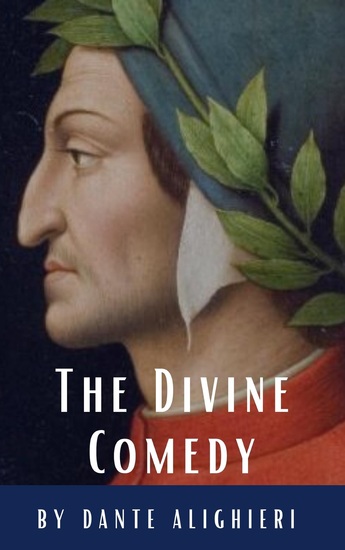
The Divine Comedy - inferno purgatorio paradiso - cover

The Divine Comedy - inferno purgatorio paradiso

Alighieri Dante, Classics HQ

Translator Henry Wadsworth Longfellow

Publisher: Classics HQ

  • 0
  • 0
  • 0

Summary

The authoritative translations of The Inferno, The Purgatorio, and The Paradiso—together in one volume. 

Belonging in the immortal company of the great works of literature, Dante Alighieri's poetic masterpiece, The Divine Comedy, is a moving human drama, an unforgettable visionary journey through the infinite torment of Hell, up the arduous slopes of Purgatory, and on to the glorious realm of Paradise—the sphere of universal harmony and eternal salvation. 

Now, for the first time, Henry Wadsworth Longfellow's brilliant and authoritative translations of Dante's three soaring canticles—The Inferno, The Purgatorio, and The Paradiso—have been gathered together in a single volume. Crystallizing the power and beauty inherent in the great poet's immortal conception of the aspiring soul, The Divine Comedy is a dazzling work of sublime truth and mystical intensity.
Available since: 02/22/2022.
Print length: 811 pages.
Other books that might interest you

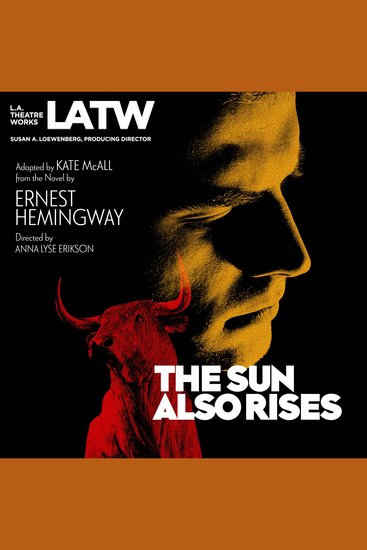
  • The Sun Also Rises - cover

    The Sun Also Rises

    Ernest Hemingway, Kate McAll

    • 0
    • 0
    • 0
    A group of friends decamps from 1920’s Paris for the Festival of San Fermin in Pamplona, Spain. Jake is in love with the aristocratic Bret Ashley, but Bret’s wandering eye lands on a young matador. In the week of drinking, bullfighting, and jealousy that follows, friendships will be upended and hopes for love dashed.   
     
    Recorded at The Invisible Studios, West Hollywood in April 2022. 
     
    Directed by Anna Lyse Erikson 
    Producing Director: Susan Albert Loewenberg 
     
    An L.A. Theatre Works full-cast recording starring: 
    Geoffrey Arend as Robert Cohn 
    Seamus Dever as Bill Gorton 
    Patrick Heusinger as Jake Barnes  
    Derrick Kemp as Pedro Romero  
    Rhian Rees as Lady Brett Ashley 
    Herbert Sigüenza as Montoya and others  
    André Sogliuzzo as Mike Campbell and the Count 
    Devon Sorvari as Frances and Georgette 
     
    Senior Producer: Anna Lyse Erikson 
    Prepared for Audio by Mark Holden for The Invisible Studios, West Hollywood 
    Sound Design by Charles Carroll with Austin Halterman 
    Recording Engineer and Mixer: Charles Carroll 
    Senior Radio Producer: Ronn Lipkin 
    Foley Artist: Jeff Gardner
    Show book
  • Salomé - A Tragedy in One Act - cover

    Salomé - A Tragedy in One Act

    Oscar Wilde

    • 0
    • 0
    • 0
    Come join me in reading the one of Oscar Wilde's only remaining tragedies, based on one of the most notorious recollections of the Bible. A story of gruesome ends for gruesome desires that shocked many of the theater goers in the late 1800's. 
    Salomé, the daughter of Herodious, has become utterly smitten with John the Baptist due to his rebuke of her advances. This causes her to desire him and only him, even unto death. ... His Death. 
    Come listen to the play that was the inspiration for the opera of the same name written by Richard Strauss, and one of the very first embodiments of the femme fatale.
    Show book
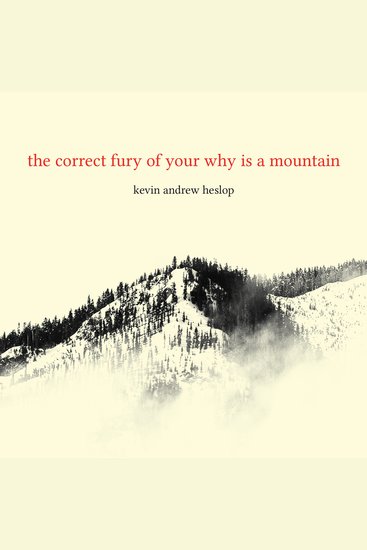
  • The correct fury of your why is a mountain - cover

    The correct fury of your why is...

    Kevin Andrew Heslop

    • 0
    • 0
    • 0
    Poet-critic Jim Johnstone has described Kevin Heslop's the correct fury of your why is a mountain as among “the most promising poetic projects to come out of Canada in recent years.” This debut collection communicates Heslop’s sense of balance as a visual artist, curator, and poet who weights the page with visual harmony. By turns experiment, lyric, and incantation, the book nods to its author’s training as an actor, combining a command of language, form, character, and polyphony to make something performatively unique.
    Show book
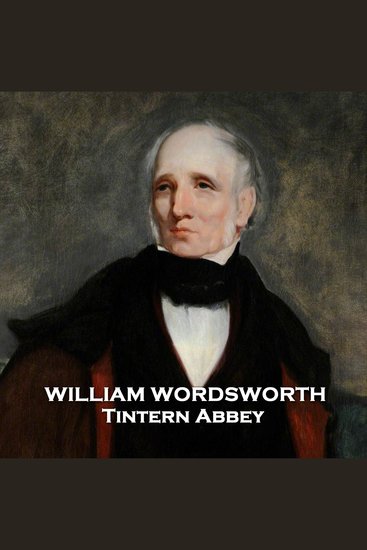
  • Tintern Abbey - Glorious poem evoking the beauty of a church monument - cover

    Tintern Abbey - Glorious poem...

    William Wordsworth

    • 0
    • 0
    • 0
    William Wordsworth was born on 7 April, 1770 in Cockermouth, in Cumbria, northwest England.  
    Wordsworth spent his early years in his beloved Lake District often with his sister, Dorothy. The English lakes could terrify as well as nurture, and as Wordsworth would write “I grew up fostered alike by beauty and by fear,” 
    After being schooled at Hawkshead he went to St. John’s College, Cambridge but not liking the competitive nature of the place idled his way through saying he “was not for that hour, nor for that place.”  
    Whilst still at Cambridge he travelled to France.  He was immediately taken by the Revolutionary fervor and the confluence of a set of great ideals and rallying calls for the people of France. 
    In his early twenties he ventured again to France and fathered an illegitimate child. He would not see that daughter till she was 9 owing to the tensions and hostilities between England and France. 
    There now followed a period of three to four years that plagued Wordsworth with doubt.  He was now in his early thirties but had no profession, was rootless and virtually penniless.  
    Although his career was not on track he did manage to publish two volumes, both in 1793;  An Evening Walk and Descriptive Sketches. 
    This dark period ended in 1795. A legacy of £900 received from Raisley Calvert enabled Wordsworth to pursue a literary career in earnest.  
    In 1797 he became great friends with a fellow poet, Samuel Taylor Coleridge. They formed a partnership that would change both their lives and the course of English poetry. 
    Their aim was for a decisive break with the strictures of Neoclassical verse. In 1798 the ground breaking Lyrical Ballads was published. Wordsworth wrote in the preface “the spontaneous overflow of powerful feelings: it takes its origin from emotion recollected in tranquility.” Most of the poems were dramatic in form, designed to reveal the character of the speaker. Thus the poems set forth a new style, a new vocabulary, and new subjects for poetry. 
    Coleridge had also conceived of an enormous poem to be called “The Brook,” in which he proposed to treat all science, philosophy, and religion, but soon laid the burden of writing it to Wordsworth.  To test his powers for that endeavour, Wordsworth began writing the autobiographical poem that would absorb him for the next 40 years, and which was eventually published as The Prelude, or, Growth of a Poet’s Mind.  
    By the 1820s, the critical acclaim for Wordsworth was growing, but perhaps his best years of work were behind him. Nonetheless he continued to write and to revise previous works.  
    With the death is 1843 of his friend and Poet Laureate Robert Southey, Wordsworth was offered the position. He accepted despite saying he wouldn’t write any poetry as Poet Laureate. And indeed he didn’t. 
    Wordsworth died of pleurisy on 23 April 1850. He was buried in St Oswald’s church Grasmere.
    Show book
  • Dear Mom: Wait That’s Me! - cover

    Dear Mom: Wait That’s Me!

    LaTanya Coleman-Carter

    • 0
    • 0
    • 0
    “Dear Mom, Wait That’s Me!” Is a collection of essays, prose, and poems from the perspective of a black mother’s experiences while parenting in today’s society. It journeys her awareness and release of the holds society, family, TV, social media, and her religion had on her. She discovers that all her children are different and shouldn’t be parented the same. The stories in the book take place over 23 years of parenting seven children, 4 of which she birthed. The story doesn’t particularly have an end as she is still parenting and evolving. It is written as an expression of her liberation and to hopefully inspire other mothers to explore the freedoms that can be experienced in their parenting.
    Show book
  • More Than Weeds - cover

    More Than Weeds

    L Kiew

    • 0
    • 0
    • 0
    More Than Weeds, the debut poetry collection by L. Kiew, explores the language of migration and how it is used in relation to plant and animal species, as well as peoples. These knowledgeable and verdant poems draw deeply on botanical and ecological detail and reveal secret histories thriving in the gaps between definitions; here are precious seedlings, unforced flowers, tongues of leaves, tangled roots and rhizomes.
    With roots in decolonialising botany and horticulture movements, and influenced by the impact of the climate crisis and regenerative gardening practices, Kiew's poetry is alive and thronging with the interconnected nature of things – and the formative forces of nurture, family, food, refuge and love. Human and plant voices speak for themselves of experiences of belonging and displacement, as well as encounters with violence. These vivid poems that ask us to scrutinise what is really contained or constrained by demarcations – whether those of weed or wildflower, or of borders and hostile environments.
    Show book