Join us on a literary world trip!
Add this book to bookshelf
Grey
Write a new comment Default profile 50px
Grey
Subscribe to read the full book or read the first pages for free!
All characters reduced
The History of Greek Philosophers - cover

The History of Greek Philosophers

Alfred William Benn

Publisher: DigiCat

  • 0
  • 0
  • 0

Summary

In "The History of Greek Philosophers," Alfred William Benn presents a comprehensive exploration of the evolution of thought in ancient Greece, meticulously examining the lives and ideas of key philosophers from pre-Socratic times through to the Hellenistic period. Benn's distinctive literary style blends rigorous scholarship with philosophical analysis, employing a narrative that is both engaging and accessible. The book is set against the backdrop of the socio-political landscape of ancient Greece, emphasizing how historical events shaped philosophical discourse and fostering a profound understanding of how these foundational ideas continue to influence contemporary thought. Alfred William Benn, a prominent British philosopher and historian of ideas, drew upon his extensive knowledge of literature, philosophy, and history to craft this work. His academic background and personal engagement with the philosophical tradition arguably provided him with the impetus to delve into the complexities of Greek philosophy, illustrating its significance not just within its historical context but also for the broader evolution of Western thought. This book is recommended for students, scholars, and anyone interested in philosophy and its historical developments. Benn's work offers valuable insights into the origins of Western philosophy, making it an essential reading for those seeking to deepen their understanding of the ideas that have shaped our intellectual heritage.
Available since: 12/10/2022.
Print length: 788 pages.
Other books that might interest you

  • The Constitution of Liberty - The Definitive Edition - cover

    The Constitution of Liberty -...

    F.A. A. Hayek

    • 0
    • 0
    • 0
    “One of the great political works of our time . . . The twentieth-century successor to John Stuart Mill’s essay ‘On Liberty.’” —NewsweekConservatives and concerned citizens alike have grown increasingly fearful of big government. Enter Nobel Prize–winning economist and political theorist F. A. Hayek, whose passionate warning against empowering states with greater economic control, The Road to Serfdom, became an overnight sensation.The latest entry in the University of Chicago Press’s series of newly edited editions of Hayek’s works, The Constitution of Liberty is, like Serfdom, just as relevant to our present moment. The book is considered Hayek’s classic statement on the ideals of freedom and liberty, ideals that he believes have guided—and must continue to guide—the growth of Western civilization. Here Hayek defends the principles of a free society, casting a skeptical eye on the growth of the welfare state and examining the challenges to freedom posed by an ever expanding government—as well as its corrosive effect on the creation, preservation, and utilization of knowledge. In opposition to those who call for the state to play a greater role in society, Hayek puts forward a nuanced argument for prudence. Guided by this quality, he elegantly demonstrates that a free market system in a democratic polity—under the rule of law and with strong constitutional protections of individual rights—represents the best chance for the continuing existence of liberty.Striking a balance between skepticism and hope, Hayek’s profound insights are timelier and more welcome than ever before. This definitive edition of The Constitution of Liberty will give a new generation the opportunity to learn from his enduring wisdom.
    Show book
  • The Moral Equivalent of War - cover

    The Moral Equivalent of War

    William James

    • 0
    • 0
    • 0
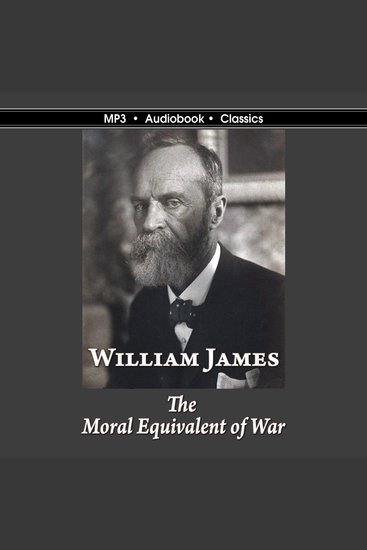
    This essay is based upon a speech given at Stanford University in 1906, William James’ last public utterance and is the original expression of the idea of non-military national service.  While acknowledging the horrors of war and its motives, he also acknowledges the benefits that accrue when groups of people address themselves to a common purpose evident in military behavior.  The modern reader will no doubt find certain attitudes regarding sex, race, and conquest of nature outdated. Nonetheless, one can’t help but admire the enlightened principles that have led to the establishment of the Civilian Conservation Corps, the Peace Corps, VISTA, and AmeriCorps, and will likely be part of the effort to deal with global warming and climate change.The following from the essay is the gist of James’ thesis:“If now -- and this is my idea -- there were, instead of military conscription, a conscription of the whole youthful population to form for a certain number of years a part of the army enlisted against Nature, the injustice would tend to be evened out, and numerous other goods to the commonwealth would remain blind as the luxurious classes now are blind, to man’s relations to the globe he lives on, and to the permanently sour and hard foundations of his higher life. To coal and iron mines, to freight trains, to fishing fleets in December, to dishwashing, clotheswashing, and windowwashing, to road-building and tunnel-making, to foundries and stoke-holes, and to the frames of skyscrapers, would our gilded youths be drafted off, according to their choice, to get the childishness knocked out of them, and to come back into society with healthier sympathies and soberer ideas.”
    Show book
  • A Room of One's Own - cover

    A Room of One's Own

    Virginia Woolf

    • 0
    • 0
    • 0
    'Women have served all these centuries as looking glasses possessing the magic and delicious power of reflecting the figure of man at twice its natural size.'
    
    Based on two lectures Woolf delivered at the University of Cambridge, A Room of One's Own compellingly argues for women's intellectual freedom and the importance of financial independence. It is still considered one of the most powerful pieces of feminist writing to this day.
    
    Published in 1929, A Room of One's Own asserts a simple message: in order for women to reach their full creative potential, they must have their own money and space with which to do it with. Drawing from the careers of the extraordinary female authors who came before her – such as Jane Austen, the Brontë sisters and Aphra Behn – Woolf stresses just how crucial access to education is, particularly in an environment which fails to support women's liberty. She cleverly asks us to imagine that Shakespeare had a sister – equal in genius, talent – and poses the question: would her legacy be the same if her means to create were stumped? As incisive as it is intelligent, A Room of One's Own is a searing social commentary for the ages. This audiobook edition is brilliantly read by Karen Cass.
    Virginia Woolf (1882 – 1941) was one of the most significant novelists of the twentieth century. A modernist writer and progressive thinker, she is known for her stream of consciousness narrative style and influence on feminist criticism. Her works have been translated into over fifty languages and are widely read and adapted to this day.
    Show book
  • The Young Turks' Crime against Humanity - The Armenian Genocide and Ethnic Cleansing in the Ottoman Empire - cover

    The Young Turks' Crime against...

    Taner Akçam

    • 0
    • 0
    • 0
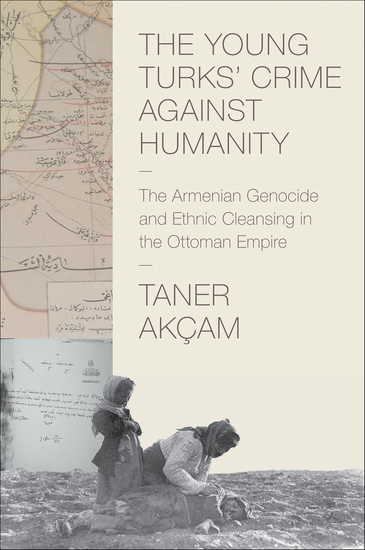
    An unprecedented look at secret documents showing the deliberate nature of the Armenian genocideIntroducing new evidence from more than 600 secret Ottoman documents, this book demonstrates in unprecedented detail that the Armenian Genocide and the expulsion of Greeks from the late Ottoman Empire resulted from an official effort to rid the empire of its Christian subjects. Presenting these previously inaccessible documents along with expert context and analysis, Taner Akçam's most authoritative work to date goes deep inside the bureaucratic machinery of Ottoman Turkey to show how a dying empire embraced genocide and ethnic cleansing.Although the deportation and killing of Armenians was internationally condemned in 1915 as a "crime against humanity and civilization," the Ottoman government initiated a policy of denial that is still maintained by the Turkish Republic. The case for Turkey's "official history" rests on documents from the Ottoman imperial archives, to which access has been heavily restricted until recently. It is this very source that Akçam now uses to overturn the official narrative.The documents presented here attest to a late-Ottoman policy of Turkification, the goal of which was no less than the radical demographic transformation of Anatolia. To that end, about one-third of Anatolia's 15 million people were displaced, deported, expelled, or massacred, destroying the ethno-religious diversity of an ancient cultural crossroads of East and West, and paving the way for the Turkish Republic.By uncovering the central roles played by demographic engineering and assimilation in the Armenian Genocide, this book will fundamentally change how this crime is understood and show that physical destruction is not the only aspect of the genocidal process.
    Show book
  • Starry Field - A Memoir of Lost History - cover

    Starry Field - A Memoir of Lost...

    Margaret Juhae Lee

    • 0
    • 0
    • 0
    As a young girl growing up in Houston, Margaret Juhae Lee never heard about her grandfather, Lee Chul Ha. His history was lost in early twentieth-century Korea, and guarded by Margaret's grandmother, who Chul Ha left widowed in 1936 with two young sons. To his surviving family, Lee Chul Ha was a criminal, and his granddaughter was determined to figure out why. 


    Starry Field chronicles Chul Ha's untold story. Combining investigative journalism, oral history, and archival research, Margaret reveals the truth about the grandfather she never knew. What she found is that Lee Chul Ha was not a source of shame; he was a student revolutionary imprisoned in 1929 for protesting the Japanese government's colonization of Korea. He was a hero—and eventually honored as a Patriot of South Korea almost 60 years after his death. It is through the series of three interviews with her grandmother that Margaret finally finds a sense of recognition she's been missing. A story of healing old wounds and the reputation of an extraordinary young man, Starry Field bridges the tales of two women. 


    Starry Field weaves together the stories of Margaret's family against the backdrop of Korea's tumultuous modern history, with a powerful question at its heart. Can we ever separate ourselves from our family's past—and if the answer is yes, should we?
    Show book
  • Agriculture - Innovative Techniques for Sustainable Food Production and Resource Management - cover

    Agriculture - Innovative...

    Jeron Iris

    • 0
    • 0
    • 0
    Agriculture stands at the heart of human civilization, sustaining populations, economies, and ecosystems around the globe. As the primary source of food and materials for countless industries, agriculture is fundamental to our daily lives. Yet, as demand for food and resources grows, traditional farming practices have come under scrutiny for their impact on land, water, and ecosystems. This situation has sparked a profound exploration into how agriculture can evolve to meet future needs without compromising environmental health or resource availability. 
    In response to these challenges, sustainable agriculture has emerged as a guiding framework. Rather than depleting resources, sustainable agriculture seeks to work in harmony with nature, fostering productive systems that can endure and even improve over time. Key principles include conserving soil health, managing water resources responsibly, reducing reliance on chemical inputs, and promoting biodiversity. Sustainable agriculture not only aims to enhance the resilience of farming systems but also to address some of the long-standing issues in conventional agriculture, from soil degradation to pest resistance. 
    Advancements in technology and innovative farming practices play an essential role in this shift. Techniques such as precision farming, vertical agriculture, and renewable energy integration are now helping farmers produce more with less environmental impact. By adopting these methods, we can begin to build a resilient food system capable of withstanding fluctuations in demand and environmental pressures.
    Show book