Join us on a literary world trip!
Add this book to bookshelf
Grey
Write a new comment Default profile 50px
Grey
Subscribe to read the full book or read the first pages for free!
All characters reduced
The Young Turks' Crime against Humanity - The Armenian Genocide and Ethnic Cleansing in the Ottoman Empire - cover

The Young Turks' Crime against Humanity - The Armenian Genocide and Ethnic Cleansing in the Ottoman Empire

Taner Akçam

Publisher: Princeton University Press

  • 0
  • 0
  • 0

Summary

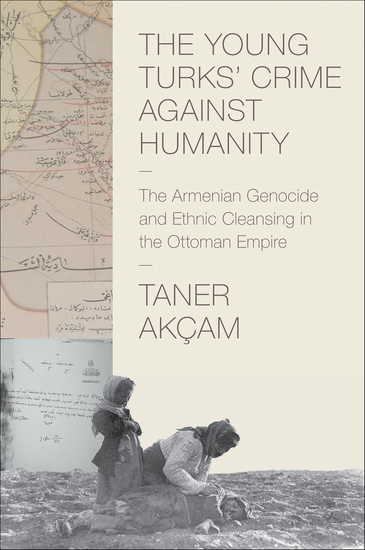
An unprecedented look at secret documents showing the deliberate nature of the Armenian genocideIntroducing new evidence from more than 600 secret Ottoman documents, this book demonstrates in unprecedented detail that the Armenian Genocide and the expulsion of Greeks from the late Ottoman Empire resulted from an official effort to rid the empire of its Christian subjects. Presenting these previously inaccessible documents along with expert context and analysis, Taner Akçam's most authoritative work to date goes deep inside the bureaucratic machinery of Ottoman Turkey to show how a dying empire embraced genocide and ethnic cleansing.Although the deportation and killing of Armenians was internationally condemned in 1915 as a "crime against humanity and civilization," the Ottoman government initiated a policy of denial that is still maintained by the Turkish Republic. The case for Turkey's "official history" rests on documents from the Ottoman imperial archives, to which access has been heavily restricted until recently. It is this very source that Akçam now uses to overturn the official narrative.The documents presented here attest to a late-Ottoman policy of Turkification, the goal of which was no less than the radical demographic transformation of Anatolia. To that end, about one-third of Anatolia's 15 million people were displaced, deported, expelled, or massacred, destroying the ethno-religious diversity of an ancient cultural crossroads of East and West, and paving the way for the Turkish Republic.By uncovering the central roles played by demographic engineering and assimilation in the Armenian Genocide, this book will fundamentally change how this crime is understood and show that physical destruction is not the only aspect of the genocidal process.
Available since: 04/22/2012.
Print length: 528 pages.

Other books that might interest you

  • Human Animals - cover

    Human Animals

    Frank Hamel

    • 0
    • 0
    • 0
    Frank Hamel's Human Animals (published in 1915) is an infamous and classic treatise on the mythology and the evidence of hybrid humans. This was one of the first popular works on cryptozoology, and a primer for those interested in the many stories and accounts of lycanthropy and other strange evolutionary paradoxes. Covering the Were-wolf Trials of 1521, to bird-women, human serpents and witch familiars, Hamel's research into the mythological, hysterical, historical and the subjective with a scholar's pen. Many religious ceremonies and occult practices are studied, and he helps us to understand how these fantastical creatures have become a part of our culture, from books of fiction, to very serious study. Human Animals is a book that contains records and accounts of traditions dealing with the belief that certain men and women can transform themselves into animals. The causes of transformation are various: contact with a wer-animal, touching what he has touched, wearing an animal skin, rubbing the body with ointment, slipping on a girdle, buckling on a strap, and many other expedients, magical and otherwise, may bring about the metamorphosis.
    Show book
  • Classic Rock & Rock Radio Commercials - Volume 5 - cover

    Classic Rock & Rock Radio...

    Various Authors

    • 0
    • 0
    • 0
    This fascinating audio program includes actual radio commercials from the 1960s for the following bands: Donovan, Joni Mitchell, Monterey Pop Festival, The Beach Boys, Traffic, The Velvet Underground
    Show book
  • Song Dynasty - Innovation and Prosperity in Medieval China - cover

    Song Dynasty - Innovation and...

    Rolf Hedger

    • 0
    • 0
    • 0
    The Song Dynasty (960–1279) emerged from a period of political fragmentation and military strife known as the Five Dynasties and Ten Kingdoms period (907–960). Following the collapse of the Tang Dynasty in 907, China was divided among competing warlords and regional states, each vying for power. The unification of China under the Song Dynasty marked the beginning of a new era of stability, economic prosperity, and cultural flourishing. 
    The dynasty was founded by Emperor Taizu (Zhao Kuangyin), a capable military general who seized power in 960 through a relatively peaceful coup known as the Chenqiao Mutiny. As the commander of the Later Zhou army, Taizu was persuaded by his loyal officers to take the throne and establish a new dynasty. Unlike previous rulers who relied on military force to maintain control, Taizu implemented policies aimed at reducing the power of the military aristocracy while strengthening the centralized government. One of his first major reforms was ensuring that top military commanders were replaced by civilian officials, significantly reducing the likelihood of future military coups. 
    Although the early Song rulers sought to consolidate power within China, they faced constant threats from neighboring states. The Khitan-led Liao Dynasty controlled much of the northern frontier, while the Western Xia and later the Jurchen-led Jin Dynasty posed additional challenges. The Song, unable to achieve military dominance over these rival states, often resorted to diplomacy, alliances, and even paying tribute in exchange for peace. This reliance on diplomacy over warfare became a defining characteristic of Song foreign policy.
    Show book
  • Sumerian Gods and Heroes - Exploring the Birth of Mythology - cover

    Sumerian Gods and Heroes -...

    Odessa Nightshade

    • 0
    • 0
    • 0
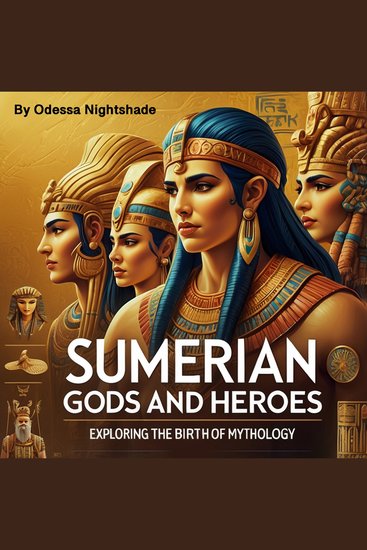
    The mythology of the Sumerians stands as one of the earliest recorded religious traditions, shaping the beliefs of later civilizations in Mesopotamia and beyond. As one of the first urban societies, the Sumerians established a complex pantheon of gods and heroes that explained the forces of nature, human existence, and the divine order of the universe. Their myths, inscribed on clay tablets in cuneiform script, offer a glimpse into a world where deities governed every aspect of life, from the rising sun to the floods of the Tigris and Euphrates rivers. These stories, rich with symbolism and allegory, not only influenced later cultures but also laid the foundation for many of the myths and legends still told today.  
    Sumerian civilization thrived in southern Mesopotamia, in what is now modern-day Iraq, around 3100 BCE. The Sumerians built city-states such as Uruk, Ur, and Nippur, each with its own patron deity. Religion was deeply intertwined with governance, as rulers were seen as intermediaries between the gods and the people. The belief that divine favor determined a city’s prosperity reinforced the importance of rituals, offerings, and temple constructions, particularly the iconic ziggurats that served as sacred centers of worship. The Sumerian gods were not distant, benevolent figures but rather powerful beings with human emotions and rivalries, shaping the world through both harmony and conflict.  
    The primary sources of Sumerian mythology come from cuneiform texts, including the Enuma Elish, various temple hymns, and the Epic of Gilgamesh. These texts preserve tales of creation, divine wars, and the struggles of mortal heroes. The myths of Anu, Enlil, and Enki explain the structure of the cosmos and the forces that govern it, while legends of Inanna and Dumuzi reveal the themes of love, fertility, and the cycle of life and death.
    Show book
  • Nate's Triumph - Presuming Competence and the Fight for Inclusion - cover

    Nate's Triumph - Presuming...

    Nate Trainor

    • 0
    • 0
    • 0
    Nate Trainor, born with Joubert syndrome, could not communicate with words until he was twenty-one. Stuck in a system that prematurely labeled him "profoundly retarded," Nate shares his battles with the public school system to be included, his incredible efforts to prove his intelligence, and the breakthroughs that finally gifted him with words and a voice. His journey proves how one man at a vast disadvantage can prevail in a world that seems hostile or indifferent to him.
    Show book
  • Codependency - cover

    Codependency

    Brittany Forrester

    • 0
    • 0
    • 0
    Codependency involves sacrificing one’s personal needs to try to meet the needs of others. Someone who is codependent has an extreme focus outside themselves. Their thoughts and actions revolve around others, such as spouses or relatives.Codependency often appears in relationships that are unbalanced and unhealthy. A person with codependency often tries to save others from themselves. They may get hurt trying to “cure” a partner’s addictions or abusive behaviors.Codependents do the wrong things for the right reasons.But the good news is that people can change and learn new, healthier behaviors.People can be inspired and encouraged to change and learn from fit role models.In this audiobook, you will find:causes of codependencyfeelings that spring from codependencyhow to recognize codependencyhow to overcome codependencystrategies, self-care, and recovery from codependencymuch much more!
    Show book