Join us on a literary world trip!
Add this book to bookshelf
Grey
Write a new comment Default profile 50px
Grey
Subscribe to read the full book or read the first pages for free!
All characters reduced
The life and works of Sir Charles Barry - cover

The life and works of Sir Charles Barry

Alfred Barry

Publisher: Good Press

  • 0
  • 0
  • 0

Summary

In "The Life and Works of Sir Charles Barry," Alfred Barry presents a comprehensive and engaging exploration of one of the foremost architects of the 19th century, known for his pivotal role in the Gothic Revival. The work interweaves a meticulous study of Barry's major projects, such as the iconic Palace of Westminster, with a deep examination of his architectural philosophy and the socio-political context of his time. Barry's prose exhibits a scholarly precision, complemented by rich descriptions that evoke the grandeur and complexity of Barry's designs, situating his contributions within the broader narrative of Victorian architecture. As the son of Sir Charles Barry, Alfred Barry draws upon a deeply personal connection to his subject, providing unique insights into both the man and the architect. His familial ties and scholarly background position him as a highly informed narrator, adept at unraveling the intricacies of Barry's life, motivations, and the evolving architectural landscape of 19th-century England. Alfred Barry's expertise in the field is evident, lending authority to his exploration and fostering an intimate understanding of his father's legacy. This book is a must-read for scholars, architecture enthusiasts, and history buffs alike, offering an indispensable resource for understanding the life and contributions of Sir Charles Barry. It not only celebrates the remarkable achievements of a defining figure in architecture but also invites readers to appreciate the interplay between personal history and architectural innovation.
Available since: 03/02/2025.
Print length: 230 pages.


Other books that might interest you

  • Glamour Addiction - Inside the American Ballroom Dance Industry - cover

    Glamour Addiction - Inside the...

    Juliet McMains

    • 0
    • 0
    • 0
    In the wake of the blockbuster television success of "Dancing with the Stars," competitive ballroom dance has become a subject of new fascination—and renewed scrutiny. Known by its practitioners as DanceSport, ballroom is a significant dance form and a fascinating cultural phenomenon. In this first in-depth study of the sport, dancer and dance historian Juliet McMains explores the "Glamour Machine" that drives the thriving industry, delving into both the pleasures and perils of its seductions. She further explores the broader social issues invoked in American DanceSport: representation of "Latin," economics that often foster inequality, and issues of identity, including gender, race, class, and sexuality. Putting ballroom dance in the larger contexts of culture and history, Glamour Addiction makes an important contribution to dance studies, while giving new and veteran enthusiasts a unique and unprecedented glimpse behind the scenes.
    Show book
  • Slayers Every One of Us - How One Girl in All the World Showed Us How to Hold On - cover

    Slayers Every One of Us - How...

    Kristin Russo, Jenny Owen Youngs

    • 0
    • 0
    • 0
    Read by the authors and hosts of the hit podcast Buffering the Vampire Slayer, this memoir reflects on heartbreak, perseverance, building community, and life lessons learned from Buffy the Vampire Slayer. This audiobook features bonus songs, jingles, and clips from the podcast and live shows, and contributions from fans/committed Scoobies.Kristin and Jenny’s marriage started with an ultimatum: to further their relationship, Kristin must watch Jenny's favorite show, Buffy the Vampire Slayer. With the terms set, they began a journey that has led them through seven seasons of the beloved genre show, a podcast rewatching the series with their newly minted listenership of “Scoobies,” unexpected success, and a divorce. Through it all, their love for Buffy and their commitment to their community held them together against the odds.Slayers, Every One of Us is the story of how two queer women navigated divorce on a very public level and managed to stay in each other’s lives through it all. While chock full of Buffy-related content (and Buffering!) for true fans, this is ultimately a memoir of queer love and chosen family. It's a heartwarming story for anyone who's experienced lost love, and a roadmap for staying close with your ex.A Macmillan Audio production from St. Martin’s Press.
    Show book
  • Sesame Street Around the World - Culture Politics and Transnational Organizational Partnerships - cover

    Sesame Street Around the World -...

    Tamara Kay

    • 0
    • 0
    • 0
    Given the sometimes extraordinary politicization of culture, it is surprising that Sesame Street has gained acceptance and legitimacy in more than fifty countries. Sesame Street's global success raises two questions. First, how does a US icon like Sesame Street spread around the world, gaining acceptance as a local cultural product? Second, how does the nonprofit that created it, Sesame Workshop, and its partners around the world navigate cultural differences, manage conflicts, and construct shared collective representations to create Sesame Street programs that resonate with local audiences? 
    Tamara Kay answers these questions using data from seven years of ethnographic fieldwork and 200 in-depth interviews with Sesame Workshop staff and international partners from seventeen countries. Kay argues that Sesame Workshop's secret is its engagement in coproduction, meaning it works with partners as a transnational team to create local Sesame Street programs.  She traces the processes of coproduction, beginning with the imagination of the cultural product, to its disassembly, reconstitution, and dissemination.  
     
    The Sesame Street case grapples with and illuminates culture in transnational interaction, providing insight into a range of other transnational organizational partnerships and different kinds of hybrid cultural products.
    Show book
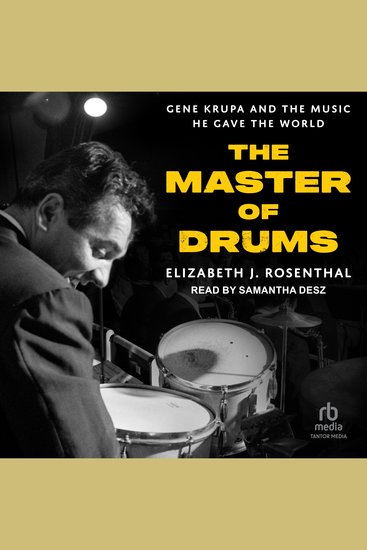
  • The Master of Drums - Gene Krupa and the Music He Gave the World - cover

    The Master of Drums - Gene Krupa...

    Elizabeth J. Rosenthal

    • 0
    • 0
    • 0
    From the early 1930s onward, Gene Krupa was a drum-centric rarity in the jazz world. Never before had a drummer been in the forefront as a solo artist. His galvanizing, unrestrained passion for percussion demanded it. Rocking the rafters, Gene thrilled audiences in ballrooms, nightclubs, and movies. 


    Seemingly born jazz-drum crazy in 1909 to a Polish-immigrant working-class family in South Chicago, Gene was a professional by the age of thirteen and soon made his first recordings. By the early 1930s, he was New York City's most in-demand drummer, and in 1934, joined brilliant clarinetist Benny Goodman's band, helped inaugurate the Swing Era, and played the first-ever swing concert at Carnegie Hall. He formed his own band and shattered racial boundaries by sharing the spotlight with the African-American trumpeter Roy Eldridge. But after a skyrocketing ride to the top, Gene experienced a rollercoaster ride of good and bad luck, emotional highs, and devastating depths. 


    In The Master of Drums, biographer Elizabeth J. Rosenthal crafts a celebratory, honest, and exhaustively researched portrait of a twentieth-century music legend. When he died, Gene Krupa may have left behind a world of grieving friends, colleagues, fans, students, and progeny, but as The Master of Drums proves, his dynamic musical and cultural influences live on.
    Show book
  • How to Keep from Losing Your Mind - cover

    How to Keep from Losing Your Mind

    Deal W. Hudson

    • 0
    • 0
    • 0
    Liberal education is nothing other then the aquistion of a free mind. 
    Unfortunately, too many of us have a mind shackled by ideologies and moved by outside forces. We’re pulled and pushed by trends and the prevailing culture. Higher education has become ridiculously expensive and is producing graduates whose minds are anything but free, filled as they are with the prejudices of their teachers. 
    Only when we break these shackles and habitually exercise a free mind can we call ourselves liberally educated. 
    In How to Keep from Losing Your Mind, Deal Hudson will show you how to avoid the false open-mindedness and groupthink of the modern “-isms” promoted by the PC arbiters of our cultural milieu. Instead you’ll learn to: Form the habit of reconsideration, the key to a truly open mindEntertain doubts about your own immediate opinionsArgue coherently from first principles, instead of repeating ideological talking pointsRecognize prejudice and propagandaAvoid sloganeering and engage in real thought 
    This book will enable every person to rise above the shouting, the name-calling, and the brutal incivility of public discourse and rediscover the pleasure and benefit of contemplating the meaning and noble aims of human life.
    Show book
  • Imperial China - Foundations of a Great Civilization (3 in 1) - cover

    Imperial China - Foundations of...

    Jun Liu

    • 0
    • 0
    • 0
    This book offers an in-depth exploration of three of the most influential dynasties in Chinese history: the Han, Qin, and Tang Dynasties. This book delves into the powerful legacies of these dynasties, each of which shaped China’s cultural, political, and social development in profound ways. The Qin Dynasty, under the leadership of Emperor Qin Shi Huang, is known for unifying China and initiating monumental infrastructure projects such as the Great Wall and the Terracotta Army. The Han Dynasty, a golden age in Chinese history, expanded China’s borders, solidified Confucian ideals, and fostered the flourishing of trade along the Silk Road. Finally, the Tang Dynasty, often regarded as the most prosperous period in China’s imperial history, saw significant advancements in arts, culture, and governance. 
    In the Qin Dynasty, China was unified for the first time under a single ruler, marking the beginning of imperial rule. Emperor Qin’s centralization of power, creation of a standardized legal system, and the construction of defensive walls set the stage for the future of Chinese civilization. Although short-lived, the Qin Dynasty’s impact on Chinese governance and infrastructure would echo through the centuries.  
    Meanwhile, the Han Dynasty succeeded the Qin, ushering in an era of stability, economic prosperity, and cultural development. The Han established a strong bureaucracy and military, advanced in science and technology, and integrated Confucianism as the official philosophy, influencing Chinese society for over two millennia. 
    The Tang Dynasty, which followed the collapse of the Sui Dynasty, is celebrated for its cultural achievements, including the flourishing of poetry, painting, and literature. The Tang Empire expanded China's territory to its greatest extent, and its cosmopolitan capital, Chang'an, became a vibrant hub for international trade and cultural exchange.
    Show book