Join us on a literary world trip!
Add this book to bookshelf
Grey
Write a new comment Default profile 50px
Grey
Subscribe to read the full book or read the first pages for free!
All characters reduced
The Federalist Papers - A Foundational Guide to American Government Liberty and Constitutional Law - cover

The Federalist Papers - A Foundational Guide to American Government Liberty and Constitutional Law

Alexander Hamilton, James Madison, John Jay, Zenith Golden Quill

Publisher: Zenith Golden Quill

  • 0
  • 0
  • 0

Summary

Before America could be united, it had to be persuaded.

The Federalist Papers are a collection of 85 essays written in 1787–88 by Alexander Hamilton, James Madison, and John Jay under the pseudonym "Publius." Their purpose: to defend and explain the newly proposed Constitution of the United States and advocate for its ratification.

These writings remain the single most authoritative commentary on the intent of the Founding Fathers. Covering checks and balances, federalism, the separation of powers, the judiciary, and individual liberty, The Federalist Papers are essential for understanding American democracy.

This complete and annotated edition features historical context, thematic summaries, and modern formatting, making it ideal for students, educators, law professionals, and citizens engaged in civic life.

"The most important commentary ever written on the Constitution." — U.S. Supreme Court
"As vital today as when they were first penned—read them to understand liberty itself." — The Wall Street Journal

Click Buy Now and engage with the intellectual blueprint that built a nation.
Available since: 05/16/2025.
Print length: 449 pages.

Other books that might interest you

  • Manifesting Justice - Wrongly Convicted Women Reclaim Their Rights - cover

    Manifesting Justice - Wrongly...

    Valena Beety, Koa Beck

    • 0
    • 0
    • 0
    When Valena Beety first became a federal prosecutor, her goal was to protect victims, especially women, from cycles of violence. What she discovered was that not only did prosecutions often fail to help victims, they frequently relied on false information, forensic fraud, and police and prosecutor misconduct. 


    Seeking change, Beety began working in the Innocence Movement, helping to free factually innocent people through DNA testing and criminal justice reform. Manifesting Justice focuses on the shocking story of Beety's client Leigh Stubbs—a young, queer woman in Mississippi, convicted of a horrific crime she did not commit because of her sexual orientation. Beety weaves Stubbs's harrowing narrative through the broader story of a broken criminal justice system. 


    Drawing on interviews with both innocence advocates and wrongfully convicted women, along with Beety's own experiences as an expert litigator and a queer woman, Manifesting Justice provides a unique outsider/insider perspective. Beety expands our notion of justice to include not just people who are factually innocent, but those who are over-charged, pressured into bad plea deals, and over-sentenced. The result is a riveting and timely book that will transform our very ideas of crime and punishment, what innocence is, and who should be free.
    Show book
  • A Rare Recording of Robert Baden-Powell - cover

    A Rare Recording of Robert...

    Robert Baden-Powell

    • 0
    • 0
    • 0
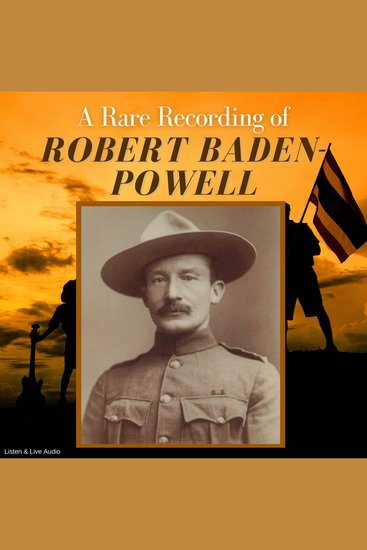
    In these two rare recordings of Robert Baden-Powell, founder and first Chief Scout of The Boy Scouts Association and founder of the Girl Guides, he extols the virtues of the Scout movement and that Scout duties are working for God and the King, helping other people, and keeping Scout law. 
    A Listen & Live audio production.
    Show book
  • The Second British Empire - In the Crucible of the Twentieth Century - cover

    The Second British Empire - In...

    Timothy H Parsons

    • 0
    • 0
    • 0
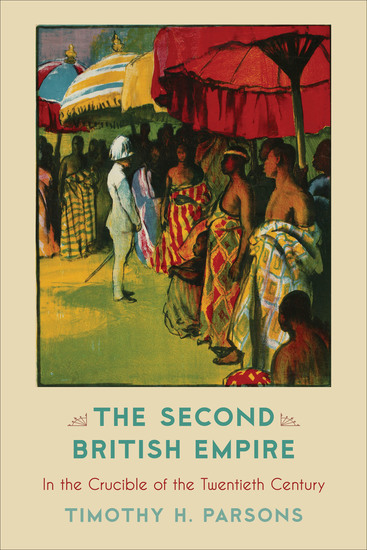
    At its peak, the British Empire spanned the world and linked diverse populations in a vast network of exchange that spread people, wealth, commodities, cultures, and ideas around the globe. By the turn of the twentieth century, this empire, which made Britain one of the premier global superpowers, appeared invincible and eternal. This compelling book reveals, however, that it was actually remarkably fragile. Reconciling the humanitarian ideals of liberal British democracy with the inherent authoritarianism of imperial rule required the men and women who ran the empire to portray their non-Western subjects as backward and in need of the civilizing benefits of British rule. However, their lack of administrative manpower and financial resources meant that they had to recruit cooperative local allies to actually govern their colonies.   Timothy H. Parsons provides vivid detail of the experiences of subject peoples to explain how this became increasingly difficult and finally impossible after World War II as Afr
    Show book
  • The Birth of Tragedy - cover

    The Birth of Tragedy

    Friedrich Nietzsche

    • 0
    • 0
    • 0
    "The Birth of Tragedy or Hellenism and Pessimism" is a seminal work by the German philosopher Friedrich Nietzsche, first published in 1872. In this book, Nietzsche explores the origins and essence of Greek tragedy, arguing that it emerged from the fusion of two artistic principles: the Apollonian, representing order, rationality, and beauty; and the Dionysian, representing chaos, intoxication, and ecstasy. He contrasts these concepts with the rationality of Socratic philosophy and explores the cultural implications of this shift. Nietzsche also introduces the idea of the "Dionysian man," who embraces life's suffering and contradictions with a tragic, yet affirmative, spirit.
    Show book
  • Acts of Resistance - The Power of Art to Create a Better World - cover

    Acts of Resistance - The Power...

    Amber Massie-Blomfield

    • 0
    • 0
    • 0
    What is the purpose of art in a world on fire? Can it be a genuine form of political resistance? 


    What is the purpose of art in a world on fire? In this exhilarating and deeply inspiring work, Amber Massie-Blomfield considers the work of artists, writers, musicians, and filmmakers—such as Gran Fury, Billie Holiday, Alexis Wright, Claude Cahun, Rick Lowe, and Joseph Beuys—alongside collectives, communities, and organizations that have used protest sites as their canvas and spearheaded political movements. From writer Ken Saro Wiwa combating oil pollution in Nigeria and Susan Sontag directing Waiting for Godot in besieged Sarajevo to the women stitching subversive patchworks in Pinochet's Chile and the artist-activists who blocked the building of a new airport in France, with stories drawn from environmentalism, feminism, anti-fascism, and other movements, Acts of Resistance brings together remarkable acts of creativity that have shifted history on its axis.
    Show book
  • The Practice and Theory of Individual Psychology - cover

    The Practice and Theory of...

    Alfred Adler

    • 0
    • 0
    • 0
    Though psychologist Alfred Adler (1870-1937) does not have the wider recognition accorded Freud and Jung, his work and ideas had an enduring effect on the practice and development of psychotherapy in the 20th century. This collection of 28 lectures and essays, published under the title The Practice and Theory of Individual Psychology (published in 1924), brings together many of his main ideas. 
    Adler was initially best known for his interest in the inferiority complex and its effect on the personality and subsequent behaviour of individuals. But his focus became increasingly concerned with the particular observation that it was the social environment of individuals that had a more fundamental influence on behavioural patterns than over-arching theories on sex, symbolism, archetypes and the like. He has been described as the first ‘community psychologist.’ This contributed considerably to the growth of schools of psychotherapy in the second half of the 20th century and their proliferation in the 21st. In fact, one historian has commented, “It would not be easy to find another author from which so much has been borrowed on all sides without acknowledgement than Alfred Adler.’ 
    The topics covered in this collection are varied and date from the pre- and post World War I period. It opens with Individual Psychology, its Assumptions and its Results (1914) and includes Individual-Psychological Treatment of Neuroses (1913), The Study of Child Psychology and Neurosis (1913), Nervous Insomnia (1914), Compulsion Neurosis (1918), Dreams and Dream-Interpretation (1912), and Demoralized Children (1920). 
    His range is wide: Among them are essays such as Neurotic Hunger Strike and New Viewpoint of War Neuroses, both concerns that regularly feature in newspapers and public discussion today. As a contrast, he offers interesting observations on the writing of Dostoyevsky, and one particular case of the suicide of a prominent 19th century Austrian politician. 
    This recording also contains (Chapter XIV) the 1918 lecture Homo-sexuality which Adler gave to the Jurististisch-Medizinische Gesellschaft of Zurich. It represents views widely held by the society of the time, which are now unacceptable. The chapter is nevertheless included here for historical purposes.
    Show book