Join us on a literary world trip!
Add this book to bookshelf
Grey
Write a new comment Default profile 50px
Grey
Subscribe to read the full book or read the first pages for free!
All characters reduced
The Second British Empire - In the Crucible of the Twentieth Century - cover

The Second British Empire - In the Crucible of the Twentieth Century

Timothy H Parsons

Publisher: Stackpole Books

  • 0
  • 0
  • 0

Summary

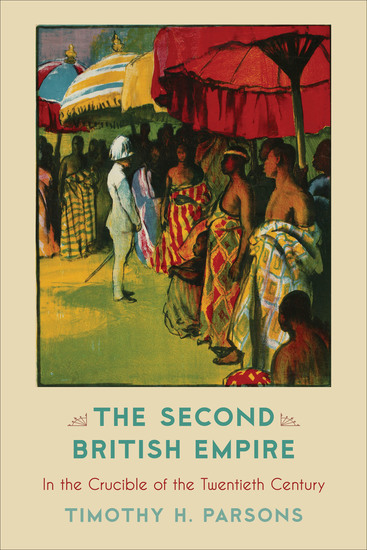
At its peak, the British Empire spanned the world and linked diverse populations in a vast network of exchange that spread people, wealth, commodities, cultures, and ideas around the globe. By the turn of the twentieth century, this empire, which made Britain one of the premier global superpowers, appeared invincible and eternal. This compelling book reveals, however, that it was actually remarkably fragile. Reconciling the humanitarian ideals of liberal British democracy with the inherent authoritarianism of imperial rule required the men and women who ran the empire to portray their non-Western subjects as backward and in need of the civilizing benefits of British rule. However, their lack of administrative manpower and financial resources meant that they had to recruit cooperative local allies to actually govern their colonies.   Timothy H. Parsons provides vivid detail of the experiences of subject peoples to explain how this became increasingly difficult and finally impossible after World War II as Afr
Available since: 06/14/2023.
Print length: 375 pages.
Other books that might interest you

  • Tyre & Carthage: The History of the Phoenician Cities that Dominated the Mediterranean for Centuries - cover

    Tyre & Carthage: The History of...

    Editors Charles River

    • 0
    • 0
    • 0
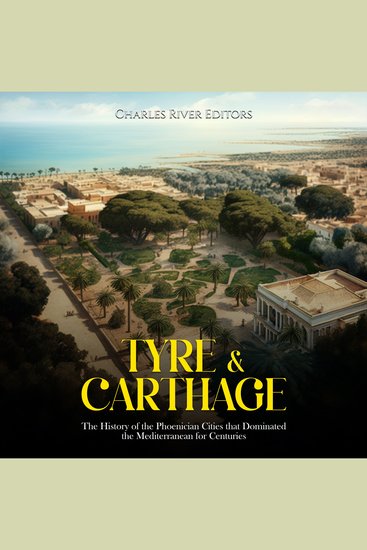
    Across the eastern Mediterranean there has been discovered a great number of objects whose appearance or materials are extraneous to local cultures, whether it was an Egyptian amulet in Greece, a Greek vase in Africa, or thousands of strange amulets in Gibraltar. The remains are evidence that a huge amount of goods was once moved from one land to another, systematically transported and traded across the Mediterranean by the ancient commercial network of the Phoenicians. Beginning in the 13th century BCE, and lasting for more than a millennium, this civilization dominated the most important body of water known to the ancients. With their formidable ships and skills in trading, they made a name for themselves by trading between Egypt, Greece, Rome, Carthage, Sardinia, Spain, and eventually all the way to the Atlantic Ocean, establishing themselves as the undisputed lords of the sea.  
    One of the most crucial cities in the system was hidden beneath the Greek, Roman, and Crusader ruins of Lebanon: the ancient city of Tyre. "Seated at entrance to the sea," according to the prophet Ezekiel, Tyre was constructed on a purportedly impenetrable island. Tyre was considered to be one of the oldest and wealthiest metropolises of the world, and indeed, the city can be directly associated with some of the most important stages in the history of mankind. 
    Although Carthage by far preferred to exert economic pressure and influence before resorting to direct military power (and even went so far as to rely primarily on mercenary armies paid with its vast wealth for much of its history, it nonetheless produced a number of outstanding generals, from the likes of Hanno Magnus to, of course, the great bogeyman of Roman nightmares himself: Hannibal. Carthage was able to go from a minor Phoenician settlement to one of the most powerful trading empires of antiquity. 
    Show book
  • Balanced Freedom: Unleash Your Child's Outdoor Potential - "Unlock Balanced Freedom: Energize your child’s outdoor potential with engaging audio lessons for exploration!" - cover

    Balanced Freedom: Unleash Your...

    Orson Vexley

    • 0
    • 0
    • 0
    Balanced Freedom: Unleash Your Child's Outdoor Potential  
    ⭐⭐ Simplified Guide & Explanations Included ⭐⭐ 
    Are you eager to help your child thrive through the power of outdoor exploration? 
    Looking for a thorough guide packed with everything you need to unlock your child's potential through free, natural exploration? 
    Your search starts and ends here! 
    This guide acts as your essential companion for deepening understanding, applying skills, and engaging in practical activities. With this resource, you're set for success. 
    Updated to reflect the latest methods in outdoor exploration education. 
    Key features of this enhanced guide: 
    - In-depth insights into nurturing your child's outdoor experiences 
    - Comprehensive explanations of the importance of natural exploration 
    - Effective strategies for fostering confidence and independence in nature 
    Our guide stands out through exhaustive coverage, crucial for your child's development. Concepts are not just touched upon; they are explored with care and depth. 
    Please note that this guide is an independent resource created for your benefit and is not affiliated with any official organization. 
    Structured clearly and written in accessible language, our guide ensures smooth transitions between topics. Say goodbye to overwhelming jargon and embrace clear, concise, and accurate guidance. 
    So, why hesitate? Click the BUY NOW button, grab your guide, and embark on the journey to help your child excel through outdoor exploration!
    Show book
  • Little Women Podcast: Social Life In Victorian Times (and why Jo lost the trip to Europe) - cover

    Little Women Podcast: Social...

    Niina Niskanen, Emily Lau

    • 0
    • 0
    • 0
    In the chapter “Calls,” Amy and Jo decide to make some social calls, a common custom among well-bred young ladies of their time. Amy, who enjoys proper manners and society, convinces Jo to accompany her, even though Jo finds such formalities dull and pretentious. Throughout the afternoon, Amy’s social grace and tact contrast sharply with Jo’s blunt honesty and impatience with convention. Amy enjoys the ritual of polite society, while Jo realizes that she prefers sincerity and simplicity to artificial manners. Join Emily and Niina when they dissect chapter Calls, and talk about various things, such as Amy's fondness towards the aristocracy, Jo's difficulties in taking compliments and also the last part of the chapter, where we get the explanation why Jo did not get to go to Europe with Aunt March.
    Show book
  • OCME - Life in America's Top Forensic Medical Center - cover

    OCME - Life in America's Top...

    Bruce Goldfarb

    • 0
    • 0
    • 0
    Bruce Goldfarb spent ten years with Maryland's Office of the Chief Medical Examiner, where every sudden or unattended death in the state is scrutinized. 


    Touching on numerous scandals, including Derek Chauvin's trial for the murder of George Floyd and the tragic killing in police custody of Freddie Gray, Goldfarb pulls back the curtain on a pioneer institution in crisis. 


    Medical examiners and the investigators and technicians who support them play vital roles in the justice and public health systems of every American community. During Goldfarb's time with the Maryland OCME, opioid-related deaths contributed to a significant increase in their workload. Faced with a chronic shortage of qualified experts and inadequate funding, their important and fascinating work has become more challenging than most people could ever imagine. 


    The public gets a skewed view of the relationship between police and medical examiners from procedural crime dramas, Bruce Goldfarb writes of his work inside one of America's most storied forensic centers. We aren't on the same team . . . We aren't on any team. The medical examiner’s sole duty is to the deceased person. We speak for the dead.
    Show book
  • Life Earth and Politics - Ideas for the Next 400 Years - cover

    Life Earth and Politics - Ideas...

    Sherman Lewis

    • 0
    • 0
    • 0
    Science, not speculative philosophy, is the only guide, however imperfect, to the nature of existence. Science culture uses and supports science. The social brain experiences free will and needs religious faith. Empathy is a choice based on intuition. We need a better scientific understanding of dogma and chauvinism, and this book explores these issues. It also describes the Crisis of the Anthropocene, described in under a hundred pages, is a wakeup that needs to overcome ignorance and naïve optimism, and reach our deepest emotions. Topics include climate change, biodiversity, pollutants, population, and political causes behind the collapse. This book also presents data from Internationalcomparisons.org that demonstrates that the US is neither advanced nor a democracy and has failed to deal with guns, reproductive rights, taxation, social welfare, fiscal discipline, and other issues. Even with these already significant problems Americans must face, there is even more: Trumpism and Putinism are existential threats to American freedom and democracy. This book presents a framework for others to act in the time of these issues.
    Show book
  • The Spice Ports - Mapping the Origins of the Global Sea Trade - cover

    The Spice Ports - Mapping the...

    Nicholas Nugent

    • 0
    • 0
    • 0
    We may think of "globalism" as a recent development but its origins date back to the fifteenth century and beyond, when seafarers pioneered routes across the oceans with the objectives of exploration, trade, and profit. These voyages only became possible after certain technical innovations—improvements in ship design, compasses, and mapping—enabled navigation across unprecedented distances. The mariners' embarkation points were the vibrant ports of the West—Venice, Amsterdam, Lisbon—and their destinations the exotic ports of the East—Malacca, Goa, Bombay—where they tracked down the elusive spices, so much in demand by Western palates. 


    This development of maritime communication brought benefits apart from culinary delights: the spread of ideas on art, literature, and science. But it was not necessarily beneficial for everyone concerned: colonial ambitions were often disastrous for local populations, who were frequently exploited as slave plantation labor. 


    This wide-ranging account of a fascinating period of global history uses original maps and contemporary artists' views to tell the story of how each port developed individually while also encouraging us to consider contrasting points of view of the benefits and the damages of the maritime spice trade.
    Show book