Join us on a literary world trip!
Add this book to bookshelf
Grey
Write a new comment Default profile 50px
Grey
Subscribe to read the full book or read the first pages for free!
All characters reduced
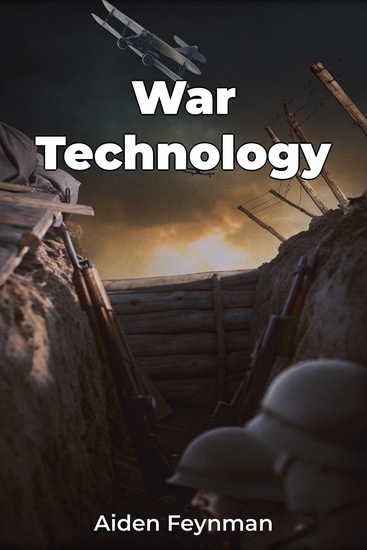
War Technology - cover

War Technology

Aiden Feynman

Translator A AI

Publisher: Publifye

  • 0
  • 0
  • 0

Summary

War Technology explores the intricate relationship between technological innovation and military history, revealing how advancements have consistently reshaped warfare. It examines the evolution of weaponry, from gunpowder's initial impact to the rise of artificial intelligence, emphasizing that technological superiority alone doesn't guarantee victory. The book uniquely highlights how human ingenuity and strategic thinking adapt to and often mitigate the impact of new weapons, showcasing that the human element remains crucial in warfare.This study emphasizes the interplay between military technology and societal change, analyzing the development and deployment of specific technologies in war. For instance, the industrial revolution spawned machine guns and armored vehicles, drastically influencing military strategy. It progresses chronologically, beginning with gunpowder's revolutionary impact on siege warfare, then moves through the industrial revolution, and dedicates significant attention to 20th and 21st-century developments like nuclear weapons and cyber warfare.
Available since: 02/17/2025.
Print length: 72 pages.

Other books that might interest you

  • Face Failure - Characteristics of Leaders Who Have Successfully Recovered from Significant Setbacks - cover

    Face Failure - Characteristics...

    Brittany Forrester

    • 0
    • 0
    • 0
    The etymology of the word fail is derived from the French word faillir, which means “almost to do.” Faillir is derived from the Latin word fallere, which means to deceive or lead into error. These definitions imply that when people fail, they do not follow through with their intentions, and those who believed that they would be in some way deceived. 
    People who experience failure can feel a sense of shame. This emotional response can cause them to suppress their feelings, deflect the responsibility of the failure, neglect to learn from the valuable lessons, and thwart the possibility for future success. 
    As Winston Churchill so eloquently said, “Success is not final, failure is not fatal: it is the courage to continue that counts.”
    Show book
  • Mellon vs Churchill - The Untold Story of Treasury Titans at War - cover

    Mellon vs Churchill - The Untold...

    Jill Eicher

    • 0
    • 0
    • 0
    Andrew Mellon, one of the most accomplished businessmen of his era, is almost unknown today. To this shy, diffident (but brilliant) man fell the daunting task of collecting the war debts from European governments still devastated by WWI and struggling to recover economically. Dealing with the US Congress and the heads of foreign governments on the world stage became one of the great adventures of his life. Winston Churchill is one of the best-known figures in history. Mellon vs. Churchill presents Churchill through a different lens, focusing on his service as Chancellor of the Exchequer when Great Britain was the largest debtor to the US. That he became the most vocal critic of American foreign policy during that time is a scarcely told chapter of economic history—and his contentious debate with Mellon has seldom been explored. 


    Yet, while Churchill served as Chancellor of the Exchequer, Mellon was his counterpart at the US Treasury, and their debate and fierce differences of opinion about the handling of what Churchill called "the monstrous war debts" made frequent headlines on both sides of the Atlantic. No mention of any of their five meetings are included in the official biographies of either man. Now these confrontations are brought to vivid life in Mellon vs. Churchill, as are many other vignettes from their public, but largely forgotten, rivalry.
    Show book
  • Self-Reliance - cover

    Self-Reliance

    Ralph Waldo Emerson

    • 0
    • 0
    • 0
    "Self-Reliance" is an 1841 essay written by American transcendentalist philosopher and essayist Ralph Waldo Emerson. It contains the most thorough statement of one of Emerson's recurrent themes: the need for each individual to avoid conformity and false consistency, and follow his own instincts and ideas. It is the source of one of Emerson's most famous quotations: "A foolish consistency is the hobgoblin of little minds, adored by little statesmen and philosophers and divines. 
    Emerson focuses on seemingly insignificant details explaining how life is "learning and forgetting and learning again".
    Show book
  • Life As Dance: The Lost Wisdom of Ralph Waldo Emerson - cover

    Life As Dance: The Lost Wisdom...

    Ralph Waldo Emerson

    • 0
    • 0
    • 0
    Ralph Waldo Emerson was an American essayist, lecturer, philosopher, abolitionist, and poet who led the transcendentalist movement of the mid19th century. He was seen as a champion of individualism and a prescient critic of the countervailing pressures of society, and his ideology was disseminated through dozens of published essays and more than 1,500 public lectures across the United States. 
      
    Emerson gradually moved away from the religious and social beliefs of his contemporaries, formulating and expressing the philosophy of transcendentalism in his 1836 essay "Nature". Following this work, he gave a speech entitled "The American Scholar" in 1837, which Oliver Wendell Holmes Sr. considered to be America's "intellectual Declaration of Independence." 
      
    Emerson wrote most of his important essays as lectures first and then revised them for print. His first two collections of essays, Essays: First Series and Essays: Second Series, represent the core of his thinking. They include the well-known essays "SelfReliance", "The OverSoul", "Circles", "The Poet", and "Experience." Together with "Nature", these essays made the decade from the mid1830s to the mid1840s Emerson's most fertile period. Emerson wrote on a number of subjects, never espousing fixed philosophical tenets, but developing certain ideas such as individuality, freedom, the ability for mankind to realize almost anything, and the relationship between the soul and the surrounding world. Emerson's "nature" was more philosophical than naturalistic: "Philosophically considered, the universe is composed of Nature and the Soul." Emerson is one of several figures who "took a more pantheist approach by rejecting views of God as separate from the world."
    Show book
  • A Rare Recording of William Butler Yeats Reading His Poetry - cover

    A Rare Recording of William...

    William Butler Yeats

    • 0
    • 0
    • 0
    The following are the live recordings of William Butler Yeats reading and discussing the inspiration behind three of his most famous poems, "The Lake Island of Innisfree," "The Fiddler of Dooney," and "Song of the Old Mother." Yeats made these three recordings in 1932, 1934, and on October 28, 1937 when he was 72. 
     
    "The Lake Island of Innisfree" is a twelve-line poem comprising three quatrains, written in 1888 and first published in the National Observer in 1890. The poem is featured in Irish passports. "The Fiddler of Dooney" was first published in 1892. The word "Dooney" refers to Dooney Rock, a small hill overlooking Lough Gill near Sligo. The central theme of poem is the celebration of life and the joy that comes from living it to the fullest. "Song of the Old Mother" first appeared in The Wind Among the Reeds anthology, published in 1899. Written in first person, the poem echoes Yeats' fascination with the Irish peasantry, explaining the difficult chores and struggles of an aged, unfortunate woman.
    Show book
  • MIND Secrets: Transform Your Birth Experience Today - "Elevate your birth experience! Discover transformative audio lessons for a powerful delivery" - cover

    MIND Secrets: Transform Your...

    Bastian Farrow

    • 0
    • 0
    • 0
    MIND Secrets: Transform Your Birth Experience Today 
    ⭐⭐Simplified Guide & Explanations Included⭐⭐ 
    Are you ready to elevate your childbirth journey and gain deeper insights for a transformative experience? 
    Searching for an all-encompassing resource that offers everything you need to achieve a holistic childbirth experience?  
    Look no further! 
    This guide is your essential companion for expanding your knowledge, honing your skills, and engaging in practical exercises. With this resource, you're set for a remarkable transformation. 
    Updated to reflect the latest practices in holistic childbirth. 
    Key features of this enhanced guide: 
    - Comprehensive insights about transformative childbirth experiences. 
    - In-depth explanations on the principles of holistic childbirth. 
    - Effective strategies for preparation and navigating the journey. 
    Our guide stands out due to its thorough coverage, ensuring you have every tool necessary for a successful childbirth experience. We delve deeply into concepts; they are not just touched upon but explored in detail. 
    Please note that this guide is an independent resource and is not affiliated with any official childbirth organization. 
    Crafted with a straightforward structure and user-friendly language, our guide guarantees smooth transitions from one topic to the next. Say goodbye to complex jargon and embrace clear, concise, and technically accurate content. 
    So, why wait? Click the BUY NOW button, secure your guide, and start your journey towards a transformative birth experience today! 
    Unlock the secrets to a transformative birthing experience today!
    Show book