Join us on a literary world trip!
Add this book to bookshelf
Grey
Write a new comment Default profile 50px
Grey
Subscribe to read the full book or read the first pages for free!
All characters reduced
When we were very young - Whimsical Verses of Childhood Magic and Wonder - cover

When we were very young - Whimsical Verses of Childhood Magic and Wonder

A. A. Milne

Publisher: Good Press

  • 0
  • 0
  • 0

Summary

In "When We Were Very Young," A. A. Milne crafts a whimsical tapestry of childhood innocence through a collection of poems that captures the joys and trials of youth. This charming work employs lighthearted rhyme and vivid imagery, inviting readers into a world of imagination and wonder. Milne'Äôs literary style is characterized by its playful language and subtle profundity, resonating with both children and adults. The poems are set against the backdrop of early 20th-century England, reflecting a simpler time infused with joy and nostalgia, thus situating the collection within the broader context of children's literature that aspires to celebrate the magic of youth. A. A. Milne, best known for his beloved creation of Winnie-the-Pooh, was deeply influenced by his own experiences as a father and his fondness for the imaginative play of children. Growing up in a middle-class English family, Milne's literary pursuits were initially shaped by his education at the prestigious Westminster School. The poems in this collection mirror his intent to preserve childlike wonder and convey the universal experiences of children, which remain timeless and relatable. For readers seeking a heartfelt exploration of childhood, "When We Were Very Young" is a delightful invitation to reconnect with one's inner child. Milne's ability to evoke nostalgia and joy makes this collection a valuable addition to any bookshelf. Its blend of whimsy and genuine emotion offers both entertainment and reflection, ensuring its place as a cherished classic in the realm of children's literature.
Available since: 07/10/2023.
Print length: 87 pages.
Other books that might interest you

  • For Those in the Midst of It - Reflections on life and love; hurt and hope - cover

    For Those in the Midst of It -...

    Gloria

    • 0
    • 0
    • 0
    ...I write for me// If you're a me like me// I write for you too... 
      
    After a few years of writing, Gloria began collecting poems and reflections. This is that collection. They depict snapshots of her journey through life and hurt, love and hope; and God's grace through it all. They were written for her, but also for all those who need to read them. She prays these words inspire and encourage. 
     
    Show book
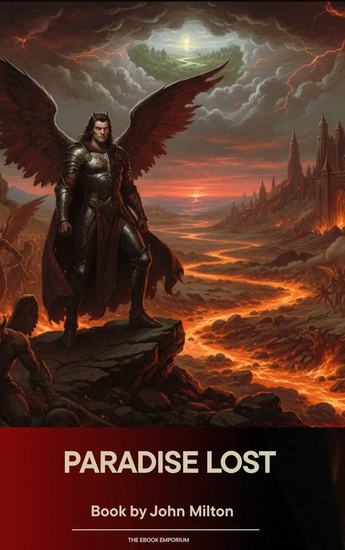
  • Paradise Lost - cover

    Paradise Lost

    John Milton

    • 0
    • 0
    • 0
    "Better to reign in Hell, than serve in Heaven."
    
    In the wake of a failed cosmic rebellion, the fallen archangel Satan awakens on a burning lake of fire. Undefeated in spirit, he rallies his legions of demons to build the palace of Pandemonium and plots a subtle revenge against the Almighty. His target? God's newest and most beloved creation: Humanity. Milton's masterpiece takes us from the depths of Tartarus to the heights of the Empyrean, and finally to the lush, innocent borders of the Garden of Eden. Here, we witness the tragic temptation of Adam and Eve, a choice that changes the course of human history forever.
    
    The Greatest Antagonist in Literature: Milton's Satan is a character of terrifying complexity. He is a charismatic leader, a tormented intellectual, and a "tragic hero" whose pride leads to his inevitable ruin. His journey from a shining angel to a crawling serpent is one of the most powerful character arcs ever written, influencing centuries of "Byronic heroes" and anti-heroes.
    
    The Beauty of the Fall: While Satan's rebellion provides the spectacle, the emotional heart of the poem lies in Book IX, where Adam and Eve face the serpent. Milton portrays their relationship with profound psychological depth, exploring themes of free will, reason, and the heavy burden of knowledge. The final lines of the poem, as the pair walks hand-in-hand out of Eden into a "subject world," are among the most moving in all of literature.
    
    The Power of Blank Verse: Discarding the "bondage of rhyming," Milton used unrhymed iambic pentameter (blank verse) to create a sense of vast, architectural scale. The language is dense, musical, and filled with classical allusions, creating a reading experience that feels truly "epic."
    
    Step into the cosmic theater. Purchase "Paradise Lost" today and witness the struggle for the soul of the world.
    Show book
  • The Glass Menagerie - cover

    The Glass Menagerie

    Tennessee Williams

    • 0
    • 0
    • 0
    Tennessee Williams’s iconic work is an evocative memory-play about an eccentric Southern family revolving around the domineering Amanda Wingfield and her grown children: the cynical Tom and the fragile Laura. This L.A. Theatre Works production reunites the cast of the Roundabout Theatre’s celebrated revival, which earned Drama Desk Awards for Kevin Kilner as Jim, and, in her Broadway debut, Calista Flockhart as Laura.


    Recorded at KCRW, Santa Monica in January 1996.


    Directed by Gordon House
     
    Producing Director: Susan Albert Loewenberg


    An L.A. Theatre Works full-cast recording, starring:


    Calista Flockhart as Laura Wingfield
     
    John Goodman as The Narrator
     
    Julie Harris as Amanda Wingfield
     
    Zeljko Ivanek as Tom Wingfield
     
    Kevin Kilner as Jim


    Recording Engineer: Theo Mondle
     
    Stage Manager and Live Sound Effects: Jode Ryskiewicz


    A co-production with the BBC and KCRW, Santa Monica.
    Show book
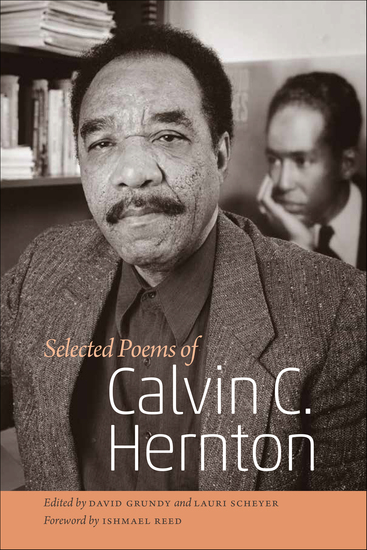
  • Selected Poems of Calvin C Hernton - cover

    Selected Poems of Calvin C Hernton

    Calvin C. Hernton

    • 0
    • 0
    • 0
    This volume promises to be the definitive guide to Calvin C. Hernton's unparalleled poetic career, re-introducing readers to a major voice in American poetry. Hernton was a cofounder of the Umbra Poets Workshop; a participant in the Black Arts Movement, R. D. Laing's Kingsley Hall, and the Antiuniversity of London; and a teacher at Oberlin College who counted amongst his friends bell hooks, Toni Morrison, and Odetta. As a pioneer in the field of Black Studies, Hernton developed a theoretical and practical pedagogy with lasting impact on generations of students. He may be best known as an anti-sexist sociologist, following in the footsteps of W.E.B. Du Bois, but Hernton viewed himself, above all, as a poet. This volume includes a generous selection of Hernton's previously published poems, from classics like the often anthologized "The Distant Drum" to the visionary epic The Coming of Chronos to the House of Nightsong, reprinted in full for the first time since 1964, alongside uncollected and unpublished material from the Calvin C. Hernton papers at Ohio University, a new critical introduction, and detailed notes, chronology, and bibliography.[sample poem]The Distant DrumI am not a metaphor or symbol.This you hear is not the wind in the trees.Nor a cat being maimed in the street.I am being maimed in the streetIt is I who weep, laugh, feel pain or joy.Speak this because I exist.This is my voiceThese words are my words, my mouthSpeaks them, my hand writes.I am a poet.It is my fist you hear beatingAgainst your ear.
    Show book
  • Haunted Hearts - A small town enemies to lovers ex-military standalone - cover

    Haunted Hearts - A small town...

    Ariana Cane

    • 0
    • 0
    • 0
    A woman on the run meets a grumpy ex-havy recluse hated by everyone in town in this steamy small-town romance. 
    “My heart demands I be near this broken man. Maybe we can be broken together.” 
    Alex: 
    The only thing I’ve ever wanted was to be left alone in my secluded cabin, deep in the woods. I wear my scars as a badge of dishonor to ensure that people will stay away from me. And severe PTSD after years in the Navy just about seals the deal. 
    And this is how I like it: alone and quiet… 
    Until a beautiful trouble gets dumped on my doorstep. 
    Freya: 
    The only thing I want is to fix my car and get the hell away from Little Hope, where I got stuck thanks to a popped tire and ‘helpful’ locals. Unfortunately, fate - apparently - has other plans for me. 
    That’s how I find myself at Alex’s doorstep. A local ex-navy recluse, Alex is rude, obnoxious, and scorching as hell with his grumpiness and f-off attitude. 
    I just want to run from this little town and from this growly man people constantly warn me about. But why does he suddenly feel like home? 
    They say All Roads Lead to Maine. But do they end there? 
    This slow-burn, strangers-to-enemies-to-lovers, contemporary romance is a standalone filled with angst, battling the demons of the past, and finding peace. Each book contains a story about a different couple. No cheating. No cliffhangers. HEA.
    Show book
  • The Book of Hours - a new poetic translation for devotional use - cover

    The Book of Hours - a new poetic...

    Rainer Maria Rilke, Brett Alan...

    • 0
    • 0
    • 0
    Written at the turn of the twentieth century, The Book of Hours is one of the most significant works of modern German poetry. There has never been an English translation that preserved the tight poeticism and Christian mysticism of the original until now. In this long poem, the narrator-poet is a monk and icon painter desperately trying to see God in a way that his art can’t capture. Over three sections (The Book of Monkish Life, The Book of Pilgrimage, and The Book of Poverty & Death), Rilke takes the narrator on a journey from the pastoral lands of his monastery to the bustling and inhuman cities of the world on a quest to make sense of God's central mystery. A variety of images recur: building, trees (roots and fruits), ripening, ore, and what Rilke simply calls "the things". Through these motifs, the narrator seeks to understand God by exploring imagery that is the inverse of the usual Biblical symbols. What can we learn by thinking of God as darkness, as son, as poor neighbor, or as the rock that runs through the earth...? And, ultimately, what truly are poverty and death to the holy pilgrim?
    Show book