Junte-se a nós em uma viagem ao mundo dos livros!
Adicionar este livro à prateleira
Grey
Deixe um novo comentário Default profile 50px
Grey
Assine para ler o livro completo ou leia as primeiras páginas de graça!
All characters reduced
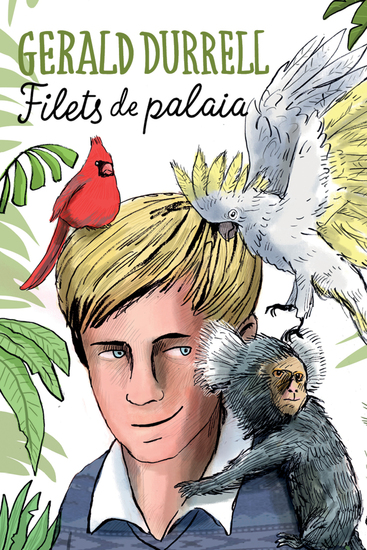
Filets de palaia - cover
LER

Filets de palaia

Gerald Durrell

Editora: L'Altra editorial

  • 0
  • 0
  • 0

Sinopse

En moltes de les seves obres, Gerarld Durrell va recorre al gènere del relat i de l'humor per fer-nos arribar històries inspirades en la seva vida. Filets de palaia (1971) n'és un bon exemple. En aquest recull de sis peces, traduïdes i actualitzades per en Pep Julià, hi trobareu una accidentada travessia en barca per Corfú amb la família Durrell al complet, molts convidats i una nevera gegant a bord —«La festa d'aniversari»—, un jove Durrell en ple descobriment de la seva vocació treballant en una botiga d'animals i d'una fila de personatges extravagants —«Un trasllat de tortugues d'estany»—, la batussa amb una bamba negra en un esbojarrat sopar al Camerun —«L'ascens»—, i humor absurd i rialles incontenibles en «Una qüestió de jerarquia» i «Úrsula», el primer amor de Durrell, un personatge molt peculiar i impossible d'oblidar.
Disponível desde: 25/03/2026.
Comprimento de impressão: 226 páginas.

Outros livros que poderiam interessá-lo

  • La pena de mort - cover

    La pena de mort

    Gabriel Alomar

    • 0
    • 0
    • 0
    "La pena de mort" by Gabriel Alomar is a philosophical treatise written in the early 20th century. This non-fiction book explores the concept of capital punishment within the framework of social justice and morality. Alomar engages deeply with the historical context and ideological implications of the death penalty, arguing against its justification and the societal implications it carries. In his exploration, Alomar presents a compelling critique of capital punishment as a form of state-sanctioned violence and vengeance. He argues that the death penalty is not only a violation of human rights but also a ritualistic act deeply intertwined with societal and religious traditions. Throughout the text, he discusses the psychological and moral ramifications of the death penalty, including its effects on families of the condemned and society as a whole. Alomar presents a vision where the abolition of capital punishment could pave the way for a more humane and morally just society, advocating for a re-evaluation of justice that emphasizes rehabilitation over retribution. His poignant reflections challenge readers to reconsider the ethics of state-sanctioned executions and the underlying motives behind them. This Catalan-language digital edition is prepared with active navigation, clean typography, a custom cover and a reading file stripped of source-site notices, donation text and unnecessary external links.
    Ver livro
  • L'estudiant de la Garrotxa: Novela de costums - cover

    L'estudiant de la Garrotxa:...

    Josep Berga i Boix

    • 0
    • 0
    • 0
    "L'estudiant de la Garrotxa" by Josep Berga i Boix is a novel written in the late 19th century. Set between Girona and the stark valleys and cliffs of La Garrotxa, it follows a poor seminarian who discovers a talent for decorative painting, rises to local renown, and is pulled between priesthood, art, and his growing love for Margarida, the rector's niece. The story blends lively portraits of student poverty and small-town life with an intimate emotional conflict over vocation and desire. The opening of the work presents a first-person narrator among a band of penniless seminarians in Girona, hustling for food and lodging while he earns coins modeling pessebre figures and learning gilding. His craft brings him to paint chapels, first in Girona and then in a Garrotxa village, where the kindly rector Mossèn Anton hosts him and his niece Margarida quietly captivates him. As they decorate the church together, shared glances, garden walks, and whispered exchanges turn affection into a consuming inward struggle that clashes with his supposed calling. The narrator's fame grows, yet seeing older masterful canvases humbles him and pushes him to study drawing seriously. Sent to an isolated hermitage, he endures comic overfeeding at a farmer's house, returns by pretext to the rectory, and faces village gossip and the suspicious eye of the fiery vicar Mossèn Just. Forced back to Girona, he parts from Margarida in a painful dawn farewell, throws himself into drawing and small commissions, and then a chance encounter with the vicar shakes his resolve to return—leaving the early narrative poised at a tense crossroads. This Catalan-language digital edition is prepared with active navigation, clean typography, a custom cover and a reading file stripped of source-site notices, donation text and unnecessary external links.
    Ver livro
  • La Mare-Balena - cover

    La Mare-Balena

    Víctor Català

    • 0
    • 0
    • 0
    "La Mare-Balena" by Víctor Català is a novel likely written in the early 20th century. The narrative unfolds in a coastal village, primarily following Ricardet, the son of a café owner who has endured illness and loss. As Ricardet moves to this new environment, themes of class difference, childhood rivalry, and the struggle against fate emerge as central elements of the story. The opening of "La Mare-Balena" introduces Ricardet and his father, a café owner whose decline in health prompts a return to their native village. Here, Ricardet grapples with feelings of alienation among local children who resent his perceived superiority. He struggles to fit in while also feeling the weight of his father's illness and expectations. As he attempts to join a group of boys planning an adventure to an islet known as Mare-Balena, tensions rise, culminating in a tragic turn of events. This early section sets the stage for exploring Ricardet's development, the harsh realities of childhood competition, and the complexities of familial love amid adversity. This Catalan-language digital edition is prepared with active navigation, clean typography, a custom cover and a reading file stripped of source-site notices, donation text and unnecessary external links.
    Ver livro
  • L'Abrandament - cover

    L'Abrandament

    Carles Soldevila

    • 0
    • 0
    • 0
    "L'Abrandament" by Carles Soldevila is a novel written in the early 20th century." The story revolves around En Llucià, a convalescent recovering from an illness, and his sister Angelina, as they navigate the complexities of life, relationships, and societal expectations. Set against a backdrop of personal and existential reflection, it delves into themes of mediocrity, domestic life, and the nuances of human connection. "The opening of "L'Abrandament" introduces us to En Llucià's gradual recovery from illness and his interactions with Angelina, who is dedicated to his care." As he begins to regain his strength, he daydreams about food, expressing a deep craving for sustenance and indulging in pleasant memories tied to meals. Their bond is highlighted during discussions about their plans for a future trip, showcasing both camaraderie and underlying tensions. The narrative paints a vivid picture of their domestic setting and hints at the broader implications of their lives amidst the emerging complexities relationships will bring as they re-enter society. This Catalan-language digital edition is prepared with active navigation, clean typography, a custom cover and a reading file stripped of source-site notices, donation text and unnecessary external links.
    Ver livro
  • La plaça del Diamant - cover

    La plaça del Diamant

    Mercè Rodoreda

    • 1
    • 1
    • 0
    "Distingida amiga: Arribo al despatx mort de son, per culpa de vostè. M'he passat la nit en blanc llegint la seva novel·la, sense poder deixar-la. Feia molt de temps que cap llibre no m'havia tret el son d'aquesta manera. Trobo aquesta novel·la simplement formidable. És la seva obra mestra." (Carta de Joan Sales a Mercè Rodoreda, 1961)"Totes aquestes pàgines, poètiques i patètiques, sense un gra de sentimentalisme, m'han emocionat profundament, i les últimes m'han deixat sense alè. Sembla mentida que amb elements tan simples es pugui arribar a una tensió tan extraordinària, a estones inaguantable. Se m'ha nuat el coll tres o quatre vegades, hi ha pàgines d'una veritat que esborrona. Aquest equilibri perfecte entre el dramatisme, la poesia i la banalitat, molt poca gent el deu haver aconseguit. I t'ho dic, no després de llegir una novel·la policíaca, sinó després d'acabar —immediatament després d'acabar— Els posseïts de Dostoievski." (Carta d'Armand Obiols a Mercè Rodoreda, 1960)"Pocas personas saben fuera de Cataluña quién era esa mujer invisible que escribía en un catalán espléndido unas novelas hermosas y duras como no se encuentran muchas en las letras actuales. Una de ellas —La plaza del Diamante— es, a mi juicio, la más bella que se ha publicado en España después de la Guerra Civil. Mi deslumbramiento fue apenas comparable al que me había causado la primera lectura de Pedro Páramo, de Juan Rulfo, aunque los dos libros no tienen en común sino la transparencia de su belleza." (Gabriel García Márquez, 1983)
    Ver livro
  • Pinya de Rosa Volume 1 Books 1-3 - cover

    Pinya de Rosa Volume 1 Books 1-3

    Joaquin Ruyra

    • 0
    • 0
    • 0
    "Pinya de Rosa, Volume 1, Books 1-3" by Joaquín Ruyra is a collection of narratives published in 1920. Named after a sailor's knot, this work gathers sea-related stories that helped restore the Catalan writer to literary prominence. The collection includes adapted tales from an earlier work alongside new pieces written between 1919 and 1920. Structured across multiple books, it features impressions, fantasies, and novellas that blend costumbrista traditions with modernist influences, all set against descriptions of serene Mediterranean waters. This Catalan-language digital edition is prepared with active navigation, clean typography, a custom cover and a reading file stripped of source-site notices, donation text and unnecessary external links.
    Ver livro