Rejoignez-nous pour un voyage dans le monde des livres!
Ajouter ce livre à l'électronique
Grey
Ecrivez un nouveau commentaire Default profile 50px
Grey
Abonnez-vous pour lire le livre complet ou lisez les premières pages gratuitement!
All characters reduced
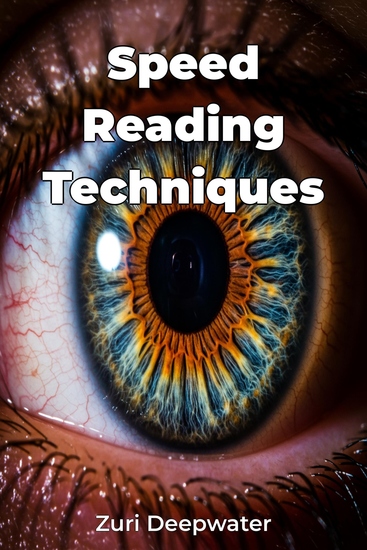
Speed Reading Techniques - cover

Speed Reading Techniques

Zuri Deepwater

Traducteur A Ai

Maison d'édition: Publifye

  • 0
  • 0
  • 0

Synopsis

Speed Reading Techniques offers a practical guide to enhancing reading speed and comprehension, drawing from cognitive science to optimize information processing. The book challenges the notion that speed reading sacrifices understanding, instead advocating for efficient reading through techniques focused on eye movement optimization, comprehension enhancement, and retention strategies. Did you know that the human brain possesses a remarkable capacity for rapid information intake and adaptation when the right techniques are applied? This book seeks to unlock that potential.

 
The book progresses from debunking myths about reading to introducing foundational principles and then explores active reading and note-taking methods. The final section details long-term retention techniques. What makes this book unique is its focus on cognitive flexibility, encouraging readers to tailor strategies to their individual needs. Rather than a one-size-fits-all approach, it provides a data-driven roadmap for improvement, balancing theoretical explanations with real-world examples applicable to management, psychology, and business management scenarios.
Disponible depuis: 22/02/2025.
Longueur d'impression: 101 pages.

D'autres livres qui pourraient vous intéresser

  • A Short History of the Printing Press - And of the Improvements in Printing Machinery from the Time of Gutenberg up to the Present Day - cover

    A Short History of the Printing...

    Robert Hoe

    • 0
    • 0
    • 0
    In A Short History of the Printing Press And of the Improvements in Printing Machinery from the Time of Gutenberg up to the Present Day, Robert Hoe explores the remarkable evolution of one of humanity’s most influential innovations: the printing press. 
     
    From Gutenberg’s revolutionary early designs to the rapid technological advancements that reshaped publishing and communication, this work traces how printing machinery transformed the spread of knowledge, literature, commerce, and culture across centuries. 
     
    Blending historical insight with industrial innovation, this fascinating account reveals the machinery, craftsmanship, and ingenuity behind the printed word—and the enduring impact of print on modern civilization. 
     
    Narrated by Marcus Locke, this audiobook delivers an engaging and accessible journey through the history of communication and technological progress.
    Voir livre
  • In the Name of Emmett Till - How the Children of the Mississippi Freedom Struggle Showed Us Tomorrow - cover

    In the Name of Emmett Till - How...

    Robert H. Mayer, Leslie-Burl...

    • 0
    • 0
    • 0
    The killing of Emmett Till is widely remembered today as one of the most famous examples of lynchings in America. African American children in 1955 personally felt the terror of his murder. From the violent Woolworth's lunch-counter sit-ins in Jackson to the school walkouts of McComb, the young people of Mississippi picketed, boycotted, organized, spoke out, and marched, working to reveal the vulnerability of black bodies and the ugly nature of the world they lived in. These children changed that world. 


    In the Name of Emmett Till: How the Children of the Mississippi Freedom Struggle Tore Down Yesterday and Showed Us Tomorrow weaves together the riveting tales of those young women and men of Mississippi, figures like Brenda Travis, the Ladner sisters, and Sam Block who risked their lives to face down vicious Jim Crow segregation. Listeners also discover the adults who guided the young people, elders including Medgar Evers, Robert Moses, and Fannie Lou Hamer. 


    This inspiring new book of history for young adults from award-winning author Robert H. Mayer is an unflinching portrayal of life in the segregated South and the bravery of young people who fought that system. As the United States still reckons with racism and inequality, the activists working In the Name of Emmett Till can serve as models of activism for young people today.
    Voir livre
  • Bookends - Collected Intros and Outros - cover

    Bookends - Collected Intros and...

    Michael Chabon

    • 0
    • 0
    • 0
    A brilliant, idiosyncratic collection of introductions and afterwords (plus some liner notes) by New York Times bestselling and Pulitzer Prize winning author Michael Chabon—“one of contemporary literature’s most gifted prose stylists” (Michiko Kakutani, New York Times). 
    In Bookends, Pulitzer Prize winning author Michael Chabon offers a compilation of pieces about literature—age-old classics as well as his own—that presents a unique look into his literary origins and influences, the books that shaped his taste and formed his ideas about writing and reading. 
    Chabon asks why anyone would write an introduction, or for that matter, read one. His own daughter Rose prefers to skip them. Chabon's answer is simple and simultaneously profound: ""a hope of bringing pleasure for the reader."" Likewise, afterwords—they are all about shared pleasure, about the ""pure love"" of a work of art that has inspired, awakened, transformed the reader. Ultimately, this thought-provoking compendium is a series of love letters and thank-you notes, unified by the simple theme of the shared pleasure of discovery, whether it's the boyhood revelation of the most important story in Chabon's life (Ray Bradbury's ""The Rocket Man""); a celebration of ""the greatest literary cartographer of the planet Mars"" (Edgar Rice Burroughs, with his character John Carter); a reintroduction to a forgotten master of ghost stories (M. R. James, ironically ""the happiest of men""); the recognition that the worlds of Wes Anderson's films are reassembled scale models of our own broken reality (as is all art); Chabon's own rude awakening from the muse as he writes his debut novel, The Mysteries of Pittsburgh; or a playful parody of lyrical interpretation in the liner notes for Mark Ronson's Uptown Special, the true purpose of which, Chabon insists, is to ""spread the gospel of sensible automotive safety and maintenance practices."" 
    Galaxies away from academic or didactic, Bookends celebrates wonder—and like the copy of The Phantom Tollbooth handed to young Michael by a friend of his father he never saw again—it is a treasured gift.
    Voir livre
  • Florida Lore - The Barefoot Mailman Cowboy Bone Mizell the Tallahassee Witch and Other Tales - cover

    Florida Lore - The Barefoot...

    Caren Schnur Neile

    • 0
    • 0
    • 0
    This fascinating collection of myths, legends, and folktales celebrates the diversity of characters and cultures across the Sunshine State. 


    Florida boasts mysterious tales that stretch back more than twelve thousand years. Dive into the lives of the proud Wakulla Pocahontas and the Ghost of Bellamy Bridge. Meet local lawbreakers like John Ashley, as well as transplants like Ma Barker and Al Capone. Stalk stumpy gators or Hogzilla as they prowl Florida's swamps and suburbs. Discover the quintessential Cracker cowboy and the Barefoot Mailman, plus the origin of names like Boca Raton and Orlando. Storyteller Caren Neile, PhD, shares myths, legends, and folktales that reflect the diversity of characters and cultures that make Florida such a fascinating place.
    Voir livre
  • Twelve Conversations David Bohm - Brockwood Park UK and Gstaad Switzerland 1975 - cover

    Twelve Conversations David Bohm...

    J. Krishnamurti

    • 0
    • 0
    • 0
    1. What is truth and what is reality - 18 May 1975 Duration: 70 minutes• What is truth and what is reality?• Anything that thought thinks about or reflects upon or projects, that is reality.And that reality has nothing to do with truth.• The art of seeing is to place reality where it is, and not move that in order to gettruth. You can't get truth.• How am I to empty that consciousness and yet retain knowledge – otherwise Icouldn't function – and reach a state which will comprehend reality?2. Seeing 'what is' is action - 24 May 1975 Duration: 122 minutes• If truth is something totally different from reality then what place has action indaily life, in relation to truth and reality?• Seeing 'what is' is action.• What place has love in truth?Code: BRGSCB1-12-A-ENGCopyright © 1975, Krishnamurti Foundation Trust Ltd. www.jkrishnamurti.orgJ. KRISHNAMURTI• When I separate you, in that separation love cannot exist.• How are you to convey the sense of truth to a student?• As long as I live in the field of reality, which has its own energy, that energy willnot free me.• When the mind is empty, when the mind is nothing, not a thing, in that there isperception.3. Thought cannot bring about an insight - 31 May 1975 Duration: 81 minutes• Is there a thinking without the word?• The action brought about by thought into the investigation of an analysis isalways incomplete.• Insight is complete. It is not fragmented as thought is. So thought cannot bringabout an insight.• I must have an insight into conditioning otherwise I can't dissolve it.• What takes place when I have an insight that the observer is the observed?• In nothingness there is complete security and stability.4. The intelligence of love - 14 June 1975 Duration: 87 minutes• Why has desire become such an extraordinarily important thing in life?• How does desire arise from perception?• Can I desire truth?• Is the energy of nothingness different from the energy of things?• Is that nothingness a hypothesis, a theory, a verbal structure, or truth? • In dying to the reality only then there is nothingness.5. Attention implies that there is no centre - 22 June 1975Duration: 126 minutes• Consciousness, because it is in constant movement, has never found an energywhich is not contradictory, which is not produced by desire and thought.• Can thought ever see its own movement and the futility of its own movement? • Attention implies that there is no centre.• Is there a perception, a seeing outside the space which is part of consciousness? • Therearetwohumanbeings,onegetsconditionedandtheotherdoesn't.Why?How has it happened the other doesn't get conditioned?• How does this perception which is beyond attention, beyond awareness,beyond concentration come about?• Thought is rather superficial, it's merely a very small part of the operation of thebrain.• Can consciousness be completely empty of its content? • Order and disorder6. Perceiving without the perceiver - 28 June 1975 Duration: 139 minutes• Can thought naturally cease?• Perceiving without the perceiver• Facing the truth of death• Krishnamurti's 'process' and early years.• Kundalini• If you can understand suffering, face it and not escape from it, that has quite adifferent energy.• Truth is a pathless land.• There is something really tremendously mysterious.• Knowledge is becoming the curse.• When the mind, with all the confusion, is nothing, not a thing, then perhapsthere is the other.
    Voir livre
  • On Bullshit - Anniversary Edition - cover

    On Bullshit - Anniversary Edition

    Harry G. Frankfurt

    • 0
    • 0
    • 0
    One of the most prominent features of our world is that there is so much bullshit. Yet we have no clear understanding of what bullshit is, how it’s different from lying, what purposes it serves, and what it means. In his acclaimed bestseller On Bullshit, which was featured on The Daily Show and 60 Minutes, Harry Frankfurt, who was one of the world’s most influential moral philosophers, explores one of the most serious problems of our politics and our world. This twentieth anniversary edition features a postscript in which Frankfurt emphasizes that “indifference to the truth is extremely dangerous.” 
      
    With his characteristic combination of philosophical acuity, psychological insight, and wry humor, Frankfurt argues that bullshitters misrepresent themselves to their audience not as liars do—that is, by deliberately making false claims about what’s true. Rather, bullshitters seek to convey a certain impression of themselves without being concerned about whether anything at all is true. They quietly change the rules governing the conversation so that claims about truth and falsity are irrelevant. Although bullshit can take innocent forms, excessive indulgence in it can eventually undermine the bullshitter’s capacity to tell the truth in a way that lying doesn’t. Liars at least acknowledge that the truth matters. Because of this, Frankfurt says, “bullshit is a greater enemy of the truth than lies are.” 
      
    Remarkably prescient and insightful, On Bullshit is a small book that explains a great deal about our time. 
      
    "Harry G. Frankfurt [was] the world’s foremost authority on bullshit … In our current political climate, [his] words sound prescient to the point of redundancy."—Ron Charles, Washington Post
    Voir livre