Join us on a literary world trip!
Add this book to bookshelf
Grey
Write a new comment Default profile 50px
Grey
Subscribe to read the full book or read the first pages for free!
All characters reduced
Lightbulb’s Bright History - cover

Lightbulb’s Bright History

Zuri Deepwater

Translator A AI

Publisher: Publifye

  • 0
  • 0
  • 0

Summary

Lightbulb's Bright History illuminates the captivating narrative of electric light, exploring its evolution from experimental curiosity to a world-altering technology. It wasn't merely an invention; it was a catalyst that reshaped society. The book highlights the intense competition between inventors like Thomas Edison and Joseph Swan, whose race to create a practical incandescent lamp involved not only scientific breakthroughs but also legal battles.

 
Before the lightbulb, our world was dictated by the limited hours of daylight, but this innovation unlocked unprecedented levels of productivity and transformed urban landscapes. The book presents a comprehensive overview, starting with early experiments in electricity, then focusing on the incandescent lamp's development and the societal changes it spurred.

 
It reveals how the electric light enabled the rise of the 24-hour society and fueled the Industrial Revolution, with factories operating around the clock. This history isn't just about technology; it's about the societal impact technology had on economics, urbanization, and daily life. The book progresses chronologically, tracing the development of the lightbulb and its subsequent global adoption.

 
It examines the lightbulb through a socio-technical lens, recognizing the interplay of social, economic, and political forces. By exploring this invention history, the book offers valuable lessons on innovation and its far-reaching consequences, making it an engaging read for anyone interested in history and technology.
Available since: 02/27/2025.
Print length: 62 pages.

Other books that might interest you

  • Sucha Tilla Tay Hor Kahanian - cover

    Sucha Tilla Tay Hor Kahanian

    Maqsood Saqib

    • 0
    • 0
    • 0
    This book is written by Maqsood Saqib. "Sucha Tilla and Other Stories" is based on his other stories. Maqsood Saqib Hora is a prominent poet and storyteller from northern Punjab. The book contains a total of nine stories. In all these stories, the author has paid close attention to the characters, and the stories are also highly engaging. Among them, "Sucha Tilla" is a story that gives a unique pleasure when read, as if it has added a new color to the passage of time.
    Show book
  • Waterloo - cover

    Waterloo

    Thomas E. Watson

    • 0
    • 0
    • 0
    Excerpt from Chapter One 
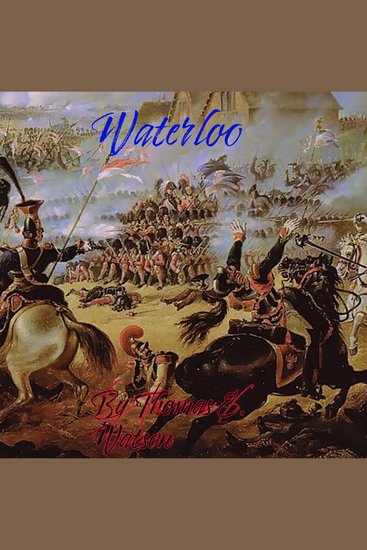
    In 1815 the Emperor was no longer a lean, sinewy, tireless, eternally vigilant human tiger—the Napoleon of Rivoli and Marengo. He was no longer the consummate General-in-Chief of Austerlitz and Wagram. The mysterious lethargy which had overwhelmed him at the critical hour of Borodino, when he withheld the order for the Old Guard to charge and convert the Russian defeat into a decisive disaster, had been the first visit of the Evil Genius which was to come again. The strange loss of the power to decide between two totally different lines of action, which, at the Château Düben had kept him idle two days, lolling on a sofa, or sitting at his writing-table tracing on the paper big school-boy letters, was to become a recurrent calamity, puzzling all who knew him, and paralyzing the action of his lieutenants in the most critical emergencies'. 
    At Leipsic the reins had fallen from his hands; only one permanent bridge over the deep river in his rear had been provided to let him out of the death trap; and when the strong currents of the rout tore through the frantic city, the great Napoleon drifted with the furious tide, whistling vacantly. 
    The same unexplainable eclipse of genius, which General E. P. Alexander described as occurring to Stonewall Jackson, in the Malvern Hill movements of our Civil War, happened to the French Emperor, time and again, after that first collapse at Borodino. 
    In Spain he ordered a madly reckless charge of his Polish Light Cavalry against the heights of Sommo Sierra, where the Spanish army was entrenched and where the position easily admitted of successful flanking, got his best troops wastefully butchered—and could not afterward remember who gave the order to charge! 
    In Dresden, in 1813, he had won a brilliant victory which needed only to be ruthlessly pushed; and he was pushing it with all his tremendous driving power when, in the twinkle of an eye, his Evil Genius descended upon him, took his strength away...
    Show book
  • The Civil War - cover

    The Civil War

    Julius Caesar

    • 0
    • 0
    • 0
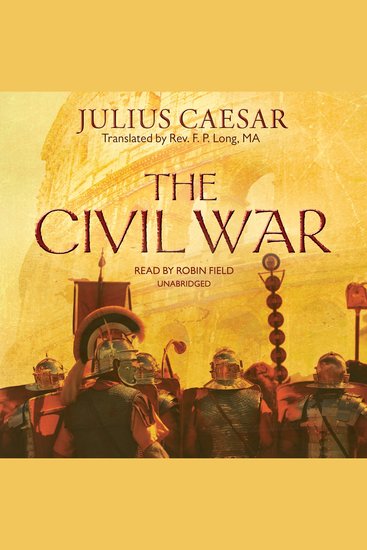
    The Civil War is Julius Caesar’s personal account of his war with Pompey the Great—the war that destroyed the five-hundred-year-old Roman Republic. Caesar the victor became Caesar the dictator. In three short books, Caesar describes how, in order to defend his honor and the freedom of both himself and the Roman people, he marched on Rome and defeated the forces of Pompey and the Senate in Italy, Spain, and Greece. Julius Caesar himself was one of the most eminent writers of the age in which he lived. His “commentaries” offer a unique opportunity to read the victor’s version of events.
    Show book
  • Countdown 1960: Book Summary & Analysis - cover

    Countdown 1960: Book Summary &...

    Briefly Summaries

    • 0
    • 0
    • 0
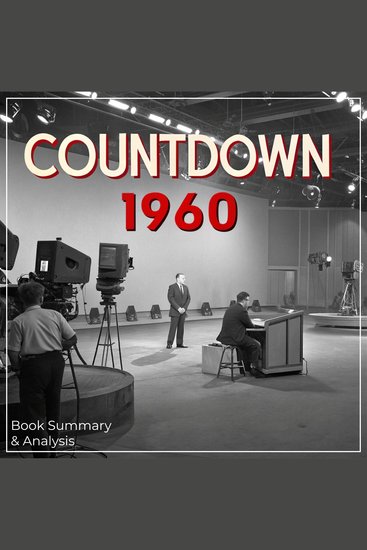
    This is a concise summary and analysis of Countdown 1960, by Chris Wallace.
     
    It is not the original book and is not affiliated with or endorsed by Chris Wallace.
     
    Ideal those seeking a quick and insightful overview.
    Countdown 1960 takes readers behind the scenes of one of the most pivotal years in American history. Set against the backdrop of the Cold War, civil rights struggles, and the space race, this gripping narrative delves into the high-stakes moments leading up to the 1960 U.S. presidential election. With unprecedented access to key figures and historical insights, the book offers a detailed exploration of how John F. Kennedy, Richard Nixon, and other influential leaders shaped the future of the nation during this defining year.
    Show book
  • The Child and the Curriculum - cover

    The Child and the Curriculum

    John Dewey

    • 0
    • 0
    • 0
    "The Child and the Curriculum" is a book written by John Dewey, an American philosopher, psychologist, and educational reformer, and published in 1902. The book is a collection of essays and lectures that explore Dewey's ideas about the relationship between the child and the curriculum in education. 
    Dewey argues that education should focus on the child's experiences and interests, rather than on a predetermined curriculum that is disconnected from the child's life. He advocates for a child-centered approach to education that emphasizes active learning, critical thinking, and problem-solving. 
    According to Dewey, the curriculum should be flexible and adaptable to the needs and interests of each child, rather than a fixed set of subjects that all students must learn. He also emphasizes the importance of hands-on, experiential learning, and the integration of subjects across disciplines. 
    Overall, "The Child and the Curriculum" is a seminal work in the field of education that continues to influence educational theory and practice today. Dewey's ideas about child-centered education, active learning, and the integration of subjects continue to shape the way educators think about teaching and learning
    Show book
  • Why Diets Don't Work - cover

    Why Diets Don't Work

    Elena Cross

    • 0
    • 0
    • 0
    This audiobook is narrated by an AI Voice.  
    "What if the reason you can’t stick to a diet has nothing to do with willpower—and everything to do with how your body and mind are designed? In this eye-opening audiobook, Vera Mindwell dismantles the myths behind the multibillion-dollar diet industry and exposes why restrictive eating plans almost always fail in the long run. Instead of blaming yourself for lack of discipline, you’ll discover how biological survival mechanisms, psychological rebound effects, and cultural pressures sabotage even the most determined attempts at weight loss. 
    Drawing from neuroscience, metabolic research, and behavioral psychology, Mindwell explains how dieting triggers the brain to fixate on food, slows the metabolism, and creates cycles of guilt, craving, and bingeing that feel impossible to escape. She reveals why short-term success often masks deeper hormonal and emotional disruptions—and why the “eat less, try harder” model is fundamentally flawed. More importantly, Why Diets Don’t Work offers a compassionate and evidence-based alternative. Learn how intuitive eating, body neutrality, and sustainable habits create lasting wellbeing without obsession or deprivation. Mindwell empowers you to rebuild trust with your body, break free from the diet mindset, and pursue health in a way that feels nourishing—not punishing. 
    If you’re exhausted by constant dieting, this audiobook offers relief, clarity, and a path toward true freedom."
    Show book