Join us on a literary world trip!
Add this book to bookshelf
Grey
Write a new comment Default profile 50px
Grey
Subscribe to read the full book or read the first pages for free!
All characters reduced
Truth [Vérité] - cover

Truth [Vérité]

Zola Émile

Translator -Ernest Alfred Vizetelly

Publisher: DigiCat

  • 0
  • 0
  • 0

Summary

In "Truth" ["Vérité"], Émile Zola embarks on a fearless exploration of the philosophical and moral implications of truth in the fabric of society. Written in Zola's characteristic naturalistic style, the book critiques the very belief systems that govern both personal integrity and communal responsibility. The narrative weaves vivid prose with incisive social commentary, delving into the struggles of individuals caught in the web of societal expectations. The literary context of this work situates it within the burgeoning realist movement of the late 19th century, marking Zola's endeavor to expose the real-life hardships faced by the marginalized in a rapidly industrializing world. Zola, a pivotal figure in the naturalist literary movement, was profoundly influenced by the turbulent socio-political landscape of his time, including the Dreyfus Affair, which underscored the importance of truth in public life. His journalistic background and relentless pursuit of social justice drove his ambition to highlight the often-ignored realities of human existence, particularly the moral dilemmas surrounding honesty and deceit. For readers intrigued by the intersection of morality and social critique, "Truth" presents a compelling examination of individual versus societal truths. It is a significant work for those interested in understanding the lasting relevance of Zola's insights within contemporary discussions about ethics, integrity, and the often-polarized nature of public truth.
Available since: 09/16/2022.
Print length: 623 pages.

Other books that might interest you

  • King Pest - cover

    King Pest

    Sampi Books, Edgar Allan Poe

    • 0
    • 0
    • 0
    "King Pest" is a short story by Edgar Allan Poe in which two drunken sailors, Legs and Hugh, enter a strange house during a plague in London. There, they encounter a bizarre court led by King Pest and his grotesque entourage, resulting in strange and darkly funny events.
    Show book
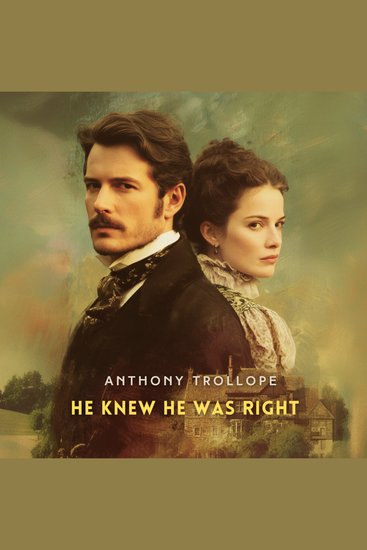
  • He Knew He Was Right Volume 2 - cover

    He Knew He Was Right Volume 2

    Anonymous

    • 0
    • 0
    • 0
    "He Knew He Was Right" by Anthony Trollope unfolds the tragic tale of Louis Trevelyan, a man whose obsessive jealousy unravels his marriage and his life. Confident in his suspicion about his wife Emily's fidelity, Trevelyan's relentless pursuit of control and vindication leads him down a path of emotional turmoil and isolation. Set against a rich tapestry of Victorian society, the novel explores themes of trust, power, and the destructive nature of unwarranted suspicion, offering a deep psychological portrait within a compelling family drama.
    Show book
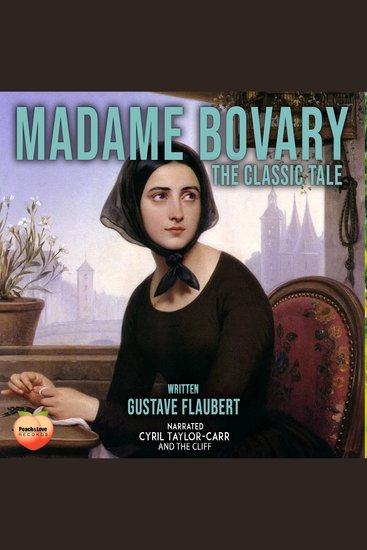
  • Madame Bovary - The Classic Tale - cover

    Madame Bovary - The Classic Tale

    Gustave Flaubert

    • 0
    • 0
    • 0
    Written over a century and a half ago, Madame Bovary is still an extraordinarily fresh, exciting and shockingly frank novel, at once an acute psychological study of a woman drawn into adultery through circumstances we can partly understand, and a sharply-observed comedy that offers a fascinating glimpse of the social and cultural divisions running through French provincial society in the mid nineteenth century. This translation is by Eleanor Marx-Aveling, a prominent social activist and literary translator. She was the youngest daughter of Karl Marx. 
     
    Gustave Flaubert was a highly influential, he has been considered the leading exponent of literary realism in his country. According to the literary theorist Kornelije Kvas, "in Flaubert, realism strives for formal perfection, so the presentation of reality tends to be neutral, emphasizing the values and importance of style as an objective method of presenting reality".He is known especially for his debut novel Madame Bovary (1857), his Correspondence, and his scrupulous devotion to his style and aesthetics. The celebrated short story writer Guy de Maupassant was a protégé of Flaubert. On the occasion of Flaubert's 198th birthday (12 December 2019), a group of researchers at CNRS published a neural language model under his name.
    Show book
  • The Great Gatsby - The Deluxe 1925 Edition - cover

    The Great Gatsby - The Deluxe...

    Francis Scott Fitzgerald

    • 0
    • 0
    • 0
    “Gatsby believed in the green light, the orgastic future that year by year recedes before us.” 
    Step into the glittering yet hollow world of the 1920s—a realm of champagne, jazz, and restless ambition. In The Great Gatsby, F. Scott Fitzgerald peers beyond the shimmer of the American Dream, revealing the illusions and disillusionment at its core. 
    The novel unfolds in the summer of 1922 through the eyes of Nick Carraway, a Yale graduate and World War I veteran who rents a modest home in West Egg, Long Island. His enigmatic neighbor, Jay Gatsby, is a self-made millionaire famed for extravagant parties but haunted by a singular obsession: to reclaim Daisy Buchanan, the woman he once loved. Daisy, trapped in wealth and a loveless marriage, becomes both the object of Gatsby’s dream and a symbol of its emptiness. 
    At its heart, The Great Gatsby is a meditation on illusion, identity, and the cost of desire. It is both a tragic love story and a sharp critique of the American Dream—its promises, its failures, and its corruption. 
    Written in the Jazz Age, Fitzgerald’s lyrical prose captures a generation intoxicated by success yet shadowed by disillusionment. A century later, the novel endures because it speaks to the dreamer in us all, chasing a light always just out of reach.
    Show book
  • The Complete Short Stories of Guy de Maupassant - cover

    The Complete Short Stories of...

    Guy de Maupassant

    • 0
    • 0
    • 0
    What can a single moment reveal about a lifetime?
    
    The Complete Short Stories of Guy de Maupassant brings together the full range of one of literature's greatest masters of the short story. With sharp observation and elegant precision, Maupassant captures love and betrayal, ambition and despair, vanity and compassion—often within just a few unforgettable pages.
    
    Set in nineteenth-century France, these stories explore everyday lives shaped by class, desire, war, and chance. Maupassant's style is clear, economical, and devastatingly effective, revealing human weakness and truth with irony, humor, and psychological insight.
    
    From tales of rural life and Parisian society to haunting stories of madness and the supernatural, this complete collection showcases the versatility and enduring power of Maupassant's art.
    
    Inside this eBook, you'll explore:
    
    All of Maupassant's short stories in one definitive collection
    
    Brilliant examples of realism, irony, and psychological depth
    
    Themes of love, greed, war, morality, and human folly
    
    A cornerstone of world literature and short fiction
    
    Studied worldwide and admired by writers such as Chekhov and Hemingway, Guy de Maupassant's stories remain essential reading for anyone who values clarity, insight, and emotional truth.
    
    Discover how much life can fit into a single story. Buy now and experience the complete short stories of Guy de Maupassant.
    Show book
  • War and Peace (Book Fourteen: 1812) - cover

    War and Peace (Book Fourteen: 1812)

    Leo Tolstoy

    • 0
    • 0
    • 0
    War and Peace is a literary work mixed with chapters on history and philosophy by the Russian author Leo Tolstoy. It was first published serially, then published in its entirety in 1869. It is regarded as one of Tolstoy's finest literary achievements and remains an internationally praised classic of world literature.
    Book 14: 1812: The Battle of Borodinó, with the occupation of Moscow that followed it and the flight of the French without further conflicts, is one of the most instructive phenomena in history. All historians agree that the external activity of states and nations in their conflicts with one another is expressed in wars, and that as a direct result of greater or less success in war the political strength of states and nations increases or decreases.
    Show book