Join us on a literary world trip!
Add this book to bookshelf
Grey
Write a new comment Default profile 50px
Grey
Subscribe to read the full book or read the first pages for free!
All characters reduced
The Complete Short Stories of Émile Zola - Enriched edition - cover

The Complete Short Stories of Émile Zola - Enriched edition

Zola Émile

Publisher: Musaicum Books

  • 0
  • 0
  • 0

Summary

The Complete Short Stories of mile Zola showcases the diverse literary talents of the renowned French author and provides readers with a comprehensive collection of his short fiction. Zola's literary style is characterized by vivid and realistic depictions of everyday life, often laden with social commentary and psychological insight. The stories in this collection reflect the naturalist movement of the 19th century, with an emphasis on human behavior and the impact of environment on characters' lives. Zola's use of vivid imagery and attention to detail make each story a compelling and immersive reading experience. With themes ranging from love and betrayal to poverty and societal injustice, these short stories offer a glimpse into the complexities of human existence. Born in 1840, mile Zola was a leading figure in the French literary scene and a prominent advocate of naturalism. His background as a journalist and his interest in social issues influenced his writing, leading him to create works that were both critically acclaimed and controversial. Zola's dedication to depicting the harsh realities of life in his works set him apart as a pioneer in the naturalist genre. I highly recommend mile Zola's The Complete Short Stories to readers who appreciate thought-provoking literature that explores the complexities of human nature. This collection is a testament to Zola's literary prowess and his enduring impact on the world of literature.

In this enriched edition, we have carefully created added value for your reading experience:
- A comprehensive Introduction outlines these selected works' unifying features, themes, or stylistic evolutions.
- The Author Biography highlights personal milestones and literary influences that shape the entire body of writing.
- A Historical Context section situates the works in their broader era—social currents, cultural trends, and key events that underpin their creation.
- A concise Synopsis (Selection) offers an accessible overview of the included texts, helping readers navigate plotlines and main ideas without revealing critical twists.
- A unified Analysis examines recurring motifs and stylistic hallmarks across the collection, tying the stories together while spotlighting the different work's strengths.
- Reflection questions inspire deeper contemplation of the author's overarching message, inviting readers to draw connections among different texts and relate them to modern contexts.
- Lastly, our hand‐picked Memorable Quotes distill pivotal lines and turning points, serving as touchstones for the collection's central themes.
Available since: 10/06/2017.
Print length: 240 pages.
Other books that might interest you

  • My Platonic Sweetheart - cover

    My Platonic Sweetheart

    Mark Twain

    • 0
    • 0
    • 0
    "Friendship is the only cement that will ever hold the world together."
    
    Mark Twain's short story, My Platonic Sweetheart, is a charming exploration of friendship and love in which the main character (believed to represent Twain) dreams of the same woman repeatedly throughout his lifetime. Across five dreams, the narrator and the woman take on different names, and the woman's appearance changes while their ages (he, seventeen, she, fifteen) remain the same. They never fail to recognise each other and their relationship always embodies the same deep, innocent affection. The story explores themes of memory, longing, and the timeless nature of platonic love.
    Samuel Langhorne Clemens, better known by his pen name Mark Twain (1835–1910), grew up along the banks of the Mississippi River, and his early experiences inspired many of his most famous works, including The Adventures of Tom Sawyer and Adventures of Huckleberry Finn. Widely celebrated as America's greatest humorist, Twain captured the spirit of a rapidly changing nation, and his sharp wit, keen eye for human nature, and gift for storytelling made him not only a beloved novelist but also a popular lecturer and essayist.
    
    Twain's innovative style, character-driven storytelling and ability to interweave humour with profound social critique laid the groundwork for modern American literature and has inspired countless authors, including Ernest Hemingway and F. Scott Fitzgerald. Indeed, Hemingway famously declared that "all modern American literature comes from one book by Mark Twain called Huckleberry Finn."
    Show book
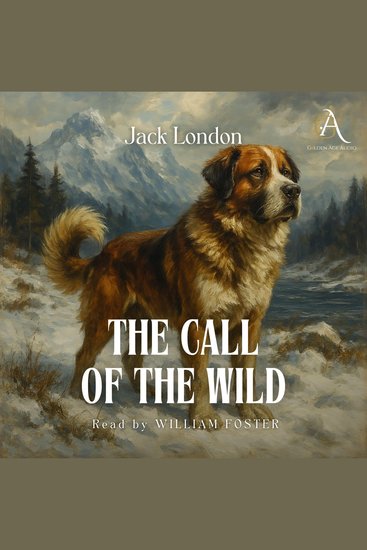
  • Call of the Wild The - Audiobook - cover

    Call of the Wild The - Audiobook

    Jack London, Classic Audiobooks,...

    • 0
    • 0
    • 0
    The Call of the Wild is a gripping adventure story about a domestic dog named Buck, who is stolen from his comfortable life in California and thrust into the brutal world of the Alaskan wilderness. As he is passed from one harsh master to another, Buck is forced to awaken his primal instincts in order to survive. Eventually, he embraces the wild entirely, answering the ancient call that echoes in his blood.This novel is both a thrilling survival story and a meditation on the forces of nature, the struggle between civilization and instinct, and the journey toward freedom and self-discovery. Jack London captures the raw power of the wilderness and the untamed spirit that lives within all creatures.
    Show book
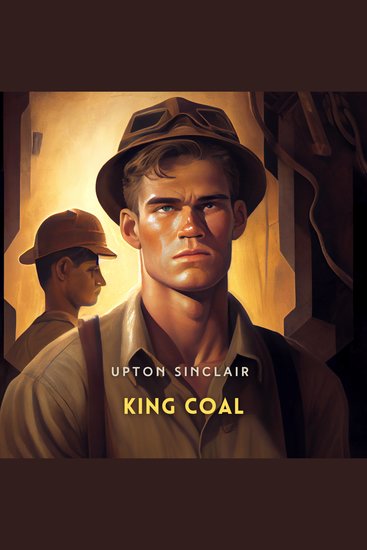
  • King Coal - A Novel - cover

    King Coal - A Novel

    Upton Sinclair

    • 0
    • 0
    • 0
    Hal Warner, a rich young fellow determined to find the truth for himself about conditions in the mines, runs away from home and adopts the alias Joe Smith. After being turned away by one coal mine for fear of Hal being a union organizer, he gets a job in another coal mine operated by the General Fuel Company, or GFC. In the mines he befriends many of the workers, and realizes their misery and exploitation at the hands of the bosses.
    Show book
  • Metamorphosis - cover

    Metamorphosis

    Franz Kafka

    • 0
    • 0
    • 0
    A masterful mix of horror and absurdity, Metamorphosis tells the story of travelling salesman Samsa, who wakes up one day to find out he has turned into a giant insect. Samsa has been a model of virtue for years, single-handedly supporting his parents and young sister. Suddenly he finds himself outcast in his own home, facing a world in which he no longer has a place. Simultaneously harrowing and humorous, Metamorphosis is a strange, subtle and moving novella which has become a classic of world literature. This edition includes the classic, unabridged text, introduced and translated by William Aaltonen.
    Show book
  • Portrait of the Artist as a Young Man A (Unabridged) - cover

    Portrait of the Artist as a...

    James Joyce

    • 0
    • 0
    • 0
    The portrayal of Stephen Dedalus's Dublin childhood and youth, his quest for identity through art and his gradual emancipation from the claims of family, religion and Ireland itself, is also an oblique self-portrait of the young James Joyce and a universal testament to the artist's 'eternal imagination'. Both an insight into Joyce's life and childhood, and a unique work of modernist fiction, A Portrait of the Artist as a Young Man is a novel of sexual awakening, religious rebellion and the essential search for voice and meaning that every nascent artist must face in order to blossom fully into themselves.
    Show book
  • A Story Without a Title - cover

    A Story Without a Title

    Anton Chekhov

    • 0
    • 0
    • 0
    "A Story Without a Title"  is an 1888 humorous story by Anton Chekhov.
    In a remote 5th century monastery the monks live and toil, led by an elderly abbot. The old man likes to play the organ, write music and compose Latin verses but is famous most of all for his eloquence and fiery, inspirational monologues which leave everybody around him enchanted. Then one night a drunkard knocks the door of the gates, saying he'd got lost on his way and asking them to give him food and wine. After the supper, instead of thanks, he rather shames the monks for spending their lives away, while the townsfolk keep on drowning themselves in debauchery and vice. The guest's speech sounds offensive, but the abbot sees the point and suggests that he makes a trip to the town himself.
    The monks wait for the old man for three months. He returns silent and morose, then spends the next seven days fasting, playing the organ and crying. Back from his cell, he tells them the appalling story of the sin raging in the town, its people indulging in all manner of pleasures, drinking wine, visiting brothels, watching lustful harlots dancing on tables. Unfortunately, one of his bouts of inspiration hits him and the monks are transfixed. Having described the charms of evil, the old man curses the devil and departs to shut himself up in his cell. When he comes out in the morning, there is not a monk left in the monastery; they had all fled to the town.
    Show book