Join us on a literary world trip!
Add this book to bookshelf
Grey
Write a new comment Default profile 50px
Grey
Subscribe to read the full book or read the first pages for free!
All characters reduced
French Horn in F parts "3 Choros" by Zequinha De Abreu for Horn and Piano - Levanta Poeira - Os Pintinhos No Terreiro - Sururu Na Cidade - cover

French Horn in F parts "3 Choros" by Zequinha De Abreu for Horn and Piano - Levanta Poeira - Os Pintinhos No Terreiro - Sururu Na Cidade

Zequinha De Abreu

Publisher: Glissato Edizioni Musicali

  • 0
  • 0
  • 0

Summary

French Horn in F part of 3 Choros by Zequinha De Abreu (author of Tico Tico) arranged for intermediate/advanced Horn and intermediate Piano accompaniment, duration 7.00 (+-). Content titles: 1. Levanta Poeira 2. Os Pintinhos No Terreiro 3. Sururu Na Cidade. Piano part available in series. Scan Qr code (in cover) for audio demo or visit www.glissato.it. product code: EG1444.

	To enhance the understanding of the compositions and the maestro behind them, multilingual sheets are provided. These sheets, invaluable for concert presentations, are available in English, French, German, Spanish, Portuguese, Italian, Korean, Japanese, and Chinese.
	Choro, also popularly called chorinho ("little cry" or "little lament"), is an instrumental Brazilian popular music genre which originated in 19th century Rio de Janeiro. Despite its name, the music often has a fast and happy rhythm. It is characterized by virtuosity, improvisation and subtle modulations, and is full of syncopation and counterpoint. Choro is considered the first characteristically Brazilian genre of urban popular music.
Available since: 03/19/2022.

Other books that might interest you

  • Leading Men in Music - Insights Into 25 Men That Have Influenced the Music Industry Since the 1970s - cover

    Leading Men in Music - Insights...

    Jene Roswell

    • 0
    • 0
    • 0
    Are you a fan of some high-profile male musicians, and want to know more about other highly influential men in the music industry? 
    You may have read a few biographies on some of the most influential men in music, but now you’re searching for a book that covers many great artists, all in one place. 
    Or, maybe you are familiar with all of the musicians and producers covered in this book, but you want to delve much deeper into their upbringing, their personalities, and their start in the music business... 
    Well, you’re in luck! Leading Men in Music answers all your musical questions. This book is the only reference you’ll need for facts on the top influential male musicians since the 1970s. 
    You’ll feel invested in each of these musical leaders as you learn more about them as real people, rather than celebrities. 
    You’ll not only find yourself fascinated by their music and how their career developed, but also their personal lives behind the music. 
    This book highlights the common themes of decency and generosity across all of these musical leaders and shows you how all of these men maintained high-profile and successful careers. 
    Inside Leading Men in Music, discover the facts on various artists such as Andrea Bocelli, Bob Dylan, David Bowie, Ed Sheeran, Freddie Mercury, Kenny Rogers, Michael Jackson, Rod Stewart, and much more! 
    It’s time you learned the truth about these influential and successful men of the music industry. 
    Read Leading Men in Music today and take your knowledge of the most influential men in music to the next level!
    Show book
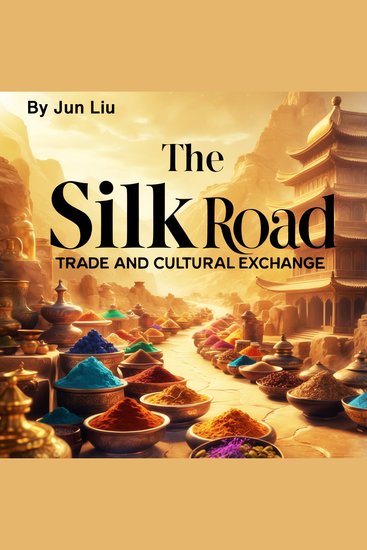
  • The Silk Road - Trade and Cultural Exchange - cover

    The Silk Road - Trade and...

    Jun Liu

    • 0
    • 0
    • 0
    The origins of the Silk Road trace back more than two thousand years, to a time when empires rose and sought to expand their influence through exploration, diplomacy, and commerce. The foundation of this vast trade network was laid during the Han Dynasty in China, around the 2nd century BCE. Under Emperor Wu of Han, the empire was looking to form alliances and open communication with regions to the west, particularly to counter nomadic threats like the Xiongnu. In pursuit of this goal, the emperor commissioned a young diplomat named Zhang Qian to journey westward, initiating one of the earliest formal missions that would lead to the opening of trade routes between East and West. 
    Zhang Qian’s expeditions proved to be pivotal. Although his initial mission was met with capture and delays, he eventually succeeded in reaching Central Asia and returning with valuable intelligence about distant peoples and lands. His reports detailed the cultures, resources, and military strength of regions far beyond China’s borders, sparking interest in trade and fostering diplomatic relationships. These journeys laid the groundwork for sustained interaction between distant civilizations and demonstrated the strategic and economic potential of linking east to west. 
    As the Han Dynasty expanded its territory and influence, it secured key routes and established military garrisons along the western frontier. These efforts ensured the safety of merchants and travelers, allowing goods to flow more freely across borders. The Silk Road was not a single road, but rather a network of interconnected paths that stretched from China through Central Asia, reaching all the way to the Mediterranean. It connected cities like Chang’an (modern-day Xi’an), Samarkand, and Antioch, forming a bridge between major civilizations of the time.
    Show book
  • ET The Extra-Terrestrial - The Ultimate Trivia Collection - From The Movie Directed By Steven Spielberg - cover

    ET The Extra-Terrestrial - The...

    Film Trivia Metaverse

    • 0
    • 0
    • 0
    E.T. THE EXTRA-TERRESTRIAL 
    THE ULTIMATE TRIVIA COLLECTION 
      
    FROM THE MOVIE DIRECTED BY STEVEN SPIELBERG 
      
    CREATED BY FILM TRIVIA METAVERSE 
      
    ABOUT THE FILM 
    E.T. the Extra-Terrestrial is a heartwarming science fiction film directed by Steven Spielberg. It follows Elliott, a young boy who befriends an alien, E.T., stranded on Earth. As Elliott and his siblings hide E.T. from their mother and government agents, the bond between them grows stronger. The film explores themes of friendship, empathy, and the innocence of childhood. Spielberg emphasizes emotional connections and the sense of wonder through the eyes of children, creating a powerful narrative about understanding, compassion, and the desire to help others, regardless of their origins. The movie balances adventure with deep emotional moments. 
      
    TRIVIA SAMPLES: 
      
    “A 2'10" tall stuntman performed most of the full-body puppetry for E.T. However, the kitchen scenes were filmed using a 12-year-old boy who was born without legs but was an expert at walking on his hands.” 
      
    “To help audiences connect more deeply with the child protagonist, Steven Spielberg shot much of the film from a child's eye level, aligning the camera perspective with that of Elliott and E.T.” 
      
    “The Halloween scene where E.T. sees a child in a Yoda costume suggests that they come from the same galaxy. Interestingly, the Star Wars universe also references E.T. when E.T.'s species appears in the Senate scene of Star Wars: Episode I – The Phantom Menace.”
    Show book
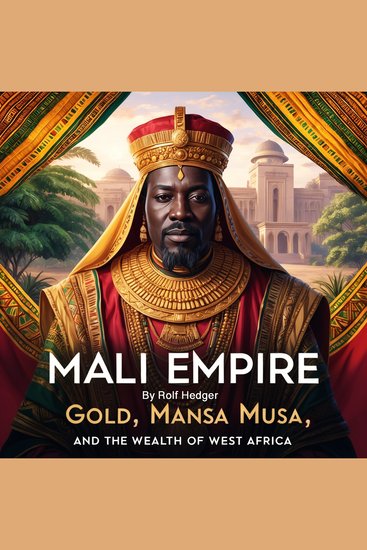
  • Mali Empire - Gold Mansa Musa and the Wealth of West Africa - cover

    Mali Empire - Gold Mansa Musa...

    Rolf Hedger

    • 0
    • 0
    • 0
    The Mali Empire emerged in the early 13th century, rising from the remnants of the Ghana Empire and the consolidation of the Malinke people under a visionary leader, Sundiata Keita. The region that would become Mali was already a center of commerce, culture, and political organization, benefiting from its strategic position along the trans-Saharan trade routes. However, it was the collapse of Ghana and the subsequent struggle for power that allowed Mali to emerge as a dominant force in West Africa. 
    The Ghana Empire, which had once controlled vast gold reserves and major trade routes, began to decline due to internal conflicts, overexpansion, and pressure from external forces such as the Almoravid invasions. As Ghana weakened, many of its vassal states and ethnic groups, including the Malinke people, sought independence and new opportunities for leadership. The Malinke, a subgroup of the Mande-speaking people, inhabited the area along the upper Niger River and had long engaged in trade and farming. Their political organization had been fragmented, but under Sundiata Keita, they would come together to form a unified and powerful state. 
    Sundiata Keita’s rise to power is deeply rooted in legend and oral tradition, preserved in the Epic of Sundiata. According to the narrative, Sundiata was born into the Keita royal family but faced exile due to political rivalries. During this time, the Sosso Kingdom, under the rule of Sumanguru Kanté, expanded its influence and sought to dominate the Malinke. Sundiata, gathering allies among different clans and neighboring groups, returned from exile to lead a coalition against Sumanguru at the Battle of Kirina around 1235. His victory in this decisive conflict not only ended Sosso rule but also laid the foundation for the Mali Empire.
    Show book
  • Pledge and Play - How the Passion Play in Oberammergau Changes a Village and Impacts the World - cover

    Pledge and Play - How the...

    Anne Fritsch

    • 0
    • 0
    • 0
    What's the story with the little village of Oberammergau in the Bavarian Alps? For nearly 400 years, the people who live here have performed the Passion of Christ every ten years. All together. Grandparents, parents, children and grandchildren all join each other on stage. They are fulfilling a vow once made by their ancestors to stave off the plague. This book sets out to discover why the villagers' enthusiasm for theatre has endured to this day. It takes a look behind the scenes and accompanies the creation of the 2022 Passion Play with its 2,400 participants. In a series of conversations, the author explores their motivations, special rituals such as the Hair and Beard Decree and theatre life in times of the coronavirus pandemic. And why giving up is not an option.
    Show book
  • The Man Who Had All the Luck - cover

    The Man Who Had All the Luck

    Arthur Miller

    • 0
    • 0
    • 0
    The Man Who Had All the Luck is a charming story of the fate of a young Midwestern man whose fortune shines on him while it passes over everyone else around him. The play wrestles with the unanswerable - the question of the justice of fate, and how it is that one man fails and another, no more or less capable, achieves some glory in life. 
     
    An L.A. Theatre Works full-cast performance featuring Emily Bergl, Kevin Chamberlin, Tim DeKay, James Gammon, Lee Garlington, Graham Hamilton, Tom McGowan, Kurtwood Smith, Russell Soder and Tegan West.
    Show book