Join us on a literary world trip!
Add this book to bookshelf
Grey
Write a new comment Default profile 50px
Grey
Subscribe to read the full book or read the first pages for free!
All characters reduced
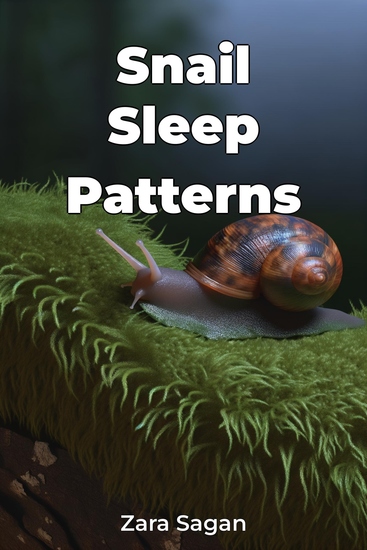
Snail Sleep Patterns - cover

Snail Sleep Patterns

Zara Sagan

Translator A AI

Publisher: Publifye

  • 0
  • 0
  • 0

Summary

Snail Sleep Patterns explores the fascinating yet understudied world of sleep in terrestrial snails, revealing the complexities of their rest cycles and the environmental factors that influence them. This book addresses a significant gap in sleep science by focusing on invertebrates, offering fresh perspectives on the evolution and function of sleep, which is often overlooked.

 
One intriguing aspect is how snail sleep patterns can be characterized and quantified using behavioral and physiological measures, providing a foundation for understanding sleep in other species. Another is the profound influence of environmental factors like temperature, humidity, and light on sleep duration and intensity, showcasing the adaptive nature of these biological rhythms.

 
The book progresses systematically, first establishing a foundation in snail biology and sleep science, then delving into laboratory experiments and field observations. It presents original research data and proposes an evolutionary framework for understanding the function of sleep in snails.

 
The book uniquely connects chronobiology, ecology, and neurobiology, with potential implications for understanding the effects of climate change on snail populations. By bridging scientific rigor with accessibility, Snail Sleep Patterns aims to engage a broad audience, from biologists and ecologists to nature enthusiasts.
Available since: 02/11/2025.
Print length: 65 pages.

Other books that might interest you

  • Design of Everyday Things The: Book Summary & Analysis - cover

    Design of Everyday Things The:...

    Briefly Summaries

    • 0
    • 0
    • 0
    This is a concise summary and analysis of The Design of Everyday Things, by Don Norman.
     
    It is not the original book and is not affiliated with or endorsed by Don Norman.
     
    Ideal those seeking a quick and insightful overview.
     
    The Design of Everyday Things explores the principles behind effective design, emphasizing the importance of user-friendly products and environments. It highlights how good design enhances usability and how poor design can create frustration. Through practical examples, the book shows how thoughtful design can improve the interaction between people and objects, making everyday life more intuitive and enjoyable.
    Show book
  • Ecommerce Fraud Prevention - The 7 Worst Scams and How to Stop Them (10 Prevention Tools) - cover

    Ecommerce Fraud Prevention - The...

    Vines Graener

    • 0
    • 0
    • 0
    To complicate matters, ecommerce merchants must defend against fraud on two fronts. First, you need to safeguard your business from schemes that target merchants directly, such as fraudulent chargebacks and website impersonation. 
    Additionally, it’s crucial to protect your customers from scams, as having scammers on your site can be detrimental to your reputation—even if you’re just as much a victim as they are. 
    The good news is that ecommerce fraud prevention is advancing rapidly, with strategies as sophisticated as the scams themselves. In this article, we’ll explore the seven most common fraud scams in ecommerce: how they operate, the warning signs to watch for, effective defenses, and ten essential tools to enhance your security. 
    Let’s dive in!
    Show book
  • Medical Ethics - Complex Decisions in Healthcare - cover

    Medical Ethics - Complex...

    Ava Westwood

    • 0
    • 0
    • 0
    Medical ethics is the backbone of modern healthcare, ensuring that medical professionals navigate complex decisions with integrity, compassion, and fairness. It establishes the moral principles that guide patient care, medical research, and public health policies, preventing harm and promoting trust in the healthcare system. Without ethical guidelines, advancements in medicine could lead to exploitation, inequities, and violations of human rights, undermining the fundamental purpose of healthcare. 
    The principles of medical ethics—autonomy, beneficence, non-maleficence, and justice—form the foundation of ethical decision-making in medicine. Autonomy protects a patient’s right to make informed choices about their own healthcare, emphasizing the importance of consent. Beneficence compels medical professionals to act in the best interests of their patients, while non-maleficence ensures that harm is minimized. Justice mandates fair and equal treatment for all patients, addressing issues of healthcare access and resource distribution. These principles help balance the rights of individuals with the broader responsibilities of medical institutions and practitioners. 
    Historical failures in medical ethics serve as stark reminders of what happens when ethical principles are ignored. The Tuskegee Syphilis Study, in which African American men were denied proper treatment for syphilis without their knowledge, remains one of the most egregious violations of patient rights. Similarly, the case of Henrietta Lacks, whose cells were taken without consent and used for groundbreaking research, highlights ethical concerns surrounding patient autonomy and medical consent. These cases have driven reforms in medical ethics, leading to stricter regulations and the establishment of review boards to oversee research practices.
    Show book
  • Light's Opponent - The Battle between Energy and Darkness in Space - cover

    Light's Opponent - The Battle...

    Dirk Fallon

    • 0
    • 0
    • 0
    The universe is a vast and mysterious place, full of wonders and unknowns. At its core, there are two forces that define the very fabric of existence: light and darkness. These forces are not just opposites; they are intertwined in a constant struggle that shapes the cosmos. This battle between energy and darkness is a fundamental aspect of the universe, influencing everything from the birth of stars to the formation of galaxies. 
    Light, in its most basic form, is energy. It travels through space at incredible speeds, illuminating everything it touches. It powers the stars and sustains life on planets. Without light, the universe would be a cold and dark place, devoid of warmth and energy. But light’s role is not just to bring warmth and life; it also plays a crucial part in the balance of the universe. Light can be a force of creation, but it can also be a force of destruction. It can burn, blind, and erase everything in its path. 
    On the opposite side of the spectrum is darkness. Darkness is not just the absence of light; it is a powerful force in its own right. It is often associated with the unknown, with mystery, and with the things that lie beyond the reach of our understanding. Darkness is present in the vastness of space, in the black holes that devour everything in their proximity, and in the cold reaches of the universe where light cannot penetrate. While darkness may seem passive, it is far from it. It is a force that can shape the universe, exerting influence over the formation of galaxies, stars, and even life itself.
    Show book
  • Home Waters - A Chronicle of Family and a River - cover

    Home Waters - A Chronicle of...

    Anonymous

    • 0
    • 0
    • 0
    In the spirit of his father's beloved classic, A River Runs through It, comes John N. Maclean’s true chronicle of his family and their bond with Montana's Blackfoot River—a profound and beautiful story about the power of place to bind generations, past and present 
    “Maclean’s Hemingway-esque prose is as clear as a mountain stream, flowing with a poetic cadence.” —Booklist 
    “The trout completed its curve in an undulating, revelatory sequence. A greenish speckled back and a flash of scarlet on silver along its side marked it as a rainbow. One slow beat, set the hook … in those first seconds I felt a connection to a fish of great size and power.""  
    So begins John N. Maclean's remarkable memoir of his family's century-long love affair with Montana's majestic Blackfoot River, which his father, Norman Maclean, made legendary. Now himself past the age that his father published his bestselling novella, Maclean returns annually to the simple family cabin that his grandfather built by hand, still in search of the fish of a lifetime. When he hooks it at last, decades of longing promise to be fulfilled, inspiring John, reporter and author, to finally write the story he was born to tell.  
    A book that will resonate with everyone who feels deeply rooted to a place, Home Waters is chronicle of a family who claimed a river, from one generation to the next, of how this family came of age in the 20th century and later as they scattered across the country, faced tragedy and success, yet were always drawn back to the waters that bound them together. Here are the true stories behind the beloved characters fictionalized in A River Runs Through It, including the Reverend Maclean, the patriarch who introduced the family to fishing; Norman, who balanced a life divided between literature and the tug of the rugged West; and tragic yet luminous Paul (played by Brad Pitt in Robert Redford’s film adaptation), whose mysterious death has haunted the family and led John to investigate his uncle’s murder and reveal new details in these pages. 
    A universal story about the power of place to shape families, and a celebration of the art of fishing, Maclean’s memoir beautifully portrays the inextricable ways our personal histories are linked to the places we come from—our home waters. 
    Show book
  • Gaia Wakes - Earth's Emergent Consciousness in an Age of Environmental Devastation - cover

    Gaia Wakes - Earth's Emergent...

    Topher McDougal

    • 0
    • 0
    • 0
    Gaia Wakes presents a compelling new framework for understanding the past, present, and future of our planet. Starting from a strong foundation in economics and drawing on a vast range of multidisciplinary scholarship, Topher McDougal explores the possibility of a fifth transition towards an upgraded Earth: the development of a technologically enabled planetary brain capable of coordinating ecological functions and peering far into the future and universe. 
    Gaia Wakes endows the emergence of a planetary brain with both a plausible economic mechanism and a historical context in which that mechanism has operated over the course of 3.8 billion years of life on Earth. It argues that the global environmental devastation we are beginning to experience and rapid recent advancements in artificial intelligence may jointly be part of a naturally recurring cycle of “upgrades” that has driven the increasing complexity of life on Earth. 
    Ambitious and provocative, the author combines economics with a breathtaking range of subjects including futurism, technology, philosophy, ecology and planetary and environmental sciences to offer new insights into questions that have long challenged us about the relationship between humankind and the world in which we live. Gaia Wakes stands out as a bold and original perspective on the future of our planet.
    Show book