Join us on a literary world trip!
Add this book to bookshelf
Grey
Write a new comment Default profile 50px
Grey
Subscribe to read the full book or read the first pages for free!
All characters reduced
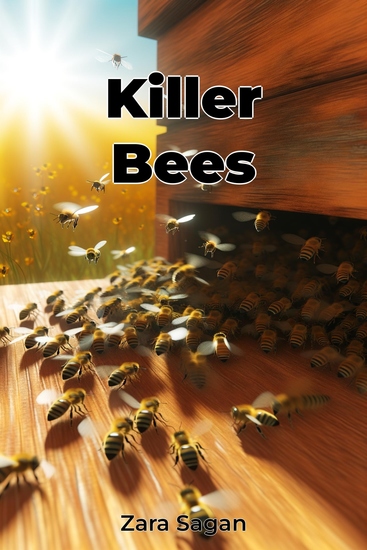
Killer Bees - cover

Killer Bees

Zara Sagan

Translator A AI

Publisher: Publifye

  • 0
  • 0
  • 0

Summary

"Killer Bees" explores the fascinating yet alarming story of Africanized honey bees, a hybrid species known for their heightened aggression and potent stings. Originating from an accidental release in Brazil, these bees rapidly spread across the Americas, presenting unique challenges for both humans and native bee populations. The book examines the biological and genetic factors driving their behavior, revealing how evolutionary pressures and resource availability contribute to their robust colony defense strategies. This exploration begins with an introduction to honey bee biology before detailing the history and expansion of Africanized honey bees.

 
Major sections analyze their aggressive behavior, supported by research on venom composition and colony defense. The book goes on to discuss practical management techniques for beekeepers and the general public while also considering the long-term implications of their presence on biodiversity and human societies. What sets this book apart is its balanced perspective, acknowledging the risks while highlighting the ecological role and potential benefits of these bees.

 
It's an accessible resource for students, researchers, beekeepers, and anyone interested in understanding the complex dynamics of these controversial insects, offering valuable insights into their biology, ecology, and management.
Available since: 02/12/2025.
Print length: 77 pages.

Other books that might interest you

  • Medical Lectures - cover

    Medical Lectures

    Ismail Serageldin

    • 0
    • 0
    • 0
    Ismail Serageldin is the Co-Chair of the Board of Trustees of the Nizami  Ganjavi International Center (NGIC).  He was the Founding Director of the Bibliotheca Alexandrina, the New Library of Alexandria in Egypt (2001-2017).  Before that he was the Vice-President of the World Bank (1993-2000) in charge of Environmentally Sustainable Development (ESD), and the Chairman of the Consultative Group for International Agricultural Research (CGIAR).  He served on many international committees and commissions, including serving as a member of the High Level group for the Alliance of Civilizations convened by the Secretary General of the United Nations (2006-2007).   He was also a distinguished professor at Wageningen University and the College de France. He is a member of many Academies and serves on many commissions, boards, and advisory committees for academic, research, and NGO institutions. He has lectured widely and published more than 100 books and 500 articles. He has received many awards from many countries and has received more than 40 honorary doctorates from all over the world.
    Show book
  • Compost after Reading - A Practical Manifesto for Purposeful Decomposition - cover

    Compost after Reading - A...

    Cassandra Marketos

    • 0
    • 0
    • 0
    Get started on your composting journey with this practical, accessible, and fun guide to reducing your waste—including this book when you finish reading! Composting is so much more than just transforming food into soil; it is deeply existential, radical, and soul-opening. And no, it's not just for gardeners. You can compost in a bowl on your kitchen counter, or a bag under your sink, and you can compost things you're told you can't (although there are some things you probably shouldn't). Everyone can compost. And even if you're not going to compost at all, knowing about compost is engaging with a dialogue about zero waste.  With wry and brilliant writing, ​Cassanda Marketos brings the culture, beauty, community, and philosophy of compost to life in this one-of-a-kind, inventive work of narrative nonfiction that brings compost out of the dark ages and into the contemporary moment. Delightfully philosophical and inviting, it is an accessible guide to everything you need to know about compost, with actionable advice for beginners and experienced composters. You will learn why compost works, where to put your compost, how to pick your compost set up, the basics of decomposition, what to put in a compost pile, where to source your compost materials, and how to build a pile. With insights on what tools to consider, how to deal with odors, insects, and other critters, and transitioning your compost pile for colder weather, find easy-to-follow compost pile designs, tips on composting in small spaces, composting with worms, and how to compost things you're always told you can't (you just need to know how).  This book has something for everyone, at any stage in their compost journey, and includes edgy, delightful illustrations by the artist Sludge Thunder throughout. And ... it's literally compostable. Read it, follow the advice, and toss it into your compost pile.
    Show book
  • Mughal Empire - The Early Modern Islamic Empire in South Asia - cover

    Mughal Empire - The Early Modern...

    Kelly Mass

    • 0
    • 0
    • 0
    The Mughal Empire, also referred to as the Mogul or Moghul Empire, was one of the most powerful and influential early modern Islamic empires in South Asia. Established in the 16th century, it controlled vast regions for over two centuries, encompassing territories from the peripheries of the Indus basin in the west, extending to northern Afghanistan, Kashmir in the north, present-day Bangladesh in the east, and stretching as far south as the Deccan Plateau's uplands.The origins of the Mughal Empire trace back to 1526 when Babur, a warrior chieftain from what is now Uzbekistan, founded the empire. Babur's military strategy combined traditional cavalry tactics with the latest artillery techniques, using matchlock guns and cast cannons acquired with Ottoman assistance. These advancements, alongside his strategic acumen, led him to a decisive victory against the Sultan of Delhi, Ibrahim Lodhi, at the First Battle of Panipat. This battle marked a turning point, allowing Babur to establish his dominance over northern India and subdue rival Rajput and Afghan forces.While Babur laid the foundation of the empire, the true structure of the Mughal state is often attributed to his grandson, Akbar the Great. By the late 16th century, under Akbar's rule, the empire expanded its reach and established a well-organized imperial administration that laid the groundwork for political stability, cultural integration, and economic prosperity. Akbar's reign is particularly noted for promoting a policy of religious tolerance, encouraging a synthesis of Hindu and Muslim cultures, and setting up an efficient centralized bureaucracy.
    Show book
  • Cruising on the Queen Elizabeth 2 - Around the World in 91 Days - cover

    Cruising on the Queen Elizabeth...

    Bernard M. Patten

    • 0
    • 0
    • 0
    HMS Queen Elizabeth 2 is the most celebrated craft afloat and one of the greatest technical achievements of the 20th century. In her construction and maintenance are involved almost every science, profession, and trade known to civilization. On her bridge stand officers, who besides being the pick of the Royal Navy, have passed rigid examinations in all studies pertaining to winds, tides, currents, navigation, and the geography of the sea. 
    For 91 days, author Bernard M. Patten, M.D., sailed around the world on this ultimate cruise ship. What was it like onboard this most luxurious of luxury liners? "Marvelous, simply marvelous," he assures the reader with obvious enthusiasm that spills off every page.  
    Determined to give the reader the complete QE2 experience, Patten and his wife, Ethel, roomed in progressively better accommodations, moving level by level from the least expensive class ("Mauritania 5") to the Penthouse Suite, which included their own butlers, Geoffrey and Paul. Along with the Pattens, readers will experience every deck, every restaurant, and every level of luxury that this incredible ocean liner has to offer. 
    Whether you’re a cruise buff, or planning your own stay aboard this fabulous ship, or just want to take a trip in your imagination on a cold rainy night, Cruising on the Queen Elizabeth 2 will provide you with interesting information, entertaining stories, and ample pleasures.
    Show book
  • Stella: Ranch Patrol - cover

    Stella: Ranch Patrol

    W. Bruce Cameron

    • 0
    • 0
    • 0
    Stella: Ranch Patrol is a new Dogs with a Purpose adventure from the #1 New York Times bestselling author of A Dog's Purpose, W. Bruce Cameron! 
     
    Some dogs were born to lend a helping hand (or paw!) 
     
    Stella, a corgi puppy, is one of them. With her natural herding instincts and big attitude, Mateo thinks she'll be the perfect new addition to his family's ranch! 
     
    But Mateo's family isn't convinced. They wanted a big, tough livestock guardian dog, not this tiny creature! She's more likely to become lunch for the coyotes than to help run the ranch. And it doesn't matter anyway; Mateo's father, Werner, has decided to sell the ranch. 
     
    To save their home, Stella and Mateo must prove that even the smallest and youngest members of a family can make the biggest difference. Can they rise to the challenge? 
     
    Stella: Ranch Patrol is another fun, heartwarming Dogs with a Purpose adventure that will introduce young readers to the hard work of herding dogs.
    Show book
  • Ancient Egyptian Gods - From Ra to Anubis - cover

    Ancient Egyptian Gods - From Ra...

    Odessa Nightshade

    • 0
    • 0
    • 0
    Ancient Egyptian civilization was deeply intertwined with religion, and at the heart of their belief system was a vast pantheon of gods and goddesses. These deities were more than just figures of worship; they shaped every aspect of daily life, from the rising of the sun to the passage into the afterlife. Unlike many modern religions, Egyptian theology was fluid, allowing gods to merge, evolve, or take on different roles depending on the time and region. This dynamic belief system gave rise to a rich mythology that endured for thousands of years.   
    The gods of Egypt were not distant, abstract beings but rather personal and deeply involved in the world. They governed nature, oversaw justice, protected the people, and maintained cosmic balance, known as *ma’at*. The concept of *ma’at* was central to Egyptian religion, representing order, harmony, and truth. It was the gods' duty to uphold *ma’at* against chaos, often personified by Set, the god of disorder and storms. This cosmic struggle played out in myths, particularly in the tales of Osiris, Isis, and Horus, which symbolized the eternal battle between good and evil, life and death.  
    Temples were the primary centers of worship, serving as both religious and political institutions. Each major city had its patron deity, and grand temples were built to honor and house these gods. Priests conducted daily rituals, offering food, incense, and prayers to ensure divine favor. Unlike in many other religions, common Egyptians were not allowed direct access to the inner sanctums of temples, where the gods' statues resided. Instead, they worshipped through prayers, festivals, and personal altars in their homes. 
    Show book