Join us on a literary world trip!
Add this book to bookshelf
Grey
Write a new comment Default profile 50px
Grey
Subscribe to read the full book or read the first pages for free!
All characters reduced
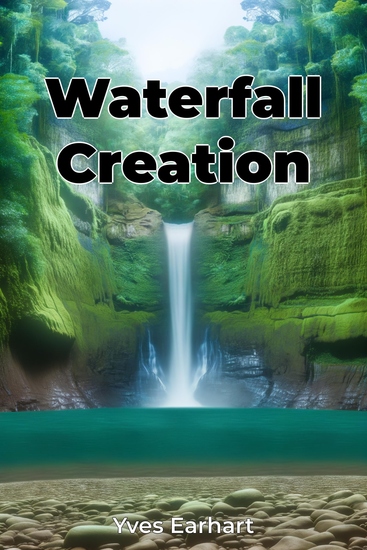
Waterfall Creation - cover

Waterfall Creation

Yves Earhart

Translator A AI

Publisher: Publifye

  • 0
  • 0
  • 0

Summary

Waterfall Creation explores the fascinating geological processes behind these breathtaking natural wonders. The book reveals how waterfalls are not static features but dynamic expressions of Earth's constant flux, shaped by the interplay of erosion, hydrological cycles, and tectonic activity.

 
Did you know that waterfalls can form through differential erosion, where softer rock layers erode faster than harder ones, or through tectonic uplift, which creates abrupt changes in elevation? Understanding these mechanisms provides valuable insights into landscape evolution and resource management.

 
The book begins with foundational concepts in erosion, weathering, and the rock cycle before delving into the specific factors that contribute to waterfall creation. It examines the roles of differential erosion, tectonic activity, and geological faulting, categorizing waterfalls by their geological origins, like glacial or volcanic landscapes.

 
Real-world applications, such as hydroelectric power and tourism, are also explored. Waterfall Creation emphasizes the interconnectedness of geological processes and ecosystems. This holistic approach sets it apart from conventional texts, making it a valuable resource for students, nature enthusiasts, and anyone curious about the forces shaping our planet.
Available since: 02/12/2025.
Print length: 63 pages.
Other books that might interest you

  • Receive Your Healing (English) - cover

    Receive Your Healing (English)

    Gabriel Agbo

    • 0
    • 0
    • 0
    This audiobook is about how to receive divine healing. Can God still heal? Yes! Can we live in good and perfect health today? Yes! Our God is the same yesterday, today, and forevermore. Expect your healing as you listen. Here, you will read some incredible testimonies that will instantly increase your faith in God and his unlimited ability and wiliness to intervene even in worst situations. For example, God still cures incurable and terminal diseases. He still raises the dead. Have you read about a man who was raised from death after staying two days in the mortuary?Now, if God can do that, why do you think nothing can be done about that your condition? There are many other incredible testimonies here. There are 10 powerful, illuminating chapters in this book: "All Things Are Possible", "Healing Is Your Right", "Origin of Sickness", "Word of God", "Name of Jesus", "Holy Spirit", "Power of Faith", "Retaining Your Healing".You will also learn about the roles of prayer, anointing oil, laying of hands, compassion (love), obedience, angels, praise, and worship, etc., in our quest to receive and retain our healing. This audiobook is designed for you to receive your healing as you go through it, and it's very practical.
    Show book
  • There's Room For Me Here - Literacy Workshop in the Middle School - cover

    There's Room For Me Here -...

    Janet Allen, Kyle Gonzalez

    • 0
    • 0
    • 0
    What do you do with your students who can't--or won't--read and write? In this practical book, award-winning teachers, Janet Allen and Kyle Gonzales share classroom-tested strategies for motivating and helping young people to become literate.
    Show book
  • Solar System - cover

    Solar System

    Introbooks Team

    • 0
    • 0
    • 0
    As you all might know solar system is a gravitationally bound system. It consists of the sun and all the objects that orbit it. These objects might orbit the sun either directly or indirectly. The eight planets are the largest objects that orbit the sun directly. Rests of them are significantly smaller objects such as dwarf planets, small solar system bodies etc. It is said that solar system was formed about 4.6 billion years ago. The reason behind such gigantic formation was gravitational collapse of an interstellar molecular cloud that has the size even bigger than our current solar system. 
    Most amount of the system’s mass is packed within the sun itself. A significant amount of remaining mass is contained in Jupiter. Main eight planets are often studied in two groups, inner planets and outer planets. Inner planets are mercury, Venus, Earth and Mars. These planets are often referred as terrestrial planets since their primary elements are rock and metals. Remaining outer planets are also referred as giant planets since they are noticeably massive compared to inner planets. Two largest among them that are Jupiter and Venus are known as gas giants since they are mainly formed with hydrogen and helium. Remaining two outermost planets are known as ice giants (Uranus & Neptune). These ice giants are formed with elements with high melting points compared to hydrogen and helium. These elements are called ices such as water, ammonia and methane. All planets possess their unique orbit that is almost circular. These orbits lie within a flat surface that is known as ecliptic. 
    Along with these super large planets, there are smaller objects too. Between the orbits of mars and Jupiter, there lies a group of objects such as terrestrial planets or rocks and metals, etc. This area or group is known as asteroid belt. It is noticeable that our solar system does not end with the orbit of Neptune. Kuiper belt and scattered discs are located beyond Neptune’s orbit. They are also considered a part of our solar system. Kuiper belt and scattered discs are group of trans-Neptunian objects. Most of them are formed with ices. Beyond kuiper belt, population of sednoids have been discover in near past. Together all these populations tend to hold more than ten thousand objects. These objects are large enough to hold their own gravity field around them. Such objects are referred as dwarf planets. Asteroid Ceres and trans-Neptunian objects Pluto and Eris are known dwarf planets. It is noticeable that Pluto was considered a planet in the past, however, not any more. In these regions, other minor objects such as comets, centaurs and interplanetary dust freely travel from on region to another. Six planets from main eight planets, four dwarf planets and many minor objects are orbited by natural satellites that we refer as moon or moons. Almost every outer planer is encircled with planetary rings made of dust and other objects. Venus and Jupiter have a clearly visible planetary ring where Uranus and Neptune have thinner one. In this book we will cover all the basic concepts that will help you to understand vast theories later on in dipper studies. 
    Show book
  • Discarded - How Technofossils Will be Our Ultimate Legacy - cover

    Discarded - How Technofossils...

    Sarah Gabbott, Jan Zalasiewicz

    • 0
    • 0
    • 0
    What kind of fossils will we leave, as relics into the far future? A blizzard of new objects has suddenly appeared on Earth: plastic bottles, ballpoint pens, concrete flyways, chicken bones, cans, teabags, phones, shirts. They're produced for our comfort and pleasure then quickly discarded. This new-made treasure chest underpins our lives. But it is also giving a completely new style of fossilization to our planet. Designed to resist corrosion and decay, many will remain, petrified, as future geology. 


    What will these technofossils look like? How long will they last and how will they change? Discarded describes how they transform and what will be left of them. These new fossils have meaning for our lives today. For we live on a world increasingly buried under our growing waste. As our discarded artefacts begin to change into fossils, they may be swallowed by birds, entangle fish, alter microbial communities and release toxins. Even buried in rock, technofossils may break down into new-formed oil and gas, change the composition of groundwater, and attract new mineral growths. 


    It is a new planetary phenomenon, now unfolding around us. Scientists are only just beginning to grasp its scale, and get to grips with how it functions. This book describes the kind of science that is emerging to show the far-future human footprint on Earth.
    Show book
  • Bioknowledgy of the Ecuadorian Flora Some medicinal plants and their uses - cover

    Bioknowledgy of the Ecuadorian...

    Hyun Jeong Kim, Omar Vacas Cruz,...

    • 0
    • 0
    • 0
     Medicinal plants  in Ecuador add up to 3118 species, 75% being native, of these, 80 were investigated by the PUCE-KRIBB project, finally 30 species were collected in this publication for being the most promising. We hope that this book contributes to new research on active ingredients that at some point will be used for the preparation of phytopharmaceuticals, for the benefit of society in general.
    Show book
  • Solar Power - A Complete Guide to Installing Solar Panels and Light Up Your Home - cover

    Solar Power - A Complete Guide...

    Jules Sun

    • 0
    • 0
    • 0
    Solar power is the most rich vitality asset on Earth. It very well may be caught and utilized in a few different ways, and as a sustainable power source, is a significant piece of our spotless vitality future. Sun-powered vitality originates from the sun and can be caught with different innovations, principally sun-oriented boards. The "photovoltaic impact" is the component by which silicon sun-powered boards outfit the sun's vitality and create power. Need to exploit sun-powered vitality yourself? Sun-based vitality: What is it and how can it work?
    Show book