Join us on a literary world trip!
Add this book to bookshelf
Grey
Write a new comment Default profile 50px
Grey
Subscribe to read the full book or read the first pages for free!
All characters reduced
Seagull Facts - cover

Seagull Facts

Yves Earhart

Translator A AI

Publisher: Publifye

  • 0
  • 0
  • 0

Summary

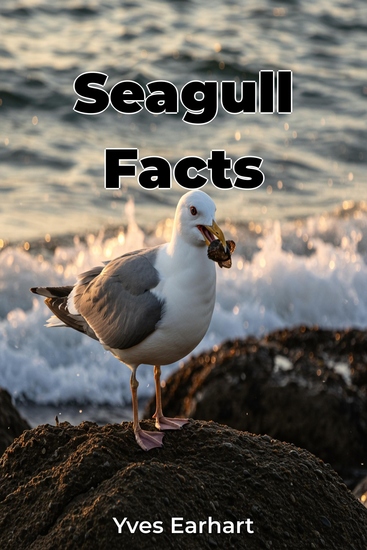
Seagull Facts offers a deep dive into the lives of gulls, revealing their surprising complexity and adaptability. Often dismissed as simple beach scavengers, seagulls display remarkable avian intelligence and intricate communication systems, making them a model species for understanding how animals adjust to rapidly changing environments. For instance, gulls have demonstrated tool use and sophisticated foraging strategies, challenging assumptions about bird cognition.

 
The book explores gull biology, beginning with an introduction to various species worldwide and then focusing on adaptation, intelligence, and communication. Through scientific data and field observations, it examines how gulls thrive in diverse environments, from remote islands to urban centers, adapting their diets, breeding strategies, and behaviors.

 
The book also highlights the conservation challenges facing gull populations due to habitat loss, pollution, and climate change, offering insights into mitigating these threats. This accessible guide synthesizes complex scientific information into an engaging narrative, making it valuable for nature enthusiasts, students, and researchers alike.

 
By connecting to interdisciplinary fields like urban ecology and climate change research, Seagull Facts provides a nuanced understanding of gull behavior and ecology and demonstrates innovative methods for studying animal behavior in urban environments, showing how gulls have evolved to become such adaptable creatures.
Available since: 02/18/2025.
Print length: 66 pages.


Other books that might interest you

  • Whittling On the Go - 13 Easy-to-Learn Woodcarving Projects - cover

    Whittling On the Go - 13...

    David Young

    • 0
    • 0
    • 0
    Whether experienced or new to woodcarving, you are sure to appreciate the in-depth knowledge of the art form from author David Young. The book begins with information on what you need to know to start whittling including tools, materials, knife sharpening, and techniques. Next, David covers finishing your project with instructions for his simple painting technique to achieve professional-looking results. Using these techniques, you'll then be ready to start whittling the 13 beautifully illustrated projects which range in difficulty, building on the skills and techniques used in each. You'll start with projects that build upon each other, adding a new technique and skill for each. You are then ready to start the next set of simple projects, further refining your whittling skills. You're now ready for the step-up projects that include a pineapple, a vase with a rose, and a wood spirit. Each project uses a 1" x 1" x 'varying length' block and can be completed in less than an hour. The scale of the projects and the use of minimal tools and supplies make carving the projects possible in virtually any space or location.
    Show book
  • Tarot Spreads - How to Read Them Create Them and Revise Them - cover

    Tarot Spreads - How to Read Them...

    Meg Jones Wall

    • 1
    • 1
    • 0
    Bring structure, clarity, and purpose to every reading.   For many who read tarot—and those new to tarot—spreads can offer a lot of power, clarity, and purpose to readings. Tarot spreads, intentional arrangements for tarot cards that include a particular meaning or prompt for each card, help us to ask focused, direct questions of our cards. Rather than focusing on premade cookie-cutter layouts, Meg Jones Wall takes you to the very foundation of tarot spreads so that you can understand how and why a spread is created and how it works. This book will walk you through reading spreads as well as writing and revising original spreads, giving you everything you need to understand, develop, tweak, and test tarot spreads of your very own.  Learn to adapt and revise card spreads to deepen your exploration.   Meg encourages you to release yourself from the expectation that you need to use a spread precisely as written in order to get the full benefit of a layout in your reading. Spreads are infinitely customizable to suit your own needs, preferences, and experience level. While the cards can offer clarity in a variety of ways, tarot spreads can help us be more direct about what we want to know, explore, question, and understand. No matter our question, concern, or situation, tarot spreads empower us to be clear about what we need from our reading.   At the core of every spread are the prompts—the meanings given to each card positioned in a layout. So that you can more effectively write and design your own spread, Meg offers over 200 prompts and suggestions for simple one-card to five-card layouts for a variety of intentions from relationships to self-awareness to community to wealth, and includes special recommended spreads for lunar cycles, the zodiac, the archetypes, the sabbats, the elements, and more.
    Show book
  • The Coda of Detective Frank Jones - cover

    The Coda of Detective Frank Jones

    Doc King Cole

    • 0
    • 0
    • 0
    Frank again is fired as a Charleston Detective and returns to Sullivan’s Island.There he becomes a Private Investigator, and studies law. He becomes an attorney.Yet to local politics, Frank’s chance to shine as an attorney is delayed.So he turns to what he knows best, Private Investigating. He is hired by the famousbi- sexual author Elizabeth Frazier. Frank’s task begins simple but winds up being twisted.He is paid to follow a popular local bouncer named Dan Flynn (Beth's cheating lover).Flynn too is bi-sexual and bi-polar. While ‘Beth’ is monitoring Dan’s infidelities, she plotsto commit other acts to gain revenge upon her gay/straight lover. After Dan Flynngoes missing in Sullivan’s Island, Jones decides to find Flynn on his own.Finding out the truth leads to a conflict of emotions he has not faced in a long timeA missing body, a murder and a Lesbian/Gay Rights courts case takes Jonesand his Pomeranian dog Trouble into troubled waters. Will Jones turn away from the truthor follow his new found passions?
    Show book
  • City Resilience - Building Stronger Urban Communities - cover

    City Resilience - Building...

    Lyric Vale

    • 0
    • 0
    • 0
    In an era of rapid urbanization, cities are facing an array of challenges that threaten the sustainability and stability of urban life. From climate change-induced natural disasters to social inequality and economic instability, the vulnerabilities of urban environments are increasingly evident. As the global population continues to concentrate in cities, the importance of urban resilience has never been more critical. Urban resilience refers to a city's capacity to withstand, adapt to, and recover from various shocks and stresses, ensuring the continued wellbeing of its residents and the functionality of its infrastructure. 
    The resilience of urban communities is not just about withstanding external shocks such as earthquakes, floods, or pandemics, but also about the ability to respond to longer-term stresses like climate change, economic fluctuations, and demographic shifts. Cities are complex systems, where the interplay of social, environmental, economic, and technological factors can either contribute to vulnerability or foster the development of adaptive capacities. Building resilience, therefore, requires a multi-dimensional approach that integrates these various aspects, creating a robust foundation upon which cities can thrive despite inevitable challenges. 
    One of the primary reasons urban resilience has gained such prominence is the growing recognition of the vulnerability of cities in the face of climate change. With rising sea levels, more frequent and severe storms, and heatwaves becoming the norm, cities are exposed to significant risks that threaten public safety, economic stability, and infrastructure. Moreover, rapid urban growth often leads to poor urban planning, inadequate infrastructure, and limited resources to address emerging problems.
    Show book
  • City Networks - Connectivity and Urban Development - cover

    City Networks - Connectivity and...

    Lyric Vale

    • 0
    • 0
    • 0
    Connectivity is a critical element in shaping the development and functionality of modern cities. As urbanization accelerates, the ability to connect people, services, and infrastructure becomes fundamental in ensuring that cities grow in a sustainable, efficient, and equitable manner. Whether through transportation, digital infrastructure, or social systems, connectivity determines the overall effectiveness of urban environments. It not only enables economic growth and innovation but also enhances the quality of life for urban residents, facilitating better access to services, opportunities, and resources. As cities evolve, improving connectivity has become one of the most pressing priorities for urban planners, policymakers, and developers. 
    Historically, the evolution of urban connectivity was rooted in physical infrastructure. Roads, railways, and ports formed the foundation for the development of cities, enabling the movement of goods, services, and people. These early forms of connectivity allowed urban centers to thrive, driving economic activity and creating spaces for cultural exchange. As cities grew, so did their need for more complex and advanced networks. In the 21st century, digital connectivity has added a new layer of importance to urban development. High-speed internet, mobile technology, and digital communication systems have transformed how cities function, providing real-time access to information and services that were previously unavailable. 
    The concept of the "smart city" highlights the profound impact of digital connectivity on urban life. By integrating technologies such as the Internet of Things (IoT), artificial intelligence, and big data, cities can improve everything from traffic management to resource distribution. Smart city solutions enable cities to operate more efficiently and sustainably, optimizing the use of energy, water, and other resources while reducing waste and pollution.
    Show book
  • Augmented Reality and Virtual Reality - Exploring Digital Worlds - cover

    Augmented Reality and Virtual...

    Craig Dames

    • 0
    • 0
    • 0
    Augmented Reality (AR) and Virtual Reality (VR) have transformed the way we interact with digital environments, offering immersive experiences that blend the real and virtual worlds. While both technologies enhance perception, they do so in fundamentally different ways. AR overlays digital elements onto the real world, enriching reality with interactive, computer-generated enhancements. VR, on the other hand, creates fully immersive digital environments, transporting users into a completely virtual space where physical surroundings disappear. 
    The evolution of AR and VR has been a fascinating journey, driven by advancements in computing power, graphics rendering, and sensor technology. Early experiments in virtual reality can be traced back to the 1960s, with devices like the Sensorama and the first head-mounted displays. However, it wasn’t until the 2010s that VR technology became widely accessible, thanks to companies like Oculus, HTC, and Sony. AR’s development followed a different trajectory, gaining mainstream attention with mobile applications like Pokémon GO and smart glasses designed for enterprise use. 
    One of the key distinctions between AR and VR is their method of user interaction. AR enhances real-world experiences without replacing them, allowing users to see both physical and digital elements simultaneously. This has led to widespread adoption in fields such as retail, education, and healthcare. VR, in contrast, immerses users in entirely synthetic environments, making it ideal for gaming, training simulations, and remote collaboration. The level of immersion is influenced by factors such as display resolution, field of view, motion tracking, and haptic feedback, all of which contribute to a sense of presence within a virtual space.
    Show book