Join us on a literary world trip!
Add this book to bookshelf
Grey
Write a new comment Default profile 50px
Grey
Subscribe to read the full book or read the first pages for free!
All characters reduced
River Deltas of China - cover

River Deltas of China

Yves Earhart

Translator A AI

Publisher: Publifye

  • 0
  • 0
  • 0

Summary

River Deltas of China explores the intricate relationship between China's river deltas, particularly the Yangtze Delta, and the nation's historical, economic, and social development. The book reveals how these geomorphological regions have been central to agricultural productivity, industrial advancement, and urbanization. It highlights the strategic importance of these areas, noting that innovations in irrigation and water management have sustained large populations and fostered sophisticated societies. This historical analysis provides context for understanding contemporary challenges and future sustainable management strategies.

 
The book adopts a multifaceted approach, beginning with the geological formation of the deltas and transitioning into a historical analysis of agricultural practices and water management. It then investigates modern industrialization and urbanization, addressing economic advantages and environmental consequences like pollution and land subsidence. Using diverse sources, including geological surveys, historical records, and GIS analysis, River Deltas of China offers data-driven insights into land resource management and environmental conservation.

 
The book connects diverse disciplines, including Earth Sciences, Geography, World History, and Environmental Science to provide a complete picture. The book's unique value lies in its long-term historical perspective on human-environment interaction within these deltas. It progresses by first establishing the geological context, then moving into a historical analysis, and finally examining modern industrialization and urbanization. It provides a comprehensive framework for understanding the complex issues and informing future policy decisions related to China's river deltas.
Available since: 02/12/2025.
Print length: 64 pages.
Other books that might interest you

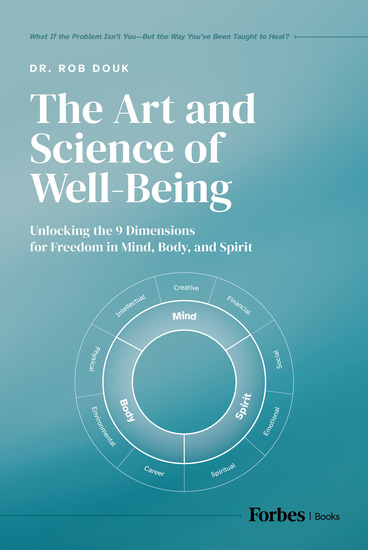
  • The Art and Science of Well-Being - Unlocking the 9 Dimensions for Freedom in Mind Body and Spirit - cover

    The Art and Science of...

    Rob Douk

    • 0
    • 0
    • 0
    What if the key to well-being isn't found in fixing what's broken, but in rediscovering what makes us whole? In The Art and Science of Well-Being, Dr. Rob Douk introduces neurobiotheology—a revolutionary approach that integrates the latest research on brain science with profound insights about human meaning and purpose.
    Show book
  • Swapped for the Duke - Gender Swap - cover

    Swapped for the Duke - Gender Swap

    Kinky Press

    • 0
    • 0
    • 0
    Does he have the assets to please the Duke? 
      
    Young Elliot doesn’t do much but cook and clean for his cruel, uncaring stepfather and oblivious, bimbo stepsisters. All he wants is to leave this place and start a new life somewhere—to be special to someone.  
      
    When his fairy godmother grants his wish to attend the Duke of Westbrook’s fancy masquerade ball, he is unsure - but she assures him to have an open mind… the duke, after all, is known to pick only the prettiest and kinkiest women. 
      
    Will Elliot agree to be turned into the devastatingly sexy Ella? And will she blow the duke’s… mind?
    Show book
  • Three Wise Monkeys - The Making of an African Economic Tragedy - cover

    Three Wise Monkeys - The Making...

    Charles van Onselen

    • 0
    • 0
    • 0
    Volume 1 of Three Wise Monkeys explores the Portuguese colonisation of Mozambique, and the gradual transformation of the colony into a reservoir of cheap labour, first during the Atlantic slave trade and then during the rise of the voracious Rand mining industry.
    Mozambique became locked into financial dependence on South Africa. The South African mining industry came to own significant parts of the harbour infrastructure of Lourenço Marques. The mining industry's insatiable appetite for pit props gave rise to a globalised trade in timber flowing in from the US, Scandinavia and Australia via new shipping lines to the port of Lourenço Marques.
    After World War I, the South African gold-mining industry and Mozambique's weak 'central bank', the Banco Nacional Ultramarino, operating alongside the South African Reserve Bank, a branch of the Royal Mint and the Rand Refinery, effectively controlled the economic fortunes and destiny of South Africa's neighbour. Mozambique was colonised twice over – first by Portugal and then by South Africa.
    Show book
  • Emotional Intelligence - Unlocking the Power of Empathy Self-awareness and Social Skills - cover

    Emotional Intelligence -...

    May Francis

    • 0
    • 0
    • 0
    "Emotional Intelligence: Unlocking the Power of Empathy, Self-awareness, and Social Skills" is a comprehensive guide to understanding and improving emotional intelligence. 
    The book delves into the science of emotions and provides practical techniques for building self-awareness, empathy, and social skills. Readers will learn how to identify and manage their emotions, understand the emotions of others, and communicate effectively in both personal and professional relationships. 
    With a focus on mindfulness and self-reflection, this book offers a step-by-step guide to elevating emotional intelligence and enhancing overall well-being. 
    Whether you're seeking to improve your relationships, advance your career, or simply live a more fulfilling life, this book is the perfect resource for unlocking the power of empathy, self-awareness, and social skills.
    Show book
  • The Rise of the Soviet Union - A Captivating Guide to the Russian Revolution and the Rise of the Soviet Union Led by Vladimir Lenin and the Bolsheviks - cover

    The Rise of the Soviet Union - A...

    History Retold

    • 0
    • 0
    • 0
    Discover the Powerful Story of the October Revolution and How It Changed History. 
    Welcome to an exciting journey into the history of one of the most significant events in modern history.  
    The October Revolution, led by Vladimir Lenin and his Bolsheviks, changed the world forever.  
    Learn about Tsar Nicholas II and his overthrow, Leon Trotsky’s leadership in organizing the Red Army, White Army opposition, and the subsequent civil war.  
    The Provisional Government’s downfall, Lenin’s rise to power, the Brest-Litovsk Treaty negotiations with Germany, and ultimately how it all led to the formation of the Soviet Union.  
    • Uncover how Lenin's Bolshevik party overthrew Tsar Nicholas II & formed a new government  
    • Understand how Trotsky organized a Red Army & defeated White Army forces during Russia's Civil War  
    • Explore Lenin's negotiation with Germany for peace through the Brest-Litovsk Treaty & its role in forming the Soviet Union 
      
    Get this book today! And deep into the Russian Revolution and understand the events that shaped history!
    Show book
  • Viracocha: The History and Legacy of the Inca’s Creator God - cover

    Viracocha: The History and...

    Editors Charles River

    • 0
    • 0
    • 0
    Although the Inca’s oral traditions suggested that the history of the region began with their empire, the various gods and the religious ceremonies of the peoples that inhabited the Inca’s lands before their arrival were assimilated into the Inca Empire and were incorporated into Inca religion. However, under Inca rule, all those gods were to be subordinate to those gods of the Incas themselves, so as to ensure that imperial authority was clear and without dispute among all quarters of the empire.  
    	Viracocha was the primary god in the Inca pantheon as the origin and creator of all things. His son, the god Inti, or the Sun, was married to Mama Quilla, the Moon, who was also created by Viracocha. According to one myth, Inti was the father of Manco Cápac, the founder of the Inca ruling dynasty, but it was believed by some that Viracocha himself fathered Manco Cápac. In practice, the Inca centered their religious worship on Inti, and this god's High Priest was the second most important person in Inca society. The god Inti was honored at an annual celebration held each June, and the Inti Raymi festival included sacrifices, feasts and sexual abstinence. This cosmology was imposed throughout the empire, and temples to the Sun were constructed and staffed by religious officials who were allotted farmland called “lands of the Sun.” Other local cults were provided with produce from these lands as well.  
    	The main temple of Inca religion was the Coricancha or Sun Temple in Cuzco, in which was kept the great golden disk of the Sun. The disk was appropriated by the Spanish in 1571 and sent off to the Pope. While it has disappeared, perhaps lost somewhere during the tortuous route to Spain, it remains alive in the fabulous world of adventure story writers, New Age mystics and manufacturers of souvenirs. It became a major element in the iconography of the 19th century independence movement in South America.
    Show book