Join us on a literary world trip!
Add this book to bookshelf
Grey
Write a new comment Default profile 50px
Grey
Subscribe to read the full book or read the first pages for free!
All characters reduced
Platinum Formation - cover

Platinum Formation

Yves Earhart

Translator A AI

Publisher: Publifye

  • 0
  • 0
  • 0

Summary

Platinum Formation explores the fascinating journey of platinum, from its origins deep within the Earth's mantle to its concentration into valuable ore deposits. This book examines the geological processes responsible for transforming trace amounts of this precious metal into economically viable resources. Platinum's unique properties, such as its resistance to corrosion and its catalytic activity, make it essential for various industries, including automotive and electronics. The book investigates how magmatic activity transports platinum group elements (PGEs) from the mantle to the crust, where they accumulate in specific geological environments. It argues that the formation of significant platinum deposits requires a specific combination of geological factors, including an enriched mantle source, efficient transport mechanisms via magma, and favorable conditions for precipitation in the crust. By integrating recent advances in mantle dynamics with detailed analyses of crustal ore-forming processes, Platinum Formation provides a quantitative understanding of the factors controlling platinum concentration. Beginning with the basic properties of platinum, the book progresses through mantle dynamics, magma transport, and crustal deposition environments. It features geochemical analyses, isotopic studies, and case studies of major platinum deposits. The book concludes by considering the economic aspects of platinum mining, exploration strategies, and future resource management. This approach provides a comprehensive perspective on the geological origin of platinum.
Available since: 02/12/2025.
Print length: 70 pages.


Other books that might interest you

  • Mammalogy - Mammals: Exploring Warm-Blooded Life on Earth - cover

    Mammalogy - Mammals: Exploring...

    Mike Crawford

    • 0
    • 0
    • 0
    Mammals, the dominant group of warm-blooded vertebrates on Earth today, have a deep evolutionary history that stretches back over 300 million years. Their origins can be traced to the synapsids, a group of amniotes that first appeared in the late Carboniferous period. These early synapsids were distinct from reptiles and birds, possessing a single temporal fenestra, an opening in the skull that allowed for stronger jaw muscles. Over millions of years, synapsids diversified into a variety of forms, some of which gave rise to the therapsids, the direct ancestors of modern mammals. 
    During the Permian period, therapsids became the dominant terrestrial vertebrates, developing more advanced characteristics such as differentiated teeth, a more upright posture, and improved metabolic efficiency. However, the Permian-Triassic extinction event, the most severe mass extinction in Earth's history, led to a significant decline in their diversity. Those that survived continued to evolve, giving rise to cynodonts, a subgroup of therapsids that displayed increasingly mammal-like features. Cynodonts had more complex teeth, enhanced jaw mechanics, and possibly even fur, adaptations that would later define true mammals.
    Show book
  • Random Facts About Life That Will Make You Sleep Fast: Calm Bedtime Talk - cover

    Random Facts About Life That...

    Facta Somnus

    • 0
    • 0
    • 0
    "Random Facts About Life That Will Make You Sleep Fast: Calm Bedtime Talk" is an audiobook designed to help listeners fall asleep quickly and peacefully. Narrated in a soothing voice, this audiobook shares a collection of fascinating yet gentle facts about life, nature, and the world around us. The content is curated to engage the mind just enough to distract from daily stress while promoting relaxation. With its calming tone and tranquil pacing, this audiobook serves as a perfect bedtime companion, helping listeners wind down and drift into a restful sleep with ease.
    Show book
  • Kanban - Secret Formulas and Strategies in Kanban Methodology - cover

    Kanban - Secret Formulas and...

    Alexa Campbell

    • 0
    • 0
    • 0
    Do you want your business to be leaner and more streamlined? 
    Do you want to add value to what your business provides? 
    This book will show you how! 
    Kanban is a Japanese idea and is a scheduling system for lean manufacturing. Suitable for any type of business that requires a production system, it enables productivity to become more streamlined by highlighting problems at an early stage. 
    Now, with Lean Kanban, you can see how this remarkable idea could work for you as you aim to simplify your business, with chapters that include:How Kanban enables continuous improvementLean business principlesConcepts and toolsHow to harness Lean to foster innovation and develop new ideasHow a business can identify value through LeanUsing Kanban to improve productivityTop mistakes made by new teamsAnd much more… 
    With this book, you will be well on the way to changing how your business operates and improving productivity and value at the same time. 
    Get a copy of Lean Kanban today and see how it could improve the way you run your business!
    Show book
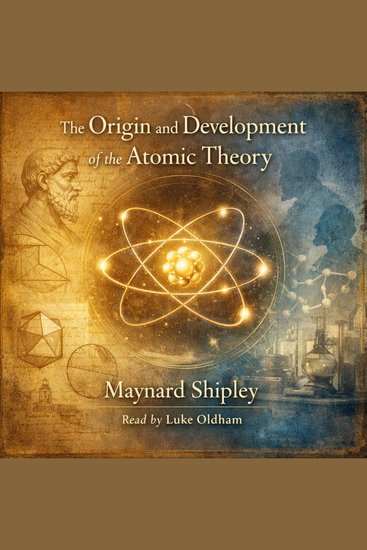
  • The Origin and Development of the Atomic Theory - cover

    The Origin and Development of...

    Maynard Shipley

    • 0
    • 0
    • 0
    The Origin and Development of the Atomic Theory is a concise and illuminating journey through one of the most important ideas in human thought: the nature of matter itself. 
    Written in the early twentieth century, Maynard Shipley traces the evolution of atomic theory from its philosophical beginnings in the ancient world to its emergence as a cornerstone of modern science. Beginning with the Pythagoreans and early Greek and Indian thinkers, Shipley explores how number, geometry, and speculation first shaped humanity’s attempts to understand the structure of reality. 
    The narrative follows the development of atomism through Leucippus and Democritus, examining atoms and the void, causal necessity, sensory perception, and the physical properties of shape, size, and arrangement. Shipley contrasts these ideas with competing schools of thought, including the Eleatics’ denial of motion and Anaxagoras’ theory of “seeds,” before turning to Epicurus and Lucretius, whose writings defended atomism against superstition and divine design. 
    In its final chapters, the book connects ancient philosophy to modern science, charting the revival of atomism through thinkers such as Descartes and Gassendi and culminating in John Dalton’s quantitative laws of chemistry. Shipley concludes by linking these early models to modern discoveries—electrons, nuclei, isotopes, and atomic number—showing how a speculative idea became a measurable scientific reality. 
    Clear, thoughtful, and accessible, The Origin and Development of the Atomic Theory offers a timeless overview of how human reason slowly uncovered the hidden structure of matter—and laid the foundations of chemistry and physics as we know them.
    Show book
  • The Fourth Coming - How God Mathematics Can Put the World to Rights - cover

    The Fourth Coming - How God...

    Francis Keith Robins

    • 0
    • 0
    • 0
    In a time of dire need, as climate change, conflict, and economic upheaval imperil our existence and our mental well-being deteriorates from not utilising our minds as God intended, Francis Keith Robins introduces a groundbreaking approach to saving humanity – reshaping our thought processes through mathematics.
     
    In his book, The Fourth Coming, Robins provides a detailed, step-by-step guide to unlocking our inherent mathematical potential. His vision is to create a society that is inclusive, equal, and peaceful – one that aligns with God’s desire for us. He advocates for a paradigm shift where shared mathematical models and systematic thinking supplant the ineffective classes of governments and institutions currently jeopardizing our planet. This revolutionary approach aims to alter the trajectory of human history in a manner that aligns with divine intentions. 
     
    Robins’ theories, described as a work of mathematical brilliance, offer a refreshingly simple yet profound solution to consciousness – which, as noted by ‘New Scientist’, remains one of the most elusive and significant mysteries in science and philosophy. Furthermore, he concludes that the introduction of religion by God was a response to 
    humanity’s failure to use their brains as He intended.
    Show book
  • Biomedical Engineering - The Fundamentals of Biotechnology - cover

    Biomedical Engineering - The...

    Phil Gilberts

    • 0
    • 0
    • 0
    Biochemical engineering integrates the principles of biology, chemistry, and engineering to develop processes for the large-scale production of valuable biochemicals. This interdisciplinary field plays a crucial role in industries such as pharmaceuticals, biotechnology, food and beverage, and environmental engineering. 
      
    One of the fundamental aspects of biochemical engineering is fermentation, which involves the controlled growth of microorganisms like bacteria, yeast, or fungi to produce desired compounds. These microorganisms can be genetically engineered or selected for their ability to synthesize specific products, such as antibiotics, vitamins, or biofuels. 
      
    Biocatalysis is another key area within biochemical engineering, focusing on the use of enzymes or whole cells to catalyze chemical reactions. By harnessing the specificity and efficiency of biological catalysts, biocatalysis offers environmentally friendly and cost-effective solutions for chemical synthesis and manufacturing processes. 
      
    Bioseparation techniques are essential for isolating and purifying target biomolecules from complex mixtures produced during fermentation or biocatalytic reactions. These techniques include filtration, chromatography, centrifugation, and membrane processes, which enable the recovery of high-purity products for further downstream processing.
    Show book