Join us on a literary world trip!
Add this book to bookshelf
Grey
Write a new comment Default profile 50px
Grey
Subscribe to read the full book or read the first pages for free!
All characters reduced
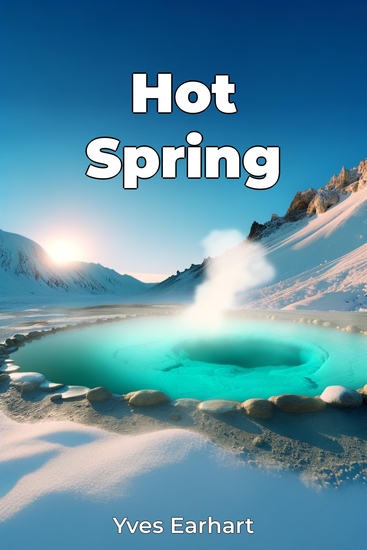
Hot Spring - cover

Hot Spring

Yves Earhart

Translator A AI

Publisher: Publifye

  • 0
  • 0
  • 0

Summary

Hot Spring unveils the captivating world of geothermal activity, exploring how nature creates rejuvenating natural spas. These springs, rich in minerals, have long drawn human interest. The book examines the geological processes behind their formation, such as groundwater heated by magma rising through rock formations, influenced by plate tectonics and volcanism.

 
Each spring's unique therapeutic properties arise from its diverse chemical composition, impacting both ecological systems and potential human health benefits. The book looks at the geological origins of hot springs, their chemical and biological diversity, and their cultural and economic importance worldwide. It traces how the Earth's internal heat drives geothermal activity, influencing hot spring distribution.

 
The book's progression includes basic principles of geothermal energy and hydrology, then moves to case studies of specific regions, examining their geological settings and chemical profiles. By combining scientific rigor with accessible storytelling, Hot Spring is a comprehensive resource.

 
It emphasizes the interconnectedness of geology, chemistry, biology, and human culture in these systems. Understanding these connections is crucial for sustainable management and conservation, especially given ongoing debates about geothermal resource exploitation and land use.
Available since: 02/12/2025.
Print length: 85 pages.

Other books that might interest you

  • The Catalyst - RNA and the Quest to Unlock Life's Deepest Secrets - cover

    The Catalyst - RNA and the Quest...

    Thomas R. Cech

    • 0
    • 0
    • 0
    For over half a century, DNA has dominated science and the popular imagination as the "secret of life." But over the last several decades, a quiet revolution has taken place. In a series of breathtaking discoveries, the biochemist Thomas R. Cech and a diverse cast of brilliant scientists have revealed that RNA—long overlooked as the passive servant of DNA—sits at the center of biology's greatest mysteries: How did life begin? What makes us human? Why do we get sick and grow old? In The Catalyst, Cech finally brings together years of research to demonstrate that RNA is the true key to understanding life on Earth, from its very origins to our future in the twenty-first century. 


    A gripping journey of discovery, The Catalyst moves from the early experiments that first hinted at RNA's spectacular powers, to Cech's own paradigm-shifting finding that it can catalyze cellular reactions, to the cutting-edge biotechnologies poised to reshape our health. We learn how RNA may have jump-started life itself, and how, at the same time, it can cut our individual lives short through viral diseases and cancer. We see how RNA is implicated in the aging process and explore the darker depths of the supposed fountain of youth, telomerase. And we catch a thrilling glimpse into how RNA-powered therapies may enable us to improve and even extend life beyond nature's current limits.
    Show book
  • Mathematical Devotionals - cover

    Mathematical Devotionals

    Dale K. Hathaway

    • 0
    • 0
    • 0
    Mathematical Devotionals serves as a guide to connect Christianity with mathematics through a year's worth of inspirational prompts and meditations. Each devotional is self-contained, including scripture verses and an image. The devotionals fall into four categories: 
    · Mathematical connections to Christianity 
    · Semi-biographical devotionals of Christian mathematicians 
    · Devotionals based on quotes either by a mathematician or about mathematics 
    · A few devotionals using logical reasoning as a form of Christian apologetics 
    The devotionals use mathematics, statistics, computer science, and even occasionally stray into the other science areas to provide a variety of engaging connections to Christianity. The book is intended to show how mathematics and other scientific fields should be considered complementary to Christianity rather than adversarial. 
    About the Author: 
    Dale K. Hathaway has been a faculty member, department chair, and recently selected as the Associate Dean for the Martin D. Walker School of STEM (Science, Technology, Engineering, and Mathematics) at Olivet Nazarene University in Bourbonnais, Illinois 
    since 1989. He received his Ph.D. in Mathematics from Boston University. Mathematically, he has a passion for finding and presenting "Birthday Problem" connections and, as a Christian, he loves finding ways to connect his profession with his faith.
    Show book
  • Everyday AI - How Anyone Can Benefit from Artificial Intelligence - cover

    Everyday AI - How Anyone Can...

    Nura Uba

    • 0
    • 0
    • 0
    Everyday AI: How Anyone Can Benefit from Artificial Intelligence 
     Artificial intelligence isn’t just powering high-tech companies and futuristic inventions it’s already shaping your daily life in ways you may not even notice. From personalized recommendations and smart assistants to fraud protection and healthcare breakthroughs, AI is working quietly in the background to make things faster, easier, and more secure. 
    This Audiobook is your guide to understanding AI without the jargon, the hype, or the fear. You don’t need to be a programmer or a tech expert to see how it fits into your world and how you can make the most of it. 
     Inside, you’ll discover:How AI shows up in everyday routines from shopping and travel to work and entertainment.The biggest myths and misunderstandings about AI, and what’s really true.Practical ways to use AI tools for productivity, learning, and personal growth.How to stay confident and informed as AI continues to evolve. 
     Everyday AI is written for curious beginners, busy professionals, and anyone who wants to keep up without feeling overwhelmed. By the end, you’ll have the clarity and confidence to see AI not as something distant or intimidating, but as a helpful partner in your everyday life.
    Show book
  • Horses And Ponies - cover

    Horses And Ponies

    Shelagh Canning

    • 0
    • 0
    • 0
    Kids will love this sweet story as they listen to “Horses and Ponies” and follow along word-for-word in this adorably illustrated eBook. Children will get to watch how a horse grows up, from the time they're born as a foal, to all the different ways they make our lives great as adults. Kids and parents alike will enjoy reading along to “Horses and Ponies” over and over again!
    Show book
  • scientific experiments that could have destroyed the world - cover

    scientific experiments that...

    Introbooks Team

    • 0
    • 0
    • 0
    Science informs the public policies, the social, and the personal decisions to conserve energy, farming, leisure, health, transport, defense, and so forth. Whether there are fair chances for failure or not, conducting experiments on merits basis, is usual amidst the world wide scientists today. If there are ample negatives then it is good to forsake the study or the research for the sake of the safety, all until the person come up with something really solid and substantial. At the same time, the understanding and the knowledge of the commons opposed to that of the scientists, is way different. That is the reason why they are scientists. 
    Having said that, to counter, or to argue with the top scientists, and their theories is not well within the scope of the insane commons. That boosts the confidence of the researchers to do what they want to do, and they get approval ahead to do the needful. It is generally acceptable saying that anything that is new is sure to get agitations from all the sides. Even the train, or radio or television or a steamer had agitations. Now, life is inevitable without using the Smartphone, high end gadgets, metro rails and so forth. In that aspect, encouraging the experiments that are conducted safely is the only choice for betterment. Thank much to all those who helped in the making of this useful literature. 
    Show book
  • Beyond Quantity - Research with Subsymbolic AI - cover

    Beyond Quantity - Research with...

    Jens Schröter, Andreas Sudmann,...

    • 0
    • 0
    • 0
    How do artificial neural networks and other forms of artificial intelligence interfere with methods and practices in the sciences? Which interdisciplinary epistemological challenges arise when we think about the use of AI beyond its dependency on big data? Not only the natural sciences, but also the social sciences and the humanities seem to be increasingly affected by current approaches of subsymbolic AI, which master problems of quality (fuzziness, uncertainty) in a hitherto unknown way. But what are the conditions, implications, and effects of these (potential) epistemic transformations and how must research on AI be configured to address them adequately?
    Show book