Join us on a literary world trip!
Add this book to bookshelf
Grey
Write a new comment Default profile 50px
Grey
Subscribe to read the full book or read the first pages for free!
All characters reduced
Disentangling humans - Genetics and environment as the basis of explaining the self and society - cover

Disentangling humans - Genetics and environment as the basis of explaining the self and society

Yiorgos Apidianakis

Publisher: Armida Publications

  • 0
  • 0
  • 0

Summary

This is a bold, thought-provoking exploration of the gaps in our understanding of the ethical, philosophical, and political ramifications of our genetics and how they are shaped by our environments. 
 
Disentangling humans synthesizes life and social sciences, and the humanities, into a philosophical understanding of humans in terms of wellbeing, sociality and ethics. 
 
Drawing from the fields of classical genetics, evolutionary biology and sociopsychology, and infused with references to classic literature and popular art, Dr Apidianakis examines the following questions through the lenses of DNA:
 
1. Is it more meaningful to predict the disease prospects of each individual or to indiscriminately prevent disease from happening?
 
2. Are there biological limits in achieving the humanitarian ideal of human equality? That is, are there inerasable inequalities among people?
 
3. Can we be determined by our genes and environments and still be responsible for our actions?
 
4. Are we more behaviorally free when following our hearts or when planning for the future?
 
5. When we punish people, should we be aiming to pacify the victim or rectify the prospective perpetrator?
 
6. Which should guide our politics and ethics, our ideals or our universal behavioral attributes?
 
7. What does it mean to be human?
 
The book is a flow of ten interlinked chapters intended for the scholar, the student, and the layperson alike. It is a source of information and arguments helping to understand the human condition from the perspective of genetics.. 
Available since: 06/28/2024.
Print length: 306 pages.

Other books that might interest you

  • A Walker in the City - cover

    A Walker in the City

    Alfred Kazin

    • 0
    • 0
    • 0
    A literary icon's "singular and beautiful" memoir of growing up as a first-generation Jewish American in Brownsville, Brooklyn (The New Yorker). 


    A classic portrait of immigrant life in the early decades of the twentieth century, A Walker in the City is a tour of tenements, subways, and synagogues—but also a universal story of the desires and fears we experience as we try to leave our small, familiar neighborhoods for something new. 


    With vivid imagery and sensual detail—the smell of half-sour pickles, the dry rattle of newspapers, the women in their shapeless flowered housedresses—Alfred Kazin recounts his boyhood walks through this working-class community, and his eventual foray across the river to "the city," the mysterious, compelling Manhattan, where treasures like the New York Public Library and the Metropolitan Museum beckoned. Eventually, he would travel even farther, building a life around books and language and literature and exploring all that the world had to offer.
    Show book
  • The Rest Is Memory - cover

    The Rest Is Memory

    Lily Tuck

    • 0
    • 0
    • 0
    THE HEARTBREAKING STORY OF A YOUNG CATHOLIC GIRL TRANSPORTED TO AUSCHWITZ BECOMES A RASHOMON-LIKE RONDO BY ONE OF OUR GREATEST NOVELISTS. 
     
    First glimpsed riding on the back of a boy’s motorcycle, fourteen-year-old Czeslawa comes to life in this mesmerizing novel by Lily Tuck, who imagines her upbringing in a small Polish village before her world imploded in late 1942.  
     
    Stripped of her modest belongings, shorn, and tattooed number 26947 on arriving at Auschwitz, Czeslawa is then photographed. Three months later, she is dead. 
     
    How did this happen to an ordinary Polish citizen? This is the question that Tuck grapples with in this haunting novel, which frames Czeslawa’s story within the epic tragedy of six million Poles who perished during the German occupation. A decade prior to writing The Rest Is Memory, Tuck read an obituary of the photographer Wilhelm Brasse, who took more than 40,000 pictures of the Auschwitz prisoners. Included were three of Czeslawa Kwoka, a Catholic girl from rural southeastern Poland. Tuck cut out the photos and kept them, determined to learn more about Czeslawa, but she was only able to glean the barest facts: the village she came from, the transport she was on, that she was accompanied by her mother and her neighbors, her tattoo number, and the date of her death. From this scant evidence, Tuck’s novel becomes a remarkable kaleidoscopic feat of imagination, something only our greatest novelists can do. 
     
    “Beautifully written, all the while instilling a sense of horror” (Susanna Moore), Tuck’s language swirls about, yet not a word is out of place. The subtly rotating images tumble out at us, accelerating as we learn about Czeslawa’s tragic stay in Auschwitz, the lives of real people such as the barbaric Commandant Rudolf Höss; his unconscionable wife, Hedwig; the psychiatrist and child rescuer Janusz Korczak; and the mordant Polish short story writer Tadeusz Borowski. 
     
    Although we are certain of Czeslawa’s fate, we have no choice but to keep turning the pages, thoroughly mesmerized by Tuck’s near otherworldly prose. 
     
    In Lily Tuck’s hands, The Rest Is Memory becomes an unforgettable work of historical reclamation that rescues an innocent life, one previously only recalled by a stark triptych of photographs. 
     
    “The Rest Is Memory is a literary resurrection, as shattering as it is astonishing. Lily Tuck has done the impossible; from darkness and hideous cruelty, she has woven an unforgettable paean to hope, to life, to justice.”—Junot Diaz
    Show book
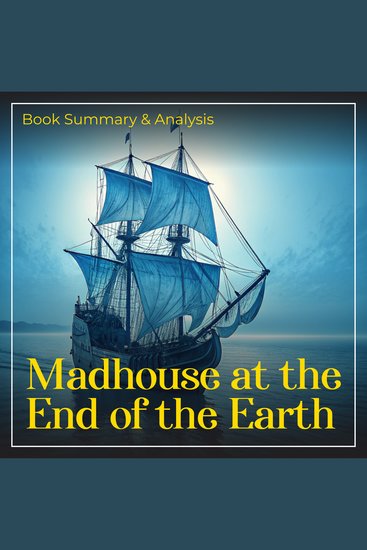
  • Madhouse at the End of the Earth: Book Summary and Analysis - cover

    Madhouse at the End of the...

    Briefly Summaries

    • 0
    • 0
    • 0
    This is a concise summary and analysis of Madhouse at the End of the Earth, by Julian Sancton.
     
    It is not the original book and is not affiliated with or endorsed by Julian Sancton.
     
    Ideal those seeking a quick and insightful overview.


    In Madhouse at the End of the Earth, embark on a gripping journey into one of history's most harrowing tales of survival, endurance, and exploration. This captivating audiobook chronicles the Belgian Antarctic Expedition of 1897, led by Adrien de Gerlache, as it ventured into the uncharted and unforgiving wilderness of Antarctica. What began as a quest for glory quickly turned into a nightmare when the expedition’s ship, the Belgica, became trapped in the ice, forcing the crew to endure months of isolation during the Antarctic winter.
     
    Through vivid storytelling and meticulous research, the author reveals the psychological and physical toll of the crew's ordeal, from scurvy and freezing temperatures to the descent into madness. At the heart of the narrative are the extraordinary figures of Frederick Cook and Roald Amundsen, whose resilience and ingenuity not only kept the crew alive but also laid the groundwork for future polar exploration.
     
    Madhouse at the End of the Earth is more than a tale of survival—it’s a testament to the human spirit’s ability to persevere in the face of overwhelming adversity. Perfect for listeners captivated by true adventure, leadership lessons, and the depths of human endurance, this audiobook will inspire you to confront your own challenges with courage and determination.
     
    Prepare to be transported to the edge of the world, where hope, innovation, and the will to survive triumph over the harshest conditions imaginable.
    Show book
  • Kalidasa’s Meghadhuta - With a brief annotation in English - cover

    Kalidasa’s Meghadhuta - With a...

    M. Venkataraman

    • 0
    • 0
    • 0
    The Meghadhuta also known as Meghasandesam is one of the beautiful works of Kalidasa. It is a poem in Sanskrit Language consisting of 117 verses. It is actually one of a few minor compositions of Kalidasa. Being one of the greatest poets of Sanskrit Literature, he has produced epics like the Raghuvamsa Mahakavya and Kumarasambhavam and dramas like Abigyana Sakuntalam. 
    The ideas contained in this poem is simple but romantic. Alaka is a mountain in the Himalayas. The god of wealth, Kubera is the king of this place. He has a group of divine attendants working for him. These attendants are known as Yakshas. One of these Yakshas was very much smitten and obsessed with his wife. Hence, he ignored his duties. Kubera, therefore, cursed him and banished him into the woods on planet Earth. The Yaksha came to a mountainous place called Ramagiri named after Lord Rama near the present state of Chattisgarh in India and was residing in an ashram there. 
    The Yaksha spent several months on the mountain. Thoroughly dejected, the love-lorn Yaksha keeps thinking about his wife. His wife also keeps thinking about him all day and all night. It is the time of monsoon. The Yaksha sees a rain cloud passing by. He requests the cloud to carry a message to his wife. The Yaksha then starts to describe the route that the cloud should take to meet his lover. This forms the crux of the verses of this poem. 
    The works of Kalidasa are synonymous with the beauty of nature, lyrical poetry, dramatic stories, great heroes and sensuous heroines. The Meghadhuta focusses mainly on sensual love and the beauty of nature. Kalidasa’s genius lies in making these two subjects flow into each other in this work. For example, Kalidasa picturises the rivers as sensuous women, and he advises his friend namely the cloud to take interest in the rivers along the way on his journey from the plains to Alaka.
    Show book
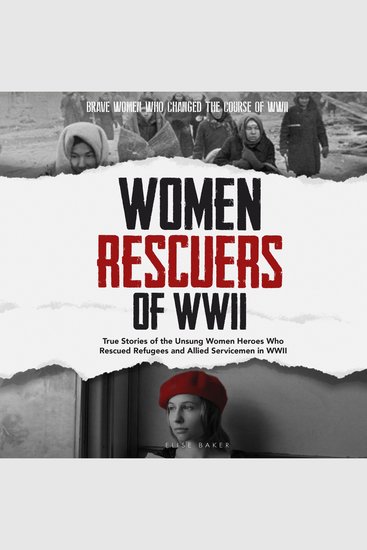
  • Women Rescuers of WWII - True stories of the unsung women heroes who rescued refugees and Allied servicemen in WWII - cover

    Women Rescuers of WWII - True...

    Elise Baker

    • 0
    • 0
    • 0
    What bright secrets transpired during the world’s darkest hours? 
    Light shone in an era marked by tyranny and mass destruction. Hope prevailed when staying hidden and quiet was a civilian’s best chance of survival. 
    The Second World War represents one of humanity’s greatest tragedies. Yet in the thick of cruelty, suffering, and loss, ordinary women secretly stood against the Nazi regime, selflessly serving as bearers of peace and hope. They risked their lives to protect the persecuted without seeking reward or recognition. 
    Today, we honor these women for their courage, kindness, wit and resourcefulness during the war. 
    Here lie their unsung legacies. 
    Women Rescuers of WWII presents the true stories of brave female heroes during the world’s most perilous crisis. Marvel at the phenomenal untold rescue missions of 
    ●      Ida and Louise Cook, the Secretive Sisters, whose risky airline flights almost cost them everything. 
    ●      Ebba Lund, the Red Riding Hood of the Danish Resistance, and the seafaring voyages she arranged for refugees fleeing to Swedish shores. 
    ●      Irena Sendler, the Good Catholic Smuggler, and her daring plot to liberate Jewish children from the Warsaw Ghetto. 
    ●      Marie Schmolka and Doreen Warriner, the Masterminds of the Move, whose Kindertransport scheme freed thousands of children. 
    ●      Andrée de Jongh, the Postmistress, who smuggled her “parcels”—fallen Allied airmen—from France to neutral Spain. 
    ●      other extraordinary women who risked it all to stand up for their beliefs!
    Show book
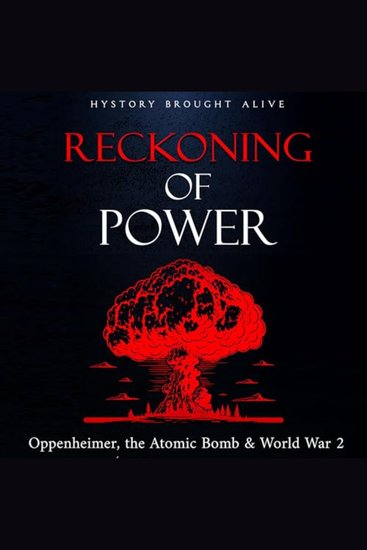
  • Reckoning of Power - Oppenheimer the Atomic Bomb & World War 2 - cover

    Reckoning of Power - Oppenheimer...

    History Brought Alive

    • 0
    • 0
    • 0
    Discover the untold story of the most terrifying invention in human historyThis audiobook explores the history of the Atomic Bomb in World War II, and uncovers Robert Oppenheimer's mysterious role as its visionary leader.As the world plunged into war, Oppenheimer found himself at the centre of a moral and scientific dilemma. Could science save humanity, or would it be its downfall?With gripping narratives and meticulous research, this book takes you on a riveting journey from the Manhattan Project to the Atomic Bombings at Hiroshima and Nagasaka, traversing the landscapes of WWII, and the nuclear age aftermath.Here are some of the highlights: 
    J. Robert Oppenheimer, the brilliant, but troubled physicist who played a key role in the development of the Atomic Bomb 
    Explore the turbulent backdrop of World War II, where global conflict ignited scientific innovation 
    Step into the shoes of some of the greatest scientific minds in history—Albert Einstein, Edward Teller, Leslie Groves, Niels Bohr, and Leo Szilárd 
    Witness the crucial moments and decisions that led to the dropping of the "Little Boy" and "Fat Man" Atomic Bombs on Hiroshima and Nagasaki 
    Discover the Manhattan Project, a top secret mission that assembled the world's brightest minds in a race against the sinister, Nazi Atomic Project 
    E = mc²: Unravel the mysteries of Einstein's groundbreaking equation that laid the foundation for atomic science 
    Explore the Cold War and the arms race, followed by a glimpse into the future of nuclear energy 
    All of this and much, much more….Whether you're a history enthusiast or new to the subject, this book tells all about Oppenheimer, the Atomic Bomb, World War II, and the Nuclear Age Aftermath.Grab your copy of this book today!
    Show book