Join us on a literary world trip!
Add this book to bookshelf
Grey
Write a new comment Default profile 50px
Grey
Subscribe to read the full book or read the first pages for free!
All characters reduced
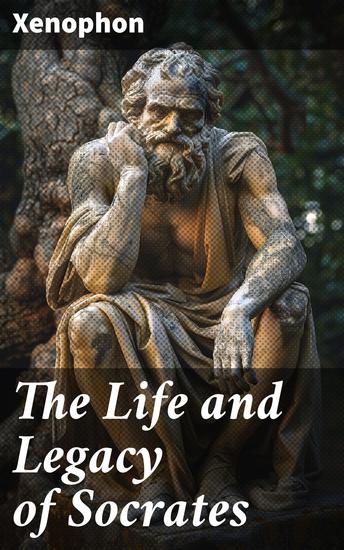
The Life and Legacy of Socrates - Xenophon's Memoires of Socrates and His Teachings: Memorabilia Apology The Economist Symposium… - cover

The Life and Legacy of Socrates - Xenophon's Memoires of Socrates and His Teachings: Memorabilia Apology The Economist Symposium…

Xenophon

Translator Henry Graham Dakyns

Publisher: Good Press

  • 0
  • 0
  • 0

Summary

In 'The Life and Legacy of Socrates,' Xenophon presents a compelling portrayal of the philosopher Socrates, intertwining narrative and philosophical discourse. Written in the 4th century BCE, this work serves as both a biography and a meditation on Socratic thought, emphasizing the moral teachings and the method of dialectical inquiry that Socrates championed. Xenophon's straightforward prose contrasts sharply with Plato's more elaborate dialogues, offering a unique perspective that is both accessible and deeply insightful, thereby capturing the essence of Socratic philosophy within its historical context.
Available since: 12/15/2023.
Print length: 502 pages.


Other books that might interest you

  • Talleyrand: The Life and Legacy of France’s Most Influential Diplomat - cover

    Talleyrand: The Life and Legacy...

    Editors Charles River

    • 0
    • 0
    • 0
    “Politics is the systematic cultivation of hatred.” - Talleyrand 
    	While Metternich is most associated with the Congress of Vienna, France, despite its turbulence, had its own influential representative there: Charles Maurice de Talleyrand-Périgord. Known simply as Talleyrand, his name ultimately became associated with crafty, manipulative personal and political maneuvering, even in a country that suffered no shortage of such diplomats and ministers in its history. 
    	As an adult, Talleyrand lived through the most tumultuous years of French history. In a period of little more than 40 years, France passed through five very different periods of rule, but despite the chaos these rapid changes brought, Talleyrand served in important roles in each successive new regime and, through a combination of charm, guile, intelligence, ability, and duplicity, played a leading role in undermining and destroying each. 
    	Under the Ancien Régime, the social and political system by which France had been ruled since the Middle Ages, Talleyrand became a bishop. When the French Revolution tore the nation apart, Talleyrand betrayed both the church and the French Monarchy and became Foreign Minister for the Directory, the governing committee of the French First Republic. In 1799, he betrayed the Republic by helping to organize the coup d'état that would see Napoleon Bonaparte become the absolute dictator of France. 
    	Talleyrand became extremely rich and very powerful under Napoleon, until he wearied of his new leader and betrayed him by selling secrets to his enemies. Talleyrand was one of the key people involved in the plot to remove Napoleon from power and pave the way for the Bourbon Restoration that brought Louis XVIII to the French throne in 1814. He was also a significant factor in the undermining of that regime and its replacement in 1830 during another revolution by a new constitutional monarchy.
    Show book
  • Visual Friendlies Tally Target - How Close Air Support in the War on Terror Changed the Way America Made War: Volume I: Invasions - cover

    Visual Friendlies Tally Target -...

    Ethan Brown

    • 0
    • 0
    • 0
    "Brown has taken an incredibly complex subject and made it accessible and readable, all while retaining the gravity of history and the sheer intensity of these battlefields. Airpower became a fundamental warfighting tool in the Global War on Terror, and its success depended on the community of JTACs whose experiences populate this important work. They are the unsung heroes of the post-9/11 wars America needs to meet." —David L. Goldfein, General (Ret.), USAF, 21st Chief of Staff 


    With a new century and a new enemy came a new kind of war: low intensity and civilian-dominated, blending austere rural and dense urban environments alike. Into this new kind of war, the American military launched two invasions against terrorist networks and military rivals, relying on airpower—close air support (CAS)—at a scale never before seen. 


    The Global War on Terror was the "CAS war." Forward Air Controllers were on the front lines, directing airstrikes against enemies in their safe havens, safeguarding friendly forces and civilians alike to their utmost, and achieving unprecedented success with limited resources. This volume captures the heroic accounts of the first Tactical Air Control Party (TACPs) in Afghanistan and Iraq, and how Close Air Support fundamentally reshaped the American war machine in the first five years of the War on Terror.
    Show book
  • The Teen Interpreter - A Guide to the Challenges and Joys of Raising Adolescents - cover

    The Teen Interpreter - A Guide...

    Terri Apter

    • 0
    • 0
    • 0
    Once children hit adolescence, it seems as if overnight “I love you” becomes “leave me alone,” and any question from a parent can be dismissed with one word: “fine.” But while they may not show it, teens benefit from their parents’ curiosity, delight, and connection. In The Teen Interpreter, psychologist Terri Apter looks inside teens’ minds—minds that are experiencing powerful new emotions and awareness of the world around them—to show how parents can revitalize their relationship. She illuminates the rapid neurological developments of a teen’s brain, explains the power of teenage friendships, and explores the positives and pitfalls of social media. With perceptive conversation exercises that synthesize research from more than thirty years in the field, Apter illustrates how teens signal their changing needs and identities—and how parents can interpret these signals and see the world through their teen’s eyes. The Teen Interpreter is a generous roadmap for enjoying the most challenging, and rewarding, parenting years.
    Show book
  • 10 Ancient Roman Concepts That Explain the Modern World - cover

    10 Ancient Roman Concepts That...

    D. S. Yvon

    • 0
    • 0
    • 0
    These ancient concepts come from an assortment of wisdom found in the time of the Roman Empire include: 
    The Tacitus Razor: “If you want to know who controls you, see who you’re not allowed to criticize.” This is how comedians accidently reveal a society's hierarchy—they call everyone naked, and soon discover who the king is. 
    The Slavery Syndrome. Roman historian Sallust: “Few men desire liberty; most men wish only for a just master.” Genuine liberty means making decisions 24/7; parsing right from wrong; solving pesky dilemmas using nothing but one’s own mind.  
    The Polybius Warning: 2nd century B.C. historian Polybius warned that a falling birthrate precedes civilizational collapse. Fewer births mean men and women have checked out. Polybius believed the Greek civilization fell due to its “low birth rate…” 
    The Pliny Principle: “It is wonderful how the mind is stirred and quickened into activity by brisk bodily exercise.”  
    The Uses of Folly. Roman historian Herodotus: “If a man insisted always on being serious, and never allowed himself a bit of fun and relaxation, he would go mad.”  
    6. The Vitruvius Rule: Modern architects love asymmetrical structures, but Ancient Roman architect Vitruvius said a building out of proportions is like a deformed body. Nature herself “composed the human body” and the rest of creation using “due proportions.” The Vitruvius Rule: No symmetry? Off to cemetery. 
    And more!
    Show book
  • The Sphinx and Its Significance - Mysteries of Egypt's Guardian - cover

    The Sphinx and Its Significance...

    Omar Khalil

    • 0
    • 0
    • 0
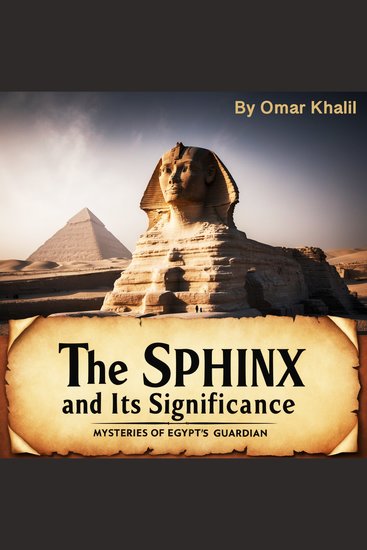
    The Great Sphinx of Giza is one of the most iconic and enigmatic monuments in the world. It stands as a symbol of ancient Egypt's grandeur, captivating historians, archaeologists, and tourists alike. The monument, which lies near the pyramids of Giza, is a colossal limestone statue with the body of a lion and the head of a human, believed to represent the Pharaoh Khafre. Its massive size and mysterious features have sparked fascination and numerous theories about its purpose, creation, and significance throughout history. 
    The origins of the Sphinx are shrouded in mystery, with its construction dating back to the Old Kingdom of Egypt, around 2500 BCE. Some scholars believe that the Sphinx was carved during the reign of Pharaoh Khafre, who also commissioned the construction of the second pyramid at Giza. Others propose that the monument predates Khafre's reign, possibly dating back to the reign of his father, Pharaoh Sneferu. While the precise dating remains uncertain, the Sphinx is undoubtedly a product of Egypt's architectural and artistic achievements, built to withstand the test of time. 
    The significance of the Sphinx in ancient Egyptian culture is multifaceted. In Egyptian mythology, lions were often associated with strength, power, and protection. The body of the lion, combined with the human head, symbolizes the union of human intelligence and animal strength, a combination that represented the ideal qualities of a ruler. The Sphinx’s location near the pyramids further emphasizes its role as a guardian, watching over the tombs of the pharaohs and ensuring their safe passage into the afterlife. The monument also reflects the Egyptians' reverence for their gods and the divine authority bestowed upon their rulers.
    Show book
  • A Rare Recording of Carl Jung - cover

    A Rare Recording of Carl Jung

    Carl Jung

    • 0
    • 0
    • 0
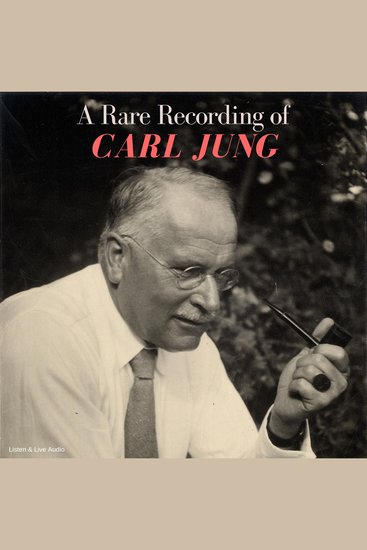
    Hear seven minutes of a 1959 interview with Swiss psychiatrist Carl Jung. This probing interview with Jung, considered the world’s greatest psychiatrist, provides a rare glimpse into his personal viewpoints and sheds insight into his pioneering work. Afterward, Jung was taken aback at the unexpectedly positive response from the general public. This strong interest in his work inspired Jung to write his final work, Man and His Symbols, his theory of the symbolism of dreams, explained in lay terms so as to be accessible to all who would come seeking answers.
    Show book