Join us on a literary world trip!
Add this book to bookshelf
Grey
Write a new comment Default profile 50px
Grey
Subscribe to read the full book or read the first pages for free!
All characters reduced
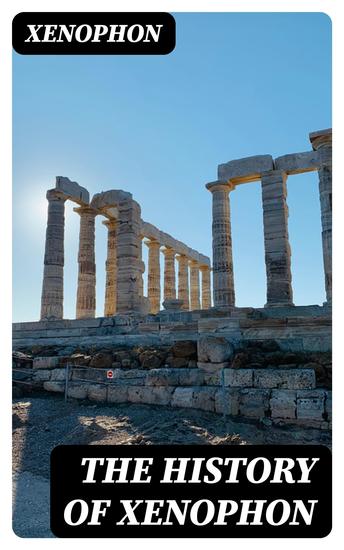
The History of Xenophon - cover

The History of Xenophon

Xenophon

Translator Henry Graham Dakyns

Publisher: DigiCat

  • 0
  • 0
  • 0

Summary

In "The History of Xenophon," the ancient Greek historian and soldier crafts a compelling narrative that intertwines personal experience with broader historical themes, notably the complexities of leadership, warfare, and human nature. Written in a direct and engaging prose style, the text reflects both personal observations from Xenophon's campaigns and his philosophical reflections on power dynamics. In a literary context that bridges the gap between narrative history and political philosophy, Xenophon employs a distinctive approach that examines the consequences of decisions made in the heat of battle and the virtues of effective governance, influenced by his time among the Greek mercenaries known as the Ten Thousand. Xenophon, a contemporary of Plato and student of Socrates, brings a unique perspective shaped by his experiences as a soldier and a politician in the turbulent landscape of 4th-century BCE Greece. His insights into the moral and ethical dilemmas faced by leaders are informed by his diverse roles, which include historian, philosopher, and military commander. This multifaceted background imbues his writing with a richness and authenticity that resonate throughout his historical inquiries. Readers interested in the intersection of history and philosophy will find "The History of Xenophon" an invaluable addition to their library. This work not only provides a vivid account of historical events but also prompts thoughtful reflection on the attributes that define effective leadership. Xenophon's blend of narrative skill and keen observation makes this text a timeless exploration of human ambition and the lessons learned through conflict.
Available since: 10/11/2022.
Print length: 1014 pages.

Other books that might interest you

  • Marina Abramovic: A short biography - 5 Minutes: Short on time – long on info! - cover

    Marina Abramovic: A short...

    5 Minutes, 5 Minute Biographies,...

    • 0
    • 0
    • 0
    Marina Abramovic, Serbian concept artist and global art star: Life and work in a short biography! Everything you need to know, brief and concise. Infotainment, education and entertainment at its best!
    Show book
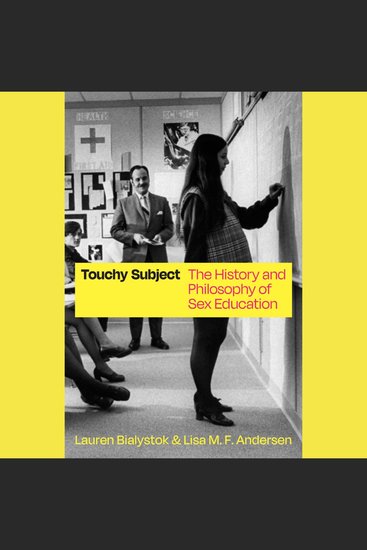
  • Touchy Subject - The History and Philosophy of Sex Education - cover

    Touchy Subject - The History and...

    Lauren Bialystok, Lisa M. F....

    • 0
    • 0
    • 0
    A case for sex education that puts it in historical and philosophical context. 
     
    In the United States, sex education is more than just an uncomfortable rite of passage: it’s a political hobby horse that is increasingly out of touch with young people’s needs. In Touchy Subject, philosopher Lauren Bialystok and historian Lisa M. F. Andersen unpack debates over sex education, explaining why it’s worth fighting for, what points of consensus we can build upon, and what sort of sex education schools should pursue in the future. 
     
    Andersen surveys the history of school-based sex education in the United States, describing the key question driving reform in each era. In turn, Bialystok analyzes the controversies over sex education to make sense of the arguments and offer advice about how to make educational choices today. Together, Bialystok and Andersen argue for a novel framework, Democratic Humanistic Sexuality Education, which exceeds the current conception of “comprehensive sex education” while making room for contextual variation. More than giving an honest run-down of the birds and the bees, sex education should respond to the features of young people’s evolving worlds, especially the digital world, and the inequities that put some students at much higher risk of sexual harm than others. Throughout the book, the authors show how sex education has progressed and how the very concept of “progress” remains contestable.
    Show book
  • Future Morality - cover

    Future Morality

    David Edmonds

    • 0
    • 0
    • 0
    The world is changing so fast that it's hard to know how to think about what we ought to do. We barely have time to reflect on how scientific advances will affect our lives before they're upon us. New kinds of dilemma are springing up. Can robots be held responsible for their actions? Will artificial intelligence be able to predict criminal activity? Is the future gender-fluid? Should we strive to become post-human? Should we use drugs to improve our intimate relationships—or to reduce crime? Our intuitions about questions like these are often both weak and confused. 


    David Edmonds has put together a philosophical task force to get to grips with these challenges. Twenty-nine philosophers present provocative and engaging pieces about aspects of life today, and life tomorrow—birth and death, health and medicine, brain and body, personal relationships, wrongdoing and justice, the internet, animals, and the environment. The future won't look the same when you've finished this book.
    Show book
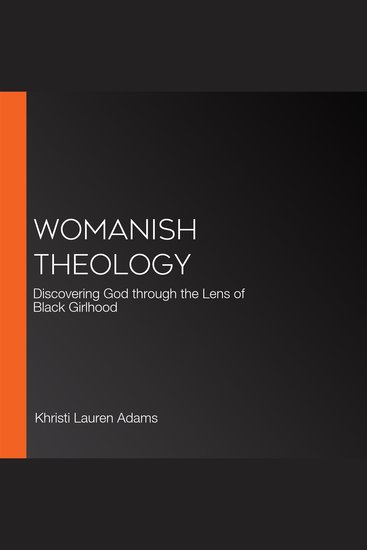
  • Womanish Theology - Discovering God through the Lens of Black Girlhood - cover

    Womanish Theology - Discovering...

    Khristi Lauren Adams

    • 0
    • 0
    • 0
    Khristi Lauren Adams's faith was first shaped by her experiences as a Black girl—learning about Scripture from her grandmother, Mama Hattie; "playing church" with her seven cousins over summer vacation; and grieving the murder of her sixteen-year-old friend when she was just fifteen. 


    In Womanish Theology, Adams reflects on those experiences, inviting listeners to learn from a new perspective and guiding them to a deeper understanding of their own spirituality. 


    This groundbreaking book introduces a new branch of theological thought Adams calls womanish, as a play on the womanist tradition (the theology of Black womanhood). "Womanish," remembers Adams, is a term Black mothers used for young girls as they grew more interested in doing grown-up things. Adams draws on her own life story as well as the life stories of other Black girls to explore theological concepts such as Scripture, theodicy, salvation, prayer, neighborly love, and the image of God. 


    Through this journey, listeners will learn that theology is for everyone and that the whole community of God can learn from the spiritual insights of Black girls.
    Show book
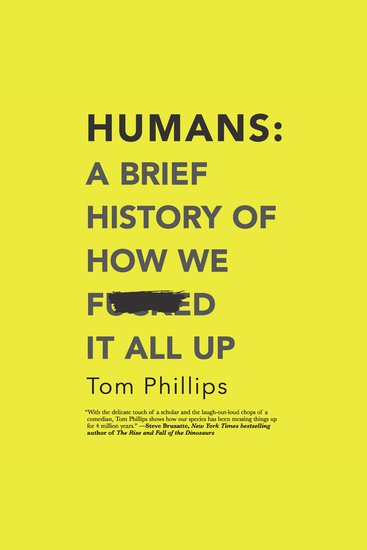
  • Humans: A Brief History of How We F*cked It All Up - cover

    Humans: A Brief History of How...

    Anonymous

    • 0
    • 0
    • 0
    Modern humans have come a long way in the seventy thousand years they’ve walked the earth. Art, science, culture, trade—on the evolutionary food chain, we’re true winners. But it hasn’t always been smooth sailing, and sometimes—just occasionally—we’ve managed to truly f*ck things up.Weaving together history, science, politics and pop culture, Humans offers a panoramic exploration of humankind in all its glory, or lack thereof. From Lucy, our first ancestor, who fell out of a tree and died, to General Zhou Shou of China, who stored gunpowder in his palace before a lantern festival, to the Austrian army attacking itself one drunken night, to the most spectacular fails of the present day, Humans reveals how even the most mundane mistakes can shift the course of civilization as we know it. Lively, wry and brimming with brilliant insight, this unique compendium offers a fresh take on world history and is one of the most entertaining reads of the year.
    Show book
  • Jewish Language and Literature - The Impact of Yiddish Hebrew and Other Languages - cover

    Jewish Language and Literature -...

    Joseph Arston

    • 0
    • 0
    • 0
    The origins of Jewish language and literature are deeply intertwined with the history of the Jewish people, shaped by centuries of cultural exchange, migration, and adaptation. At the heart of Jewish literary tradition lies the Hebrew language, whose roots stretch back to the ancient world. Hebrew, as the language of the Bible, forms the foundation of Jewish thought, identity, and religious practice. The earliest examples of Hebrew literature can be found in the sacred texts of the Torah, where the stories, laws, and teachings of the Jewish people are recorded. These texts, passed down through generations, have remained central to Jewish life and continue to be a source of literary and theological inspiration. 
    In addition to Hebrew, other languages played an important role in the development of Jewish language and literature. Aramaic, a Semitic language closely related to Hebrew, became widespread during the Babylonian exile and remained influential for centuries. Aramaic is the language of significant portions of the Talmud and other rabbinic writings, shaping Jewish legal and philosophical thought. Over time, Jewish communities across the globe adopted the languages of the regions they inhabited, which further contributed to the diversity of Jewish literary expression. 
    The emergence of Yiddish, a language born in the Jewish communities of Eastern Europe, marked a significant shift in Jewish linguistic and literary culture. Yiddish, a Germanic language enriched with Hebrew, Aramaic, and Slavic elements, became the vernacular of millions of Ashkenazi Jews. It allowed for the creation of a vibrant body of literature, including plays, novels, and poetry, that expressed the daily lives, struggles, and aspirations of Jewish communities. Yiddish literature flourished in the 19th and early 20th centuries, with writers such as Sholem Aleichem, Isaac Bashevis Singer, and I.L. Peretz capturing the complexities of Jewish life through their works.
    Show book