Join us on a literary world trip!
Add this book to bookshelf
Grey
Write a new comment Default profile 50px
Grey
Subscribe to read the full book or read the first pages for free!
All characters reduced
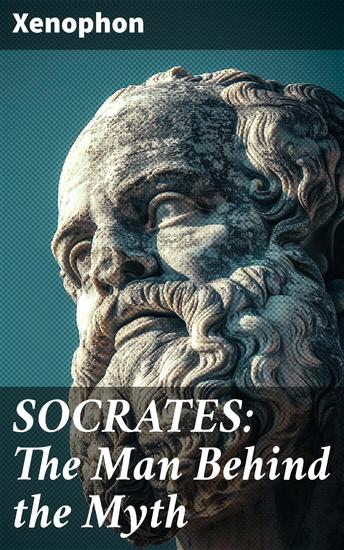
SOCRATES: The Man Behind the Myth - Xenophon's Memoires of Socrates and His Teachings: Memorabilia Apology The Economist Symposium Hiero - cover

SOCRATES: The Man Behind the Myth - Xenophon's Memoires of Socrates and His Teachings: Memorabilia Apology The Economist Symposium Hiero

Xenophon

Translator Henry Graham Dakyns

Publisher: Good Press

  • 0
  • 0
  • 0

Summary

In "SOCRATES: The Man Behind the Myth," Xenophon provides a compelling exploration of the life and philosophy of Socrates, presenting a nuanced portrait that counters the prevailing depictions found in Plato's dialogues. Written in a straightforward, accessible style, this work reflects Xenophon's background as a historian and philosopher striving to illuminate the foundational ethical and philosophical inquiries raised by Socratic thought. The text situates Socrates within the socio-political landscape of Athens, deftly weaving historical context with personal anecdotes, thus enriching the reader's understanding of Socratic principles and their relevance in ancient Greek culture. Xenophon, a soldier, historian, and student of Socrates, was profoundly influenced by his mentor's teachings. His firsthand experiences and unique position in Athenian society inform his portrayal of Socrates not only as a philosopher but as a pivotal cultural figure whose ideas on virtue, community, and ethics resonate through the ages. Xenophon's own search for wisdom and understanding of human nature underscore the urgency with which he presents Socratic philosophy. This book is a vital read for anyone interested in the origins of Western thought, ethics, or the role of the individual in society. Xenophon'Äôs engaging narrative and insightful analysis invite readers to reconsider the myths surrounding Socrates and appreciate his enduring significance.
Available since: 12/10/2023.
Print length: 502 pages.

Other books that might interest you

  • Fragmentation and Conflict - A Divided China (3 in 1) - cover

    Fragmentation and Conflict - A...

    Rolf Hedger

    • 0
    • 0
    • 0
    The grand narrative of Chinese history is often presented as a seamless succession of unified dynasties. Yet between these periods of unity, China experienced crucial eras of division that profoundly shaped its cultural and political development. "Fragmentation and Conflict: A Divided China" examines three fascinating periods when competing states vied for dominance across the Chinese landscape. 
    Following the collapse of the Han Dynasty, the Three Kingdoms period (220-280 CE) saw China fractured into the competing states of Wei, Shu, and Wu. This era of military genius, political intrigue, and strategic maneuvering became immortalized in the classic novel "Romance of the Three Kingdoms," transforming historical figures like Cao Cao, Liu Bei, and Sun Quan into cultural icons. Beyond the battlefield drama, these rival states developed distinct regional cultures and governance approaches while competing for legitimacy as the true inheritors of the Han legacy. 
    The Jin Dynasty (265-420 CE) briefly reunified China before succumbing to internal rebellions and nomadic invasions, leading to further fragmentation. This tumultuous period witnessed massive population movements as northern Chinese fled southward, dramatically reshaping the cultural geography of China while Buddhist influence expanded significantly throughout society. 
    Centuries later, as the Song Dynasty controlled much of traditional China, the Western Xia (1038-1227 CE) emerged as a powerful independent state in the northwest. Founded by the Tangut people, this sophisticated kingdom developed its own unique script, produced remarkable Buddhist art, and maintained a complex relationship with its Chinese and nomadic neighbors before ultimately falling to the Mongol conquest.
    Show book
  • The Chinese Great Leap Forward Famine - A Social and Political Catastrophe - cover

    The Chinese Great Leap Forward...

    Sarah Willards

    • 0
    • 0
    • 0
    The origins of the Great Leap Forward are deeply rooted in the political ambition and ideological vision of Mao Zedong, the founding leader of the People’s Republic of China. Following the success of the Communist revolution in 1949, Mao sought not only to rebuild a war-torn nation but to rapidly transform it into a socialist utopia capable of rivaling the industrial powers of the West. By the mid-1950s, China had already launched its First Five-Year Plan, modeled after the Soviet approach to centralized economic planning. Encouraged by early gains in heavy industry, Mao envisioned a second phase of development that would leap over traditional stages of economic growth. 
    At the heart of this vision was a push for mass mobilization. Mao believed that the sheer size of China's population could be harnessed as a revolutionary force capable of achieving miraculous feats. The Great Leap Forward, initiated in 1958, was designed to propel China into a modern communist society by emphasizing agricultural collectivization and rural industrialization simultaneously. Rather than relying on expert knowledge or slow-paced industrial planning, Mao favored decentralized enthusiasm and ideological commitment, trusting that the collective will of the people would overcome any technical limitations. 
    One of the most radical elements of this plan was the establishment of people’s communes, which replaced the traditional family unit and private farming with large-scale collective labor. Households were merged into communes comprising thousands of individuals, who would eat, sleep, and work under strict communal arrangements. The idea was to increase efficiency and free up labor for industrial production, especially in rural areas where backyard furnaces were set up to produce steel. This was accompanied by an aggressive campaign to eliminate what were seen as capitalist tendencies, including private plots and individual incentives.
    Show book
  • Freezing Cold Takes - NFL Football Media’s Most Inaccurate Predictions and the Fascinating Stories Behind Them - cover

    Freezing Cold Takes - NFL...

    Fred Segal

    • 0
    • 0
    • 0
    Since 2015, Fred Segal has chronicled "unprophetic" sports predictions on the internet. His Freezing Cold Takes social media pages feature quotes and predictions from members of the sports world that have aged poorly or were, in hindsight, flat-out wrong. The pages have become a guilty pleasure for hundreds of thousands of sports fans who love to see sports media's infamous "hot takes" that went cold. 


    Segal focuses on the NFL, and provides a vast collection of poorly aged predictions and analysis from NFL media members and personalities about some of the most famous teams and players in the league's history. He also explores ill-fated commentary related to draft picks, hiring decisions, and some of the NFL's most notable games. But this book is not simply a list of quotes. It delves through content mined from internet archives and original interviews with media, players, and coaches. Segal provides important background surrounding each featured mistake to offer essential context as to why the ill-fated prediction was made as well as why the personality who made the prediction is eating their words. 


    Together, the fourteen chapters—each spotlighting Freezing Cold Takes about a specific team or topic within a certain defined period—create a wholly unique and endlessly entertaining lens through which to explore NFL history.
    Show book
  • Scramble for Africa The: A Captivating Guide to European Expansion Colonial Conflicts the Berlin Conference and Its Impact on Modern Times - cover

    Scramble for Africa The: A...

    Captivating History

    • 0
    • 0
    • 0
    Step into the riveting saga of the Scramble for Africa and learn about the dramatic reshaping of the African continent. 
    This audiobook offers a lens into the pivotal moments that saw Africa carved and claimed by European powers. Explore the technological revolution that was occurring in the backdrop, as well as the indomitable spirit of the Africans who resisted colonial rule. 
    The Berlin Conference: Discover how a meeting in Berlin under Otto von Bismarck’s guidance led to the division of Africa. 
    King Leopold II’s Reign of Terror: Uncover the harrowing exploitation under Belgium King Leopold II in the Congo Free State, marking one of history’s darkest chapters. 
    Technological Advancements: Learn how innovations like the iron-hulled steamboat, the machine gun, and quinine made colonization possible. 
    Resistance Heroes: Be inspired by leaders like Cetshwayo, Samori Toure, and others who valiantly fought against colonial forces, showcasing the resilience and courage of African peoples. 
    Plundered Heritage: Reflect on the tragic loss of African cultural artifacts and human remains to European museums. 
    Literary Impact: Discover Arthur Conan Doyle’s influential critique of the Congo Free State, a testament to the power of the pen against injustice. 
    Add this compelling narrative to your collection and delve into the stories that have shaped the world. Click the “add to cart” button to learn more about the Scramble for Africa!
    Show book
  • A Rare Recording of Joan Crawford - cover

    A Rare Recording of Joan Crawford

    Joan Crawford

    • 0
    • 0
    • 0
    Joan Crawford, born Lucille Fay LeSueur (March 23, 1904 - May 10, 1977) in San Antonio, TX, was an American dancer, businesswoman, and actress of 86 films. Crawford often played hardworking young women who find romance and financial success. Her films that were well received by Depression-era audiences and popular with women. By the 1930s, Crawford became one of Hollywood's most prominent movie stars—rivaling fellow actresses Norma Shearer and Greta Garbo. A three-time Academy Award Best Actress nominee, Crawford took home the Oscar for the 1945 film Mildred Pierce. In this 1971 recording, Crawford discusses filmmaking, her films, and her appearance at an upcoming AFI event in Washington, DC.
    Show book
  • Gaza in Crisis - Reflections on the US-Israeli War Against the Palestinians - cover

    Gaza in Crisis - Reflections on...

    Ilan Pappe, Noam Chomsky

    • 0
    • 0
    • 0
    This "succinct and eye-opening collection of recent interviews and essays [presents] sober and unflinching analysis" of Gaza's humanitarian crisis (Publishers Weekly). 


    While numerous books address Israel-Palestine conflict, Gaza in Crisis brings together two renowned thinkers—American activist Noam Chomsky and Israeli historian Ilan Pappé—to examine why this conflict has lasted so long, who can stop it, and how. Israel's Operation Cast Lead, a 2008 military assault on the Gaza Strip, thrust the region to the center of the discussion. With expert knowledge and deep insight, Chomsky and Pappé survey the fallout from Israel's conduct in Gaza and place it in historical context. 


    This revised and expanded edition includes a new essay by Pappé called "The Ten Mythologies of Israel," originally written for the New York session of the Russell Tribunal on Palestine. Also included is Chomsky's incisive essay "'Exterminate All the Brutes': Gaza 2009" and a dialogue between the two writers on "The Ghettoization of Palestine."
    Show book