Join us on a literary world trip!
Add this book to bookshelf
Grey
Write a new comment Default profile 50px
Grey
Subscribe to read the full book or read the first pages for free!
All characters reduced
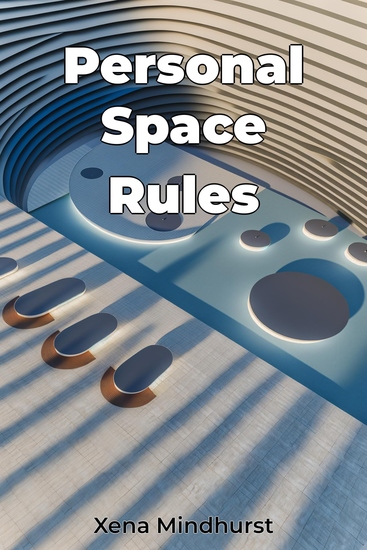
Personal Space Rules - cover

Personal Space Rules

Xena Mindhurst

Translator A AI

Publisher: Publifye

  • 0
  • 0
  • 0

Summary

Personal Space Rules delves into the fascinating world of human spatial behavior, exploring how different cultures establish and navigate personal boundaries during social interactions. Through a comprehensive analysis of proxemics, haptic communication, and cultural spatial norms across 42 cultures, the book reveals how our invisible boundaries are shaped by both biological instincts and cultural conditioning. This research-backed exploration demonstrates that personal space rules aren't arbitrary but rather systematic cultural constructions reflecting deeper social values.

 
The book uniquely combines traditional anthropological observations with modern scientific tools, presenting a three-part journey through the subject matter. It begins by examining the biological and psychological foundations of personal space, including the role of the amygdala in processing spatial threats. The narrative then expands into cultural variations, contrasting high-contact societies in Latin America with low-contact cultures in Northern Europe, before culminating in practical applications for urban design, workplace architecture, and diplomatic relations.

 
Drawing from five decades of research, including Edward T. Hall's groundbreaking work on proxemics, this interdisciplinary study bridges psychology, anthropology, and architecture. The book stands out for its accessible presentation of complex concepts through clear examples and case studies, making it valuable for both academic researchers and professionals working in cross-cultural environments. Its examination of contemporary challenges, such as maintaining personal space during health crises and adapting to virtual communication, makes it particularly relevant in today's interconnected world.
Available since: 01/24/2025.
Print length: 95 pages.

Other books that might interest you

  • Dad Bod - Portraits of Pop Culture Papas - cover

    Dad Bod - Portraits of Pop...

    Cian Cruise

    • 0
    • 0
    • 0
    A collection of essays about father figures in popular culture, Dad Bod unpack the ideas that inform our collective image of fatherhood as it is found in movies, television shows, and video games. Follow a newly minted parent as he journeys to the heart of dadness to redefine what it means to be a father.
    Show book
  • Four Chancellors and a Funeral - How to Lose a Country in Ten Days - cover

    Four Chancellors and a Funeral -...

    Russell Jones

    • 0
    • 0
    • 0
    The sequel nobody wants. After a decade of the Tories, could it get any worse? Spoiler – it does. 
     
    Towards the end of 2021, Britain had been frogmarched into an escalating series of surreal calamities. Brexit was a disaster, the NHS was in crisis, the government was bathed head-to-toe in impropriety, senior Tories were still acting as though the public purse was their personal feed-trough, and the air crackled with anger about PartyGate. All of which led to an inglorious start to 2022: the year the UK saw two monarchs, three prime ministers and four chancellors. 
     
    From Boris Johnson, who crashed our international reputation and handed billions to his mates so they could ineptly fight a pandemic while he stayed at home, shagging and acting as a super-spreader; to Liz Truss, a drive-by prime minister who managed to kill off the queen and crash the economy in a single week. And now we’re led by Rishi Sunak, who doesn’t know how to use a credit card, drives a pretend car, and grinningly promises even more poverty. 
     
    Four Chancellors and a Funeral delivers more of Russell Jones’s signature scathing wit, combining a detailed historical record of 2021 and 2022, with acerbic commentary, all of it leavened by jokes at the seemingly endless maelstrom of failures, nincompoops and hypocrisies.
    Show book
  • The Far Edges of the Known World - Life Beyond the Borders of Ancient Civilization - cover

    The Far Edges of the Known World...

    Owen Rees

    • 0
    • 0
    • 0
    When Ovid was exiled from Rome to a border town on the Black Sea, he despaired at his bleak and barbarous new surroundings. Like many Greeks and Romans, Ovid thought the outer reaches of his world was where civilization ceased to exist. Our own fascination with the Greek and Roman world has for centuries followed this perspective, shrouding cultures at the far reaches of their influence in myth. But what was it like to live on the edges of these empires, on the boundaries of the known world? 


    In The Far Edges of the Known World, ancient historian Owen Rees draws on archaeological excavations to reveal these so-called borders as thriving multicultural spaces. This is where the boundaries of "civilized" and "barbarian" began to dissipate; where traditional rules didn't always apply; where different cultures intermarried; and where nomadic tribes built their own cities. Rees journeys from the sandy caravan routes of Morocco to the freezing winters of the northern Black Sea, from the Red River valley of Vietnam to the rain-lashed forts south of Hadrian’s Wall. Rees introduces us to the everyday people who called the borderlands home. As Rees shows, exchanges of trends, ideas, even religious practices were happening all over the world. 


    The Far Edges of the Known World offers us a vibrant new lens to see and understand the ancient world.
    Show book
  • Sh*t I Say to Myself - 40 Ways to Ditch the Negative Self-Talk That's Dragging You Down - cover

    Sh*t I Say to Myself - 40 Ways...

    MA Katie Krimer

    • 0
    • 0
    • 0
    It's time to break up with your toxic mind. 


    Have you ever had thoughts that drag you down? Thoughts that make you feel hopeless and stuck? You're far from alone. Many people struggle with negative thoughts about themselves—and the world. But if your unrepentant ruminations are getting in the way of living your life, it's time to tell your toxic mind to cut the crap. It's time to stand up to your inner critic. And it's time to show negative thoughts the door—once and for all. 


    Written by a psychotherapist and grounded in proven-effective mindfulness and cognitive behavioral therapy (CBT), the irreverent, no-nonsense approach in this snarky—yet hopeful—guide will help you "ghost" your negative thoughts, put an end to toxic self-talk, and start living like a badass, with all the positivity and confidence needed to reach your goals. 


    Over time, negative self-talk can lead to more than just a pessimistic outlook on life. It can destroy your confidence; damage your relationships; and lead to anxiety, depression, and a host of other mental health conditions. It's time to say, enough! This little book will give you the tools—and the courage—you need to tell your toxic mind to f*ck off for good.
    Show book
  • True Facts That Sound Like Bull$#*t: World History - 500 Preposterous Facts They Definitely Didn’t Teach You in School - cover

    True Facts That Sound Like...

    Shane Carley

    • 0
    • 0
    • 0
    Prove you are the smartest person in the room with 500 true trivia facts about world history. These facts are so absurd some might even say that they sound like bull$#*t! Explore the wild and the wacky or history in this fun addition to the True Facts series that shares all things from all over the globe. Give the gift that keeps giving to friends, family, fathers, or grads and test your knowledge. 
    Knowledge is power! Crush the competition at trivia night or start the most interesting conversation ever with real facts that are hard to believe. This book is loaded with mind-blowing facts that are sure to keep you wondering, "How are these even true?" while equipping you to outsmart everyone in the room. Including:Turkeys were once worshipped as gods by the Mayans.Forks were seen as sacrilegious in 11th century Italy.Pope Gregory IV once declared a war on cats.President Abraham Lincoln is in the Wrestling Hall of Fame.The longest war in history lasted from 1651 to 1986, between the Netherlands and the Isles of Scilly. There were no casualties. 
      
    Put your game face on and prove once and for all that you are the real history know-it-all! Gather your friends and family 'round and get ready to learn some crazy trivia they definitely didn’t teach you in history class.
    Show book
  • Democracy Under Fire - Donald Trump and the Breaking of American History - cover

    Democracy Under Fire - Donald...

    Lawrence R. Jacobs

    • 0
    • 0
    • 0
    Before Trump even ran for President, his disdain for the rules, procedures, and norms of American democracy and the US Constitution was well-known and led prominent Republicans to repudiate him as "unfit" for the GOP nomination. Given the clear-eyed assessment of candidate Trump, why did the Republican Party nominate him as its presidential candidate in 2016 and then stand by him during the next four years? 


    Much of the attention paid to Trump's rise to power has focused on his corrosive personality and divisive style of governing. But he alone is not the problem. The vulnerability is much broader and deeper. The ascendance of Trump is the culmination of nearly 250 years of political reforms that gradually ceded party nominations to small cliques of ideologically-motivated party activists, interest groups, and donors. 


    In Democracy under Fire, Lawrence Jacobs provides a highly engaging history of political reforms since the late-eighteenth century that over time dangerously weakened democracy, widened political inequality as well as racial disparities, and rewarded toxic political polarization. Jacobs's searing indictment of political reformers concludes with recommendations to restrain the unbridled ambition of politicians who thrive on division and instead generate broad citizen engagement with tangible policy making.
    Show book