Junte-se a nós em uma viagem ao mundo dos livros!
Adicionar este livro à prateleira
Grey
Deixe um novo comentário Default profile 50px
Grey
Assine para ler o livro completo ou leia as primeiras páginas de graça!
All characters reduced
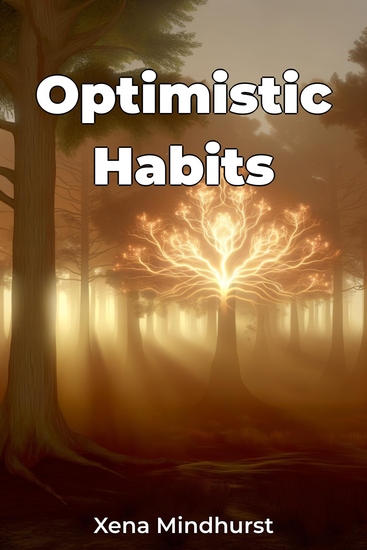
Optimistic Habits - cover
LER

Optimistic Habits

Xena Mindhurst

Tradutor A AI

Editora: Publifye

  • 0
  • 0
  • 0

Sinopse

Optimistic Habits redefines happiness as a skill built through intentional routines, not luck or genetics. Blending behavioral science, positive psychology, and neuroscience, the book argues that optimism can be cultivated via actionable habits—challenging the myth that it’s an innate trait. Central themes include the transformative power of neuroplasticity, which shows how practices like gratitude journaling rewire the brain, and the science of habit formation, where strategies like "habit stacking" help embed positivity into daily life. The book also highlights resilience against negativity bias, our brain’s tendency to fixate on threats, offering tools to reframe setbacks as growth opportunities.

 
Structured for practicality, the book progresses from individual habits to societal impact. Early chapters dissect habit loops (cues, routines, rewards) and link them to dopamine-driven motivation. Middle sections explore cognitive reframing and growth mindset principles, grounded in work by researchers like Martin Seligman and Carol Dweck. Final chapters demonstrate how personal habits—like mindfulness or prosocial actions—ripple into communities, improving relationships or workplace dynamics. Each chapter includes exercises, such as designing habit trackers or conducting emotional audits, to translate theory into daily practice.

 
What sets Optimistic Habits apart is its balance of academic rigor and accessibility. It avoids toxic positivity by acknowledging valid struggles while providing science-backed coping mechanisms. Real-world examples—a teacher reviving classroom morale or a retiree combating isolation through volunteering—anchor abstract concepts. By merging behavioral science with relatable anecdotes, the book empowers readers to replace fleeting joy with sustainable optimism, one small habit at a time.
Disponível desde: 26/01/2025.
Comprimento de impressão: 64 páginas.

Outros livros que poderiam interessá-lo

  • The Roman Revolution - Crisis and Christianity in Ancient Rome - cover

    The Roman Revolution - Crisis...

    Nick Holmes

    • 0
    • 0
    • 0
    It was a time of revolution. The Roman Revolution describes the little known "crisis of the third century", and how it led to a revolutionary new Roman Empire. Long before the more famous collapse of the Western Roman Empire in the fifth century, in the years between AD 235-275, barbarian invasions, civil war, and plague devastated ancient Rome. Out of this ordeal came new leaders, new government, new armies, and a new vision of what it was to be Roman. Best remembered today is the rapid rise of Christianity in this period, as Rome's pagan gods were rejected, and the emperor Constantine converted to this new religion. Less well remembered is the plethora of other changes that conspired to provide an environment well suited to a religious revolution. 


    Drawing on the latest research, Nick Holmes looks for new answers to old questions. He charts the rise of the Roman Republic and the classical Roman Empire, examining the roles played by sheer good luck and the benign climate. Focusing on the reigns of the critically important but under-researched emperors in the third century, such as Aurelian, Diocletian, and Constantine, he vividly brings to life how Rome just escaped catastrophe in the third century, and embarked on a journey that would take it into a brave new world—one which provided the foundations for modern Europe and America.
    Ver livro
  • In Search of Madness - A Psychiatrist's Travels Through the History of Mental Illness - cover

    In Search of Madness - A...

    Brendan Kelly

    • 0
    • 0
    • 0
    Who is 'Mad'? Who is Not? And Who Decides?
    In this fascinating new exploration of mental illness, Professor Brendan Kelly examines 'madness' in history and how we have responded to it over the centuries.
    We travel from the psychiatric institutions of modern India to scientific studies of the brain in Victorian England. We discover the beginnings of formal asylum care and witness the experimental therapies of the cavernous psychiatric hospitals of the nineteenth and early twentieth centuries in Ireland, England, Belgium, Italy, Germany and the United States.
    Covering lobotomy and the Nazis' Aktion T4 campaign, as well as Freud, psychoanalysis, cognitive behavioural therapy and neuroscience, In Search of Madness examines the shift in recent times from 'psychobabble' to 'neurobabble'.
    This is an all encompassing history of one of the most basic fears to haunt the human psyche – madness – and it concludes with a passionate manifesto for change: four proposals to make mental health services more effective, accessible and just.
    Ver livro
  • Last Stand of the Louisiana Shrimpers - cover

    Last Stand of the Louisiana...

    Emma Christopher Lirette

    • 0
    • 0
    • 0
    In recent years, shrimpers on the Louisiana coast have faced a historically dire shrimp season, with the price of shrimp barely high enough to justify trawling. Yet, many of them wouldn't consider leaving shrimping behind, despite having transferrable skills that could land them jobs in the oil and gas industry. Since 2001, shrimpers have faced increasing challenges to their trade: an influx of shrimp from southeast Asia, several traumatic hurricane seasons, and the largest oil spill at sea in American history.
    
    In Last Stand of the Louisiana Shrimpers, author Emma Christopher Lirette traces how Louisiana Gulf Coast shrimpers negotiate land and blood, sea and freedom, and economic security and networks of control. This book explores what ties shrimpers to their boats and nets. Despite feeling trapped by finances and circumstances, they have created a world in which they have agency.
    
    Lirette provides a richly textured view of the shrimpers of Terrebonne Parish, Louisiana, calling upon ethnographic fieldwork, archival research, interdisciplinary scholarship, and critical theory. With evocative, lyrical prose, she argues that in persisting to trawl in places that increasingly restrict their way of life, shrimpers build fragile, quietly defiant worlds, adapting to a constantly changing environment. In these flickering worlds, shrimpers reimagine what it means to work and what it means to make a living.
    Ver livro
  • Education Imagination and Myth with James Hillman - cover

    Education Imagination and Myth...

    James Hillman

    • 0
    • 0
    • 0
    James Hillman is the father of Archetypal Psychology. This rare program focuses on Education, Imagination and Myth with James Hillman. Here is a transcribed excerpt: 
     
    "And it's very important for the teacher to allow these things to occur, to feel them, to experience them even to record them so that she or he feels comfortable with the strangeness of the imaginative world with the gods and the demons and the animals and the jungles and the territories that are the source of one's imaginative life. 
    Unless the teachers comfortable with that he or she will censor and repress or suppress the imaginative life of the pupil. It seems to me that everyone can be re-tread. ▪ We can all get a retread and you unlearn. 
    I mean, one of the basic things of learning is unlearning what you've learned, not just negative capability, but negative learning learning against what you've learned. 
    You have to learn the stuff and then you see through it and you unlearn it."
    Ver livro
  • First Bull Run: The History of the Civil War’s First Major Battle - cover

    First Bull Run: The History of...

    Jonathan Gianos-Steinberg

    • 0
    • 0
    • 0
    After the Battle of Fort Sumter in April 1861 ignited the Civil War, many in the North expected a relatively quick victory, including President Abraham Lincoln. While that seems naïve in hindsight, given the knowledge that the war lasted over four years, these expectations seemed entirely realistic at the time due to the Union’s overwhelming economic advantages over the South. At the start of the war, the Union had a population of over 22 million, whereas the South had a population of 9 million, nearly 4 million of whom were slaves. Union states contained 90% of the manufacturing capacity of the country and 97% of the weapon manufacturing capacity. Union states also possessed over 70% of the total railroads in the pre-war United States at the start of the war, and the Union also controlled 80% of the shipbuilding capacity of the pre-war United States. 
    McDowell’s strategy during the First Battle of Bull Run was grand, and in many ways it was the forerunner of a tactic Robert E. Lee, Stonewall Jackson and James Longstreet executed brilliantly on nearly the same field during the Second Battle of Bull Run in August 1862. McDowell’s plan called for parts of his army to pin down General P.G.T. Beauregard’s Confederate soldiers in front while marching another wing of his army around the flank and into the enemy’s rear, rolling up the line. McDowell assumed the Confederates would be forced to abandon Manassas Junction and fall back to the next defensible line, the Rappahannock River. In July 1861, however, this proved far too difficult for his inexperienced troops to carry out effectively. 
    As the first major land battle of the Civil War, the First Battle of Bull Run made history in several ways. The two sides fought near the railroad junction at Manassas on July 21, 1861, just 25 miles away from Washington, which was close enough for many civilians from the nation’s capital to come and watch what they expected to be a rout of Confederate forces.
    Ver livro
  • Overreach: The Inside Story of Putin’s War Against Ukraine - cover

    Overreach: The Inside Story of...

    Owen Matthews

    • 0
    • 0
    • 0
    Winner of the Pushkin House Book Prize 2023 
    *A Telegraph Book of the Year*  
    A Times Best Book of Summer 2023 
    *Shortlisted for the Parliamentary Book Awards* 
    An astonishing investigation into the start of the Russo-Ukrainian war – from the corridors of the Kremlin to the trenches of Mariupol. 
    The Russo-Ukrainian War is the most serious geopolitical crisis since the Second World War – and yet at the heart of the conflict is a mystery. Vladimir Putin apparently lurched from a calculating, subtle master of opportunity to a reckless gambler, putting his regime – and Russia itself – at risk of destruction. Why? 
    Drawing on over 25 years’ experience as a correspondent in Moscow, as well as his own family ties to Russia and Ukraine, journalist Owen Matthews takes us through the poisoned historical roots of the conflict, into the Covid bubble where Putin conceived his invasion plans in a fog of paranoia about Western threats, and finally into the inner circle around Ukrainian president and unexpected war hero Volodimir Zelensky. 
    Using the accounts of current and former insiders from the Kremlin and its propaganda machine, the testimony of captured Russian soldiers and on-the-ground reporting from Russia and Ukraine, Overreach tells the story not only of the war’s causes but how the first six months unfolded. 
    With its panoramic view, Overreach is an authoritative, unmissable record of a conflict that shocked Europe to its core. 
    In Overreach, Owen Matthews masterfully unravels the complex tapestry of history, geopolitics, and conflicts that have defined the Soviet Union. This top-tier work is a must-read for anyone interested in understanding the wars and crimes that have shaped our world. 
    For fans of Simon Scarrow (The Honour of Rome), Antony Beevor (Russia), Bill Browder (Orden de embargo. Una historia real de blanqueo de dinero, asesinatos y...), Mark Galeotti (Russia’s Wars in Chechnya), and Robert Peston (WTF?). 
    HarperCollins 2022
    Ver livro