Junte-se a nós em uma viagem ao mundo dos livros!
Adicionar este livro à prateleira
Grey
Deixe um novo comentário Default profile 50px
Grey
Assine para ler o livro completo ou leia as primeiras páginas de graça!
All characters reduced
Loneliness Insights - cover
LER

Loneliness Insights

Xena Mindhurst

Tradutor A AI

Editora: Publifye

  • 0
  • 0
  • 0

Sinopse

Loneliness Insights reframes loneliness as a modern public health emergency, blending cutting-edge psychology and sociology to reveal how isolation reshapes both bodies and societies. The book argues that loneliness transcends personal experience, driving systemic risks like cardiovascular disease, cognitive decline, and premature mortality—effects as deadly as smoking. Paradoxically, these dangers surge in our hyper-connected age, fueled by vanishing community spaces, remote work trends, and aging populations. Through landmark studies like the US Health and Retirement Survey, the authors show how social isolation’s biological toll mirrors physical pain in brain scans, while sociological data exposes how marginalized groups face compounded risks due to structural inequities.

 
Structured in three clear sections, the book moves from defining loneliness’s physiological roots to analyzing societal triggers like urban design flaws and policy failures. A striking case study explores Japan’s kodokushi (lonely deaths), linking rigid work cultures and aging demographics to extreme isolation. Solutions emphasize scalability: Finland’s national loneliness strategy and community time banks model systemic change, while neuroimaging validates social prescribing—doctors recommending group activities as treatment. The research synthesizes smartphone interaction data, ethnographic narratives, and global health metrics, balancing academic rigor with relatable stories of isolated seniors and gig workers.

 
What sets Loneliness Insights apart is its dual focus on individual and institutional responsibility. It rejects simplistic self-help tropes, instead advocating policy reforms and inclusive urban planning alongside personal resilience. By framing loneliness as a mirror of societal health, the book offers a roadmap for rebuilding human connection—one community space, workplace policy, and clinical intervention at a time.
Disponível desde: 26/01/2025.
Comprimento de impressão: 70 páginas.

Outros livros que poderiam interessá-lo

  • Dear Future Wife - Letters of love - cover

    Dear Future Wife - Letters of love

    Spurgeon Chisulo

    • 0
    • 0
    • 1
    Letters for a man to learn how to Love his woman and for the woman to know how to be loved by her man. Love that is selfless and giving. Love that seeks the best for the loved and loving. Letters to a future wife as a man is seeking and a letter for any potential wife to learn how she will be worth being sought.
    Ver livro
  • Battle of Tsushima The: The History and Legacy of the Decisive Naval Battle that Ended the Russo-Japanese War - cover

    Battle of Tsushima The: The...

    Editors Charles River

    • 0
    • 0
    • 0
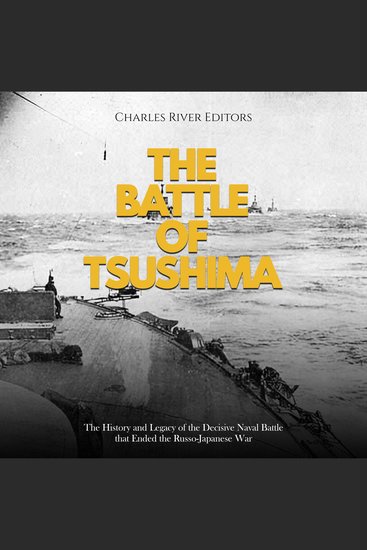
    By the end of the 19th century, the Russian Empire seemed to be at the zenith of its power and reach. It was the largest country in the world, stretching from the Black Sea on the eastern edge of Europe to the Bering Straits in the extreme east of Asia. Even by rail, it took over ten days to travel from one side of the country to the other. Its standing army of over 1.3 million men was the largest in the world, and the “Russian Steamroller” was regarded as one of the most potent military forces available to any ruler. 
    	The sudden and unexpected rise of Japanese influence in the region was opposed by Russia, Germany, and France, who threatened war with Japan unless the terms that ended the war were changed. Reluctantly, the Japanese agreed to withdraw from Manchuria, but they never forgot or forgave what they saw as the way in which the unwarranted European influence was used against them.  
    	Japanese suspicions were reinforced when Russia subsequently concluded a treaty of alliance with China and forced the tottering regime to grant a lease of the Liaodong peninsula to Russia. Russian troops occupied Port Arthur and began to build massive fortifications around the city. The port was linked to Russia by a new railroad that connected to the Trans-Siberian Railroad at the Chinese city of Harbin. Russia also insisted on the right to use its troops to defend the new railroad throughout its length in China. Although the terms by which Russia leased the port from China were temporary, it was clear that Port Arthur was intended to become Russia’s new warm-water port on the Pacific.  
    	To most observers, it seemed clear that Japan and Russia were destined to come into conflict in Korea and Manchuria. Both empires were set on expansion, and both saw these areas as important. However, Russia’s vastly larger population, army, and navy seemed to make it inevitable that Japan would lose if the conflict escalated into war.
    Ver livro
  • Power of Habit The: Book summary & analysis - cover

    Power of Habit The: Book summary...

    Briefly Summaries

    • 0
    • 0
    • 0
    This is a concise summary and analysis of The Power of Habit, by Charles Duhigg. It is not the original book and is not affiliated with or endorsed by Charles Duhigg. Ideal for those seeking a quick and insightful overview.
     
    Unlock the science behind the routines that shape your life with The Power of Habit. This dynamic and insightful guide delves deep into the psychology of habits, offering practical tools to transform your daily behaviors and achieve extraordinary results. Discover the secret to breaking bad habits, forming empowering ones, and understanding the ripple effect of keystone habits on personal growth, organizational success, and societal change.
     
    Perfect for anyone eager to boost productivity, enhance willpower, and create meaningful change, this audiobook combines engaging stories, scientific research, and actionable strategies. The Power of Habit is your roadmap to lasting transformation.
    Ver livro
  • Genghis Khan - Life Death and Resurrection - cover

    Genghis Khan - Life Death and...

    John Man

    • 0
    • 1
    • 0
    “A thrilling account” of the brilliant, ruthless founder of the Mongol Empire (The Guardian). 
     
    Genghis Khan is one of history’s immortals, alive in memory as a scourge, hero, military genius and demigod. To Muslims, Russians, and westerners, he is a murderer of millions, a brutal oppressor. Yet in his homeland of Mongolia he is the revered father of the nation, and the Chinese honor him as the founder of a dynasty. In his so-called Mausoleum in Inner Mongolia, worshippers seek the blessing of his spirit. In a supreme paradox, the world’s most ruthless conqueror has become a force for peace and reconciliation. 
     
    As a teenager, Genghis was a fugitive, hiding from enemies on a remote mountainside. Yet he went on to found the world’s greatest land empire and change the course of world history. Brilliant and original as well as ruthless, he ruled an empire twice the size of Rome’s until his death in 1227 placed all at risk. To secure his conquests and then extend them, his heirs kept his death a secret—and secrecy has surrounded him ever since. His undiscovered grave, with its imagined treasures, remains the subject of intrigue and speculation. 
     
    This is more than just a gripping account of Genghis’ rise and conquests. John Man uses firsthand experiences in China and Mongolia to reveal the khan’s enduring influence. He has traveled the length of the empire, and he spotlights the tension between Mongols and Chinese, who both claim Genghis’ spirit. He is the first writer to explore the hidden valley where Genghis is believed to have died, and one of the few westerners to climb the mountain where he was likely buried. 
     
    This stunning narrative paints a vivid picture of the man himself, the places where he lived and fought, and the passions that surround him still. For in legend, ritual, and intense controversy, Genghis lives on. 
     
    “[An] engrossing book.” —Booklist 
     
    “A rattling good read.” —The Independent
    Ver livro
  • Ancient Egyptian Conspiracy Theories: The History of the Most Popular Conspiracy Theories about Egypt in Antiquity - cover

    Ancient Egyptian Conspiracy...

    Editors Charles River

    • 0
    • 0
    • 0
    Given how far back the Egyptian civilization goes, it’s no surprise that Egypt is still full of mystery, and the unknown continues to generate conspiracy theories that attempt to fill in the gaps. For example, generations have viewed Egypt’s pyramids and the Great Sphinx as symbols of a lost past, which in turn leads to Egypt’s portrayal as a world full of romance and mystery. The age and structural integrity of these magnificent structures also make them symbols of longevity and power, which is only fitting because those are two purposes the ancient pharaohs who commissioned them intended them to serve. 
    In fact, while the sphinx was a well-known mythological creature among various ancient civilizations, the Egyptian statue that is now most famously associated with the creature is full of mysteries that have been endlessly debated throughout the centuries and continue to be hotly contested among scholars. The famous “Riddle of the Sphinx”, told by Sophocles in his play Oedipus Rex in the 5th century B.C., characterized the sphinx as a clever and powerful creature, and the mysteries of the Egyptian statue were discussed even among the ancient Romans. Even the source of the damage suffered by the Sphinx has become the stuff of legend, as evidenced by the story of Napoleon’s French soldiers shooting off the Sphinx’s nose. 
    Of course, the Sphinx is merely one object in Egypt that has been the source of endless theories. The discovery of King Tutankhamun’s tomb revived the legends of pharaohs’ curses and mummies, and ancient Egyptian art has been analyzed in seemingly every conceivable way possible as people come up with alternate theories for how the Egyptians built their most famous buildings and forged their enduring civilization.
    Ver livro
  • Thinking Through Aquinas - Essays on God Humanity and Christ - cover

    Thinking Through Aquinas -...

    Fritz Bauerschmidt

    • 0
    • 0
    • 0
    In Thinking Through Aquinas: Essays on God, Humanity, and Christ, Frederick Christian Bauerschmidt presents fourteen essays, written over the course of twenty years, that are attempts both to think through the arguments contained in the theology of Thomas Aquinas and to use the theology of Thomas to think through the questions that confront theologians in our own day. The essays include discussions of Thomas’s understanding of the nature of theology and of God; his reflections on virtue, vice, and the moral life; and his theology of Christ, the Church, and the Sacraments. Over the course of these essays, Thomas is brought into dialogue with figures ranging from Michel Foucault to Flannery O’Connor, Jonathan Lear to Ignacio Ellacuría, Stanley Hauerwas to St. John Paul II.  
    Ver livro