Junte-se a nós em uma viagem ao mundo dos livros!
Adicionar este livro à prateleira
Grey
Deixe um novo comentário Default profile 50px
Grey
Assine para ler o livro completo ou leia as primeiras páginas de graça!
All characters reduced
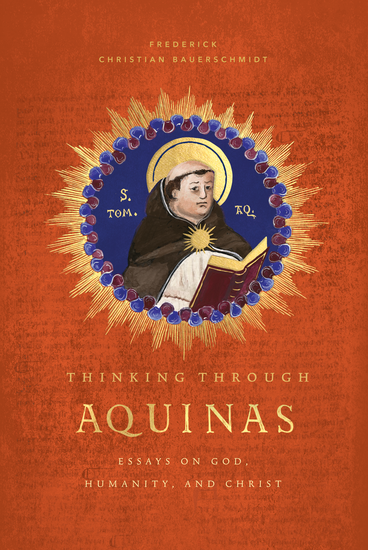
Thinking Through Aquinas - Essays on God Humanity and Christ - cover
LER

Thinking Through Aquinas - Essays on God Humanity and Christ

Fritz Bauerschmidt

Editora: Word on Fire Academic

  • 0
  • 0
  • 0

Sinopse

In Thinking Through Aquinas: Essays on God, Humanity, and Christ, Frederick Christian Bauerschmidt presents fourteen essays, written over the course of twenty years, that are attempts both to think through the arguments contained in the theology of Thomas Aquinas and to use the theology of Thomas to think through the questions that confront theologians in our own day. The essays include discussions of Thomas’s understanding of the nature of theology and of God; his reflections on virtue, vice, and the moral life; and his theology of Christ, the Church, and the Sacraments. Over the course of these essays, Thomas is brought into dialogue with figures ranging from Michel Foucault to Flannery O’Connor, Jonathan Lear to Ignacio Ellacuría, Stanley Hauerwas to St. John Paul II.  
Disponível desde: 26/09/2024.
Comprimento de impressão: 384 páginas.

Outros livros que poderiam interessá-lo

  • Ways of Eating - Exploring Food through History and Culture - cover

    Ways of Eating - Exploring Food...

    Merry White, Benjamin Aldes Wurgaft

    • 0
    • 0
    • 0
    What we learn when an anthropologist and a historian talk about food. 


    From the origins of agriculture to contemporary debates over culinary authenticity, Ways of Eating introduces listeners to world food history and food anthropology. Through engaging stories and historical deep dives, Benjamin A. Wurgaft and Merry I. White offer new ways to understand food in relation to its natural and cultural histories and the social rules that shape our meals. 


    Wurgaft and White use vivid storytelling to bring food practices to life, weaving stories of Panamanian coffee growers, medieval women beer makers, and Japanese knife forgers. From the Venetian spice trade to the Columbian Exchange, from Roman garum to Vietnamese nuoc cham, Ways of Eating provides an absorbing account of world food history and anthropology. Migration, politics, and the dynamics of group identity all shape what we eat, and we can learn to trace these social forces from the plate to the kitchen, the factory, and the field.
    Ver livro
  • Presidential Assassinations: The History of the Killing of Abraham Lincoln James Garfield William McKinley and John F Kennedy - cover

    Presidential Assassinations: The...

    Editors Charles River

    • 0
    • 0
    • 0
    Until April 14, 1865, John Wilkes Booth was one of the most famous actors of his time, and President Abraham Lincoln had even watched him perform. But his most significant performance at a theater did not take place on the stage. That night, Booth became one of history’s most infamous assassins when he assassinated President Lincoln at Ford's Theatre in Washington, D.C. 
    	In 1880, Civil War veteran James Garfield was running as a Republican for president, and one of his supporters was a man named Charles Guiteau, who wrote and circulated a speech called “Garfield vs. Hancock” that aimed to rally support for the Republican candidate. Though few knew it, Guiteau’s family had already deemed him insane and attempted to keep him committed in an asylum, only to have him manage an escape from confinement.  
    	In September 1901, the city of Buffalo was full of celebration. The Pan-American Exposition was ongoing, and it brought notable figures to northern New York, including President William McKinley, who had been reelected less than a year earlier. But also in Buffalo was Leon Czolgosz, a young man who had turned to anarchy years earlier after losing his job, Embracing his philosophy wholeheartedly, Czolgosz believed it was his mission to take down a powerful leader he considered oppressive, and McKinley’s attendance gave him the chance. 
    	In the annals of American history, few moments have been so thoroughly seared into the nation’s conscience that Americans can remember exactly where and when they heard about an earth-shattering event. In the 20th century, there was Pearl Harbor and the assassination of President John F. Kennedy. November 22, 1963 started as a typical Friday, and many Americans were unaware that President Kennedy was even heading to Dallas, Texas. 
    Ver livro
  • How to Raise Smart and Intelligent Children - 7 Secrets for Raising a Successful and Thriving Child With Extraordinary Intelligence - cover

    How to Raise Smart and...

    Frank Dixon

    • 0
    • 0
    • 0
    Do you ever wonder if you’re doing enough to help your child reach their full potential? 
    Are you looking for practical, proven ways to build intelligence, confidence, and strong thinking habits—starting now? 
    How to Raise Smart and Intelligent Children gives you practical, parent-friendly strategies to help your child build life-long intelligence, stronger thinking skills, and the kind of confidence that carries into every area of life. 
    Being “smart” isn’t just about grades. It’s a combination of habits, mindset, emotional strength, curiosity, and how your child learns to handle challenges. 
    In How to Raise Smart and Intelligent Children, you’ll discover how to: 
    • Understand what really shapes intelligence (and what matters most at home) 
    • Build simple daily habits that strengthen focus, memory, and learning 
    • Avoid common parenting mistakes that unintentionally limit growth 
    • Help your child enjoy learning and become naturally curious 
    • Teach problem-solving and critical thinking in everyday situations 
    • Use intelligence for good by developing empathy, responsibility, and character 
    If you’re ready to help your child become sharper, more confident, and more capable for the long run, How to Raise Smart and Intelligent Children will help you get there—one simple step at a time.
    Ver livro
  • FLYING SAUCERS - A Modern Myth of Things Seen in the Skies - cover

    FLYING SAUCERS - A Modern Myth...

    C. G. Jung

    • 0
    • 0
    • 0
    Brought to you by Altrusian Grace Media and narrated by Matthew Schmitz. Jung's primary concern in Flying Saucers is not with the reality or unreality of UFOs but with their psychic aspect. Rather than speculate about their possible nature and extraterrestrial origin as alleged spacecraft, he asks what it may signify that these phenomena, whether real or imagined, are seen in such numbers just at a time when humankind is menaced as never before in history. The UFOs represent, in Jung's phrase, "a modern myth."
    Ver livro
  • Black Death - Causes Fatalities and Effects of the Plague - cover

    Black Death - Causes Fatalities...

    Kelly Mass

    • 0
    • 0
    • 0
    Here we have it: We may be looking at the years 2020-2021 and think a certain virus has been bad for the world population. However, what happened in these two years is nothing, proportionally, to the hundreds of millions of people who got wiped out by rat infestations spreading insanitary bacteria, resulting in the disease and death of huge parts of the European population in the mid-centuries. 
    The genesis or origin of the Black Death is a point of contention. The epidemic started in Central Asia or East Asia, but it wasn't till 1347 that it made its conclusive presence in Crimea. It spread out through the Mediterranean Basin, reaching Africa, Western Asia, and the remainder of Europe through Constantinople, Sicily, and the Italian Peninsula, probably brought by fleas surviving on black rats carried by Genoese servant ships. There's proof that the Black Death was spread out in big part by fleas-- which trigger pneumonic plague-- and the person-to-person contact by means of aerosols that pneumonic plague permits, which would clarify the epidemic's fast inland spread out, which would be expected if the main vector was rat fleas triggering bubonic plague. 
    The Black Death was the 2nd significant natural catastrophe to strike Europe in the late Middle Ages (the first being the Great Scarcity of 1315-- 1317), killing between 30 and sixty percent of Europe's population. 
    In the 14th century, the plague disease might have decreased the worldwide population from c. 475 million to 350-- 375 million. So, more than 100 million people died from it, which was almost a fourth of the world’s population. 
    To mention that such were difficult times, is an understatement. My empathy for those unfortunate souls has reached an entire new level of suffering. I don’t know about you, but when I did my research, I wanted to know more about it. I hope you feel the same way.
    Ver livro
  • Martha Nussbaum - The Feminist and Political Philosopher - cover

    Martha Nussbaum - The Feminist...

    Hector Davidson

    • 0
    • 0
    • 0
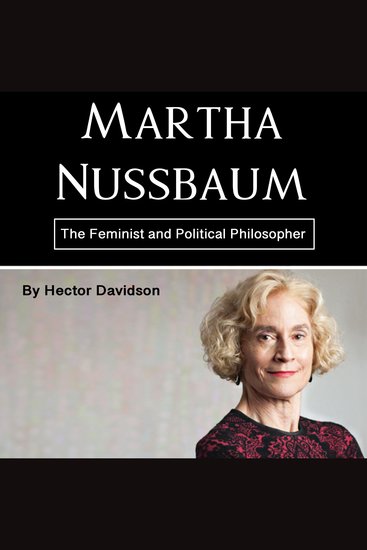
    Martha Nussbaum is one of the most influential philosophers of our time, particularly known for her contributions to feminist theory, political philosophy, and ethics. A professor at the University of Chicago, her work spans a wide array of topics including justice, human capabilities, human rights, and the role of emotions in moral decision-making. Nussbaum’s ideas have significantly impacted both academic philosophy and practical policy, with her innovative theories offering valuable insights into the intersection of ethics, politics, and human development. 
    At the heart of Nussbaum’s intellectual journey is the development of the capabilities approach, a framework she co-created with economist Amartya Sen. This approach is centered on the idea that justice should be evaluated based on individuals’ abilities to function and achieve various important life goals, rather than simply on income or wealth. The capabilities approach emphasizes human dignity and focuses on the conditions that allow people to live lives they have reason to value. It challenges traditional views of social justice by broadening the scope of what constitutes a flourishing life beyond mere economic success. 
    Nussbaum’s feminist philosophy is also pivotal in understanding her work. As an advocate for gender equality, she has critiqued traditional philosophical frameworks that have marginalized women’s voices and experiences. Her feminist perspective emphasizes the importance of recognizing the diverse and often undervalued roles that women play in society, and she works toward reshaping institutions to ensure that women’s capabilities are supported and nurtured. Nussbaum argues that feminism is not just about advocating for women’s rights but also about advancing a more inclusive and just society for all people, regardless of gender.
    Ver livro