Join us on a literary world trip!
Add this book to bookshelf
Grey
Write a new comment Default profile 50px
Grey
Subscribe to read the full book or read the first pages for free!
All characters reduced
Laughter For Health - cover

Laughter For Health

Xena Mindhurst

Publisher: Publifye

  • 0
  • 0
  • 0

Summary

"Laughter For Health" presents a fascinating scientific exploration of how laughter impacts our physical and mental well-being, backed by current medical research and psychological studies. The book uniquely bridges the gap between scientific understanding and practical application, demonstrating how something as natural as laughter can serve as a powerful tool for health improvement.

 
Through a careful examination of physiological responses, the text reveals how laughter reduces stress hormones while boosting endorphins, creating measurable benefits for pain management and overall wellness. The book progresses systematically from biological foundations to psychological mechanisms, offering evidence-based insights into how therapeutic humor aids in managing anxiety, depression, and trauma.

 
Particularly intriguing is the research showing how laughter triggers specific neural pathways and hormonal responses, leading to improved mental health outcomes. The text skillfully weaves together findings from neuroscience, psychology, and social research, making complex concepts accessible while maintaining scientific rigor.

 
What sets this work apart is its comprehensive approach to implementing humor-based interventions in both clinical and personal settings. Each chapter builds upon the previous, culminating in practical techniques for incorporating therapeutic humor into daily life. The book addresses cultural variations in humor appreciation and provides a framework for developing personalized strategies, making it valuable for healthcare professionals and individuals seeking evidence-based approaches to wellness.

 
Throughout, it maintains a balance between academic depth and practical applicability, ensuring readers can effectively translate scientific findings into actionable steps for better health.
Available since: 01/12/2025.
Print length: 141 pages.

Other books that might interest you

  • Talleyrand: The Life and Legacy of France’s Most Influential Diplomat - cover

    Talleyrand: The Life and Legacy...

    Editors Charles River

    • 0
    • 0
    • 0
    “Politics is the systematic cultivation of hatred.” - Talleyrand 
    	While Metternich is most associated with the Congress of Vienna, France, despite its turbulence, had its own influential representative there: Charles Maurice de Talleyrand-Périgord. Known simply as Talleyrand, his name ultimately became associated with crafty, manipulative personal and political maneuvering, even in a country that suffered no shortage of such diplomats and ministers in its history. 
    	As an adult, Talleyrand lived through the most tumultuous years of French history. In a period of little more than 40 years, France passed through five very different periods of rule, but despite the chaos these rapid changes brought, Talleyrand served in important roles in each successive new regime and, through a combination of charm, guile, intelligence, ability, and duplicity, played a leading role in undermining and destroying each. 
    	Under the Ancien Régime, the social and political system by which France had been ruled since the Middle Ages, Talleyrand became a bishop. When the French Revolution tore the nation apart, Talleyrand betrayed both the church and the French Monarchy and became Foreign Minister for the Directory, the governing committee of the French First Republic. In 1799, he betrayed the Republic by helping to organize the coup d'état that would see Napoleon Bonaparte become the absolute dictator of France. 
    	Talleyrand became extremely rich and very powerful under Napoleon, until he wearied of his new leader and betrayed him by selling secrets to his enemies. Talleyrand was one of the key people involved in the plot to remove Napoleon from power and pave the way for the Bourbon Restoration that brought Louis XVIII to the French throne in 1814. He was also a significant factor in the undermining of that regime and its replacement in 1830 during another revolution by a new constitutional monarchy.
    Show book
  • Our Common Cause - Establishing the Political Power We Lack - cover

    Our Common Cause - Establishing...

    Étienne Chouard

    • 0
    • 0
    • 0
    I want to talk to you about democracy. The real one. The one that does not exist, and the one we really need today. My research method is that of Hippocrates, who said, look for the cause of causes. In other words, to cure a disease, to solve a problem, it is useless to attack the consequences, it is useless to attack the different causes. There is always a determining cause (the one that determines all the others)—and that is our common cause.
    The first decisive battle is to push the important words "right side up":
    First. I am not a "citizen" (a citizen is autonomous; he votes himself his laws). I am only a "voter;" that is to say, a political child—because I am subject to the law voted into existence by someone other than me.
    Second. My "parents" in politics, the elected officials, do not want me to emancipate myself from them—they do not allow me to vote for or against the laws to which I have to submit myself.
    We are "the incompetents." They treat us like children. But it is our fault, because children also believe in "Santa Claus," and so voters believe in "universal suffrage," which we accept to call "democracy" (demos kratos, power belongs to the people). The so-called modern "democracy".
    Show book
  • How America Dismantled the British Empire - cover

    How America Dismantled the...

    Aaron North

    • 0
    • 0
    • 0
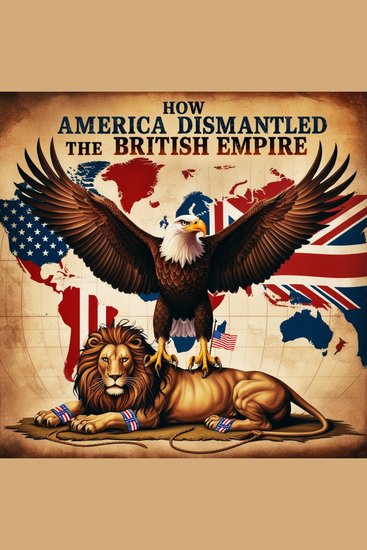
    In "How America Dismantled the British Empire," journey through one of the most transformative periods in modern history, where the balance of global power shifted decisively from the British Empire to the United States. This meticulously detailed account delves into the political machinations, strategic decisions, and international pressures that culminated in the Suez Crisis of 1956—a pivotal event that signaled the end of Britain's imperial dominance and heralded the ascent of American influence. 
    Explore the intricate dynamics between key figures like British Prime Ministers Winston Churchill and Anthony Eden, U.S. Presidents Dwight D. Eisenhower, and Egyptian leader Gamal Abdel Nasser. Uncover the layers of frustration, miscommunication, and strategic realignment that characterized the era. From the corridors of power in London and Washington to the volatile landscapes of the Middle East, this book paints a comprehensive picture of the geopolitical shifts that reshaped the world order. 
    "How America Dismantled the British Empire" offers an in-depth analysis of the decline of British influence and the concurrent rise of American hegemony, set against the backdrop of Cold War tensions and emerging post-colonial movements. The narrative captures the essence of a time when global leadership was contested, alliances were tested, and the future of international relations was irrevocably altered. 
    Whether you are a history enthusiast, a student of international relations, or simply curious about the forces that shaped the contemporary world, "How America Dismantled the British Empire" provides a compelling, insightful, and richly detailed chronicle of an era that defined the trajectory of modern geopolitics.
    Show book
  • A Rare Recording of Film Icon Shirley Temple - cover

    A Rare Recording of Film Icon...

    Shirley Temple

    • 0
    • 0
    • 0
    Shirley Temple (April 23, 1928 - February 10, 2014) was an American actress, singer, dancer, and diplomat, who was Hollywood's number-one box-office draw as a child actress from 1934 to 1938. Temple began her film career in 1931 when she was three years old. In 1935, she received a special Juvenile Academy Award for her contributions in motion pictures. Temple embarked on her U.S. diplomatic career in 1969, later being named Ambassador to Ghana and Czechoslovakia, and also served as Chief of Protocol of the United States.
    Show book
  • AUTISM PARENTING MADE EASY - Practical Strategies for Everyday Life - cover

    AUTISM PARENTING MADE EASY -...

    Dr Prashantt Joshii

    • 0
    • 0
    • 0
    Discover the potential of "Autism Parenting Made Easy: Practical Strategies for Everyday Life," authored by Dr.Prashantt Joshii, through the following essential elements: 
    1. Practical Insights: Explore a brief and informative guide that provides effective ways for successfully managing the difficulties associated with raising a child who has autism. 
    2. Routines and Communication: Discover professional guidance on developing efficient routines and improving communication to foster a nurturing atmosphere. 
    3. Establishing Connections: Acquire the skills for building significant bonds with your child. 
    4. Advocacy and Self-Care: Gain vital knowledge on advocacy for your child's needs and learn essential self-care techniques to prioritize your own well-being. 
    Join this revolutionary expedition with "Autism Parenting Made Easy: Practical Strategies for Everyday Life," where understanding meets practical assistance. Your child deserves a voice, and you deserve a dependable resource on this journey of parenthood.
    Show book
  • World War I on the Ground: The History and Legacy of Life in the Trenches - cover

    World War I on the Ground: The...

    Editors Charles River

    • 0
    • 0
    • 0
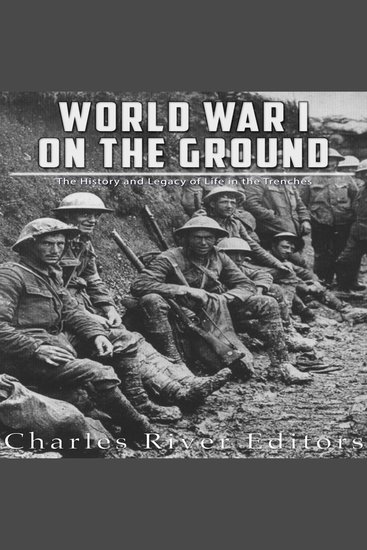
    World War I, also known in its time as the “Great War” or the “War to End all Wars”, was an unprecedented holocaust in terms of its sheer scale. Fought by men who hailed from all corners of the globe, it saw millions of soldiers do battle in brutal assaults of attrition which dragged on for months with little to no respite. Tens of millions of artillery shells and untold hundreds of millions of rifle and machine gun bullets were fired in a conflict that demonstrated man’s capacity to kill each other on a heretofore unprecedented scale, and as always, such a war brought about technological innovation at a rate that made the boom of the Industrial Revolution seem stagnant. 
    The enduring image of World War I is of men stuck in muddy trenches, and of vast armies deadlocked in a fight neither could win. It was a war of barbed wire, poison gas, and horrific losses as officers led their troops on mass charges across No Man’s Land and into a hail of bullets. While these impressions are all too true, they hide the fact that trench warfare was dynamic and constantly evolving throughout the war as all armies struggled to find a way to break through the opposing lines. 
    There was another war going on beneath the trenches, a war of tunnels and mines fought by men who didn’t see sunlight for days at a time and who lived in constant fear of cave-ins and enemy detection. These men, who had mostly been miners in civilian life, lived a twilight existence, working long hours in silence and near darkness while great battles raged overhead. They suffered from fatigue, stress, and the knowledge that they could be killed at any time by an unseen enemy. Despite this, they persevered, and the mines they laid under enemy trench systems turned the tide of at least one major battle.
    Show book