Join us on a literary world trip!
Add this book to bookshelf
Grey
Write a new comment Default profile 50px
Grey
Subscribe to read the full book or read the first pages for free!
All characters reduced
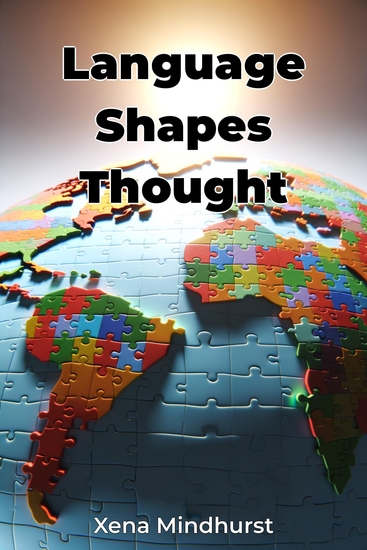
Language Shapes Thought - cover

Language Shapes Thought

Xena Mindhurst

Translator A AI

Publisher: Publifye

  • 0
  • 0
  • 0

Summary

"Language Shapes Thought" explores the intricate connection between language and our cognitive processes, examining how linguistic structures influence our perception of reality and shape cultural norms. It investigates the age-old question of whether the language we speak affects how we think, delving into the nuances of linguistic relativity and its implications for cognitive frameworks.

 
One intriguing insight is how different languages impact spatial reasoning and time perception, demonstrating that our native tongue may subtly alter our understanding of the world. The book progresses from foundational theories to specific linguistic features, such as grammatical gender and tense systems, analyzing their cognitive impact.

 
It highlights empirical studies, cross-linguistic comparisons, and neuroimaging research to support its arguments. The book uniquely emphasizes the practical applications of linguistic relativity, bridging the gap between theoretical research and real-world scenarios. This approach makes the book valuable for educators and policymakers, offering insights into improving language education and cross-cultural communication strategies.
Available since: 02/12/2025.
Print length: 68 pages.

Other books that might interest you

  • Katha Upanishad - cover

    Katha Upanishad

    Unknown

    • 0
    • 0
    • 0
    The word Upanishad (upa-ni-shad) consists of, "Upa" means "near;" "ni" means "down;" "shad" means "to sit." Thus, Upanishad is to sit down near the teacher to discuss, learn, practice, and experience. There are some 200 or more Upanishads. Some are lost and are only known about because of being referenced in other Upanishads.Most of the Upanishads were kept secret for centuries, only passed on to others orally in the form of Shloka (a category of verse line developed from the Vedic Anustubh meter).Katha-Upanishad is one the 11 principal Upanishads. Its chronology is contested as being between fifth century BCE and 1st millennium BCE.Katha (Sanskrit: ??) literally means "distress". Katha Upanishad uses words that symbolically embed and creatively have multiple meanings. For example, a closely pronounced word Katha (Sanskrit: ???) literally means "story, legend, conversation, speech, tale". All of these related meanings are relevant to the Katha Upanishad.The text presents Death as the Teacher and features a dialogue between an aspiring disciple, Nachiketas, the boy and a central character, and the Ruler of Death regarding the great Hereafter. It has two Adhyayas (chapters), each with three Valiis (sections), thus a total of six Vallis.The 11 principal Upanishads to which Sankara appeals in his great commentary on the Vedanta-Surtras are: Chandogya, Talavakara or Kena, Aitareya, Kaushitaki, Vajasaneyi or Isha, Katha, Mundaka, Taittirtiyaka or Taittiriya, Brihadaranyaka, Svetasvatara, and Prasna. They are also called the 11 classical Upanishads or the fundamental Upanishads of the Vedanta Philosophy. The Upanishadic literature is not a religious scripture and is free from dogma and doctrines. It is not a part of any religion but is a philosophy for all times and for all. German philosopher Arthur Schopenhauer, impressed by the Upanishads, called the texts "the production of the highest human wisdom". ( Summary by Jothi)
    Show book
  • Canada Under Siege - How PEI Became a Forward Operating Base for the Chinese Communist Party - cover

    Canada Under Siege - How PEI...

    Garry Clement, Michel Juneau...

    • 0
    • 0
    • 0
    In a chilling tale of soft power, corruption, and covert influence, Canada Under Siege pulls back the curtain on how the Chinese Communist Party quietly turned Prince Edward Island into a strategic forward operating base—right under the noses of Islanders and Ottawa alike.
    		 
    Drawing from a nearly two-year investigation by veteran intelligence officer and Chief of Asia Pacific (CSIS) Michel Juneau-Katsuya, former RCMP financial crime chief Garry Clement, and publisher Dean Baxendale, this groundbreaking exposé follows the money, the land grabs, the political manipulation, and the elites, captured or compromised.
    		This is not fiction. With whistleblower testimony, court documents, and explosive first-hand accounts stretching from Charlottetown to Taiwan, this book connects the dots between organized crime, espionage, elite capture, and Beijing’s United Front Work Department.
    		 
    What emerges is a damning picture of how one of the world’s most authoritarian regimes used immigration loopholes, Buddhist temples, and Anne of Green Gables to anchor its influence in Canada’s Prince Edward Island, the birthplace of Canadian Confederation. With China’s increased belligerence towards taking Taiwan by force, the authors show readers how the infiltration of Buddhist groups is playing a key role in the soft power dynamic in Taiwan and around the world, particularly as it relates to His Holiness the Dalai Lama and Tibetan Buddhism.
    		 
    Canada Under Siege is more than an exposé, it’s a warning. The threat is no longer at the gates. It’s already here. The time to act is now.
    Show book
  • Boomer Brand Winners & Losers - 156 Best & Worst Brands of the 50s and 60s - cover

    Boomer Brand Winners & Losers -...

    Barry Silverstein

    • 0
    • 0
    • 0
    What was the name of the first maple flavor instant oatmeal cereal? 
     What brand is the oldest major soft drink in America? 
     What do the “m’s” in M&Ms stand for? 
     Who was the Barbie doll named after? 
     Which toothpaste had Bucky Beaver as a mascot? 
    The answers to these burning questions – and many more – can be found in the book, Boomer Brand Winners & Losers: 156 Best & Worst Brands of the 50s and 60s. 
    This remarkable book features fascinating stories of 156 best and worst brands of the Boomer era. Relive the days of Cap’n Crunch and Cocoa Puffs, E-Z Pop and Pop-Tarts, cap guns and comic books. Recall the time when automobiles ruled the road and a transistor radio was “advanced technology.” Learn how television played a key role in brand advertising. Discover which brands blossomed and which were a bust.
    Show book
  • Holy Secret Society - cover

    Holy Secret Society

    Raphael Terra

    • 0
    • 0
    • 0
    This audiobook has been recorded using Text to speech (TTS). 
     
    The Bible is a profound book on many levels. Spiritually it holds questions and answers for what it means to be human. Historically it reveals the lives of thousands of individuals and dozens of nations. 
     
    It is not a book written by one man or one god. It is a collection of thoughts, poems and histories collated together in one mega-volume. There are cyphers, codes and systems that hide secrets. There are metaphors that evade ordinary reasoning. In this film we are going to zone in one those codes and metaphors to unravel a massive hidden history. A sacred truth that has found itself locked away in the societies man created in later days such as the Freemasons. This ultimate secret stretches back in time for thousands of years and was included within the pages of the Bible. 
     
    This is the tale of a powerful and secret organization that has influenced mankind for millennia. This is the tale of how their existence brought about a number of mysteries that we will now unravel. This is the story of the Holy Secret Society.
    Show book
  • Understanding Your Child - Parenting Strategies for Children's Emotional Resilience - cover

    Understanding Your Child -...

    Elly Watson

    • 0
    • 0
    • 0
    "Understanding Your Child: Parenting Strategies for Emotional Resilience" offers practical guidance for parents to nurture their children's emotional well-being. Drawing on the latest research, this book equips parents with tools to recognize, validate, and guide their children's emotions. From fostering empathy to teaching coping skills, parents learn how to create a supportive environment where their children can develop emotional resilience. With real-life examples and actionable strategies, this book is an essential resource for parents seeking to raise emotionally healthy children.
    Show book
  • Awkwardness - A Theory - cover

    Awkwardness - A Theory

    Alexandra Plakias

    • 0
    • 0
    • 0
    Awkwardness offers an account of the psychology and philosophical significance of a ubiquitous social phenomenon. Our aversion to awkwardness mirrors our desire for inclusion. This explains its power to influence and silence us: as social creatures, we don't want to mark ourselves as outsiders. As a result, our fear of awkwardness inhibits critique and conversation, acting as an impediment to moral and social progress. Even the act of describing people as "awkward" exacerbates existing inequities, by consigning them to a social status that gives them less access to the social goods (knowledge, confidence, social esteem) needed to navigate potentially awkward situations. 


    Awkwardness discusses how we ostracize and punish those who fail to fit into existing social categories; how we all depend on—and are limited by—social scripts and norms for guidance; and how these norms frequently let us down when we need them. But awkwardness has a positive side: it can highlight opportunities for moral and social improvement, by revealing areas where our social norms and scripts fail to meet our needs or have yet to catch up with changing social and moral realities. Awkwardness ultimately underscores the conflict between our moral motivations and our desire for social approval and conformity.
    Show book