Unisciti a noi in un viaggio nel mondo dei libri!
Aggiungi questo libro allo scaffale
Grey
Scrivi un nuovo commento Default profile 50px
Grey
Iscriviti per leggere l'intero libro o leggi le prime pagine gratuitamente!
All characters reduced
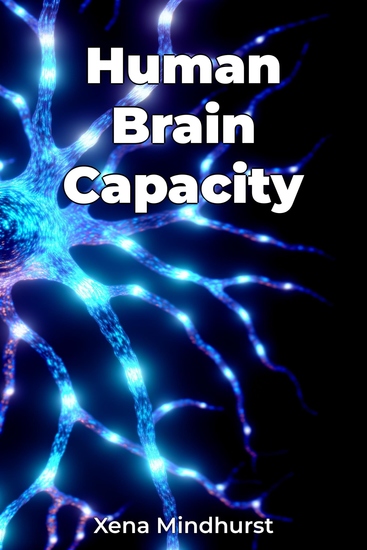
Human Brain Capacity - cover

Human Brain Capacity

Xena Mindhurst

Traduttore A AI

Casa editrice: Publifye

  • 0
  • 0
  • 0

Sinossi

'Human Brain Capacity' offers a fascinating exploration of our mind's remarkable ability to store, process, and retrieve information through its network of 100 billion neurons. This comprehensive work bridges the gap between complex neuroscience and practical understanding, examining how our brain's storage capabilities far surpass current artificial systems through its dynamic and selective approach to memory formation.The book strategically progresses through three main sections, beginning with the fundamental neuroscience of memory formation, moving through various memory systems, and concluding with practical applications for cognitive enhancement. It uniquely combines traditional neuroscientific research with contemporary findings, using clear analogies and real-world examples to illuminate complex concepts like synaptic plasticity and neural pruning. Readers discover how different memory systems—working, long-term, and procedural—work together to create our complete cognitive experience.What sets this book apart is its interdisciplinary approach, connecting neuroscience with computer science and education while remaining accessible to general readers. The text expertly balances theoretical understanding with practical application, offering evidence-based techniques for memory improvement while exploring the fascinating distinction between biological and digital storage systems. Through detailed examination of synaptic connections and neural networks, readers gain insight into how memories are physically stored and how the brain continuously reorganizes itself to maintain optimal cognitive function.
Disponibile da: 31/01/2025.
Lunghezza di stampa: 125 pagine.

Altri libri che potrebbero interessarti

  • Blacksound - Making Race and Popular Music in the United States - cover

    Blacksound - Making Race and...

    Matthew D. Morrison

    • 0
    • 0
    • 0
    A new concept for understanding the history of the American popular music industry. 


    Blacksound explores the sonic history of blackface minstrelsy and the racial foundations of American musical culture from the early 1800s through the turn of the twentieth century. With this namesake book, Matthew D. Morrison develops the concept of "Blacksound" to uncover how the popular music industry and popular entertainment in general in the United States arose out of slavery and blackface. 


    Blacksound as an idea is not the music or sounds produced by Black Americans but instead the material and fleeting remnants of their sounds and performances that have been co-opted and amalgamated into popular music. Morrison unpacks the relationship between performance, racial identity, and intellectual property to reveal how blackface minstrelsy scripts became absorbed into commercial entertainment through an unequal system of intellectual property and copyright laws. By introducing this foundational new concept in musicology, Blacksound highlights what is politically at stake—for creators and audiences alike—in revisiting the long history of American popular music.
    Mostra libro
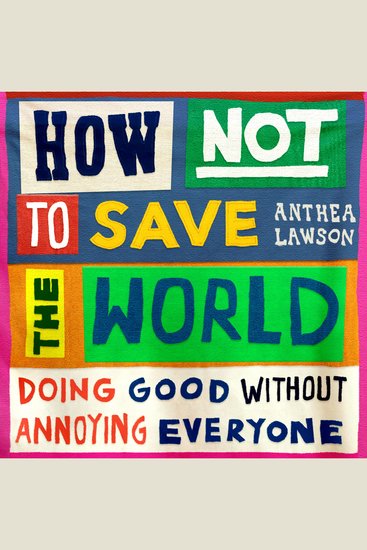
  • How Not to Save the World - Doing Good Without Annoying Everyone - cover

    How Not to Save the World -...

    Anthea Lawson

    • 0
    • 0
    • 0
    Do you want to change the world but wonder if there's any point trying?
    Are you unsure what you can offer, or don't feel that you fit the activist mould?
    Do you think activists can be self-righteous, even oblivious to the very people they're trying to help?
    'A wise, rich and crucial book.' George Monbiot
    How Not To Save the World is a book about doing good, for anyone who has looked at politics or public discourse and thought, 'we need better than this.' The fervour that drives us to change the world can create blind spots, where we don't see our own behaviour, or disregard it because the cause is urgent.
    Realistic, candid and hopeful, How Not To Save the World is a sympathetic exploration of alternatives to righteousness, purity traps and other unhelpful habits. It shows that there are ways to work together for what matters, without alienating the people we need to convince.
    ***
    'The stories in this book show how we can build bridges in order to work together for the world that we want.' Brian Eno
    'Read it and weep, laugh, cringe... it might bring more compassion and togetherness in a broken world.' Dr. Gail Bradbrook, co-founder of Extinction Rebellion
    'Anthea Lawson's provocative book provides us with deep insights into the tactical, emotional and ethical complexities of campaigning.' Sir Jonathon Porritt
    Mostra libro
  • Oddball Thoughts - cover

    Oddball Thoughts

    Donald Silverman

    • 0
    • 0
    • 0
    A collection of random thoughts and observations written between 2019-2024, written by former newspaper delivery boy, boardwalk barker, encyclopedia salesman, street art festival promoter, university executive, and filmmaker Donald Silverman.
    Mostra libro
  • Leonardo da Vinci: A short biography - 5 Minutes: Short on time - long on info! - cover

    Leonardo da Vinci: A short...

    5 Minutes, 5 Minute Biographies,...

    • 0
    • 0
    • 0
    Leonardo da Vinci, painter and universal genius: Life and works in a short biography! Everything you need to know, brief and concise. Infotainment, education and entertainment at its best!
    Mostra libro
  • Spanish Empire in the Americas The: The History of Spain’s Colonization across Central America and South America - cover

    Spanish Empire in the Americas...

    Editors Charles River

    • 0
    • 0
    • 0
    By the time Christopher Columbus started setting east from the New World, he had explored San Salvador in the Bahamas (which he thought was Japan), Cuba (which he thought was China), and Hispaniola, the source of gold. As the common story goes, Columbus, en route back to Spain from his first journey, called in at Lisbon as a courtesy to brief the Portuguese King John II of his discovery of the New World. King John subsequently protested that according to the 1479 Treaty of Alcáçovas, which divided the Atlantic Ocean between Spanish and Portuguese spheres of influence, the newly discovered lands rightly belonged to Portugal. To make clear the point, a Portuguese fleet was authorized and dispatched west from the Tagus to lay claim to the “Indies,” which prompted a flurry of diplomatic activity in the court of Ferdinand and Isabella. At the time, Spain lacked the naval power to prevent Portugal from acting on this threat, and the result was the hugely influential 1494 Treaty of Tordesillas. 
    	The Treaty of Tordesillas was one of the most important documents of its kind of the age, for it established the essential parameters of the two competing empires, the first of the major European imperial entities. The Treaty of Tordesillas drew an imaginary line from pole to pole, running 100 leagues west of the westernmost islands of the Azores. According to the terms of a supporting papal bull, all the lands to the west of that belonged to Spain, and all of those to the east belonged to Portugal. What this meant in practical terms was that Portugal was given Africa and the Indian Ocean while Spain was granted all the lands to the west, including the Americas and the Caribbean, all collectively known as the “Indies,” or the New World. Perhaps inevitably, a regional rivalry had developed as the Portuguese began to establish a colony in Brazil and push its boundaries southwards. 
    Mostra libro
  • Mind F CK Thought Experiments For Sleep - cover

    Mind F CK Thought Experiments...

    Explained Before Sleep

    • 0
    • 0
    • 0
    This audiobook is narrated by an AI Voice. Right and wrong, reality and illusion, free will and determinism—the deepest questions humans have ever asked can, strangely, become the gentlest path into sleep. This remarkable audiobook combines classical philosophy with modern neuroscience to create a uniquely calming bedside experience. Journey through the Trolley Problem, exploring why our moral intuitions shift when we imagine pulling a switch versus pushing a stranger. Discover the Brain in a Vat thought experiment and contemplate whether your entire reality could be an elaborate simulation. Each philosophical puzzle is presented not to agitate but to soothe, inviting your mind to wander through abstract reasoning while your body gradually releases tension. The narration explores cognitive psychology research from Harvard, diving into how different brain regions light up when processing ethical dilemmas. You'll encounter Descartes' evil demon, Putnam's radical skepticism, and Bostrom's Simulation Argument—all designed to occupy your conscious mind with fascinating complexity while your subconscious drifts toward rest. Unlike traditional sleep content, these thought experiments provide intellectual substance that paradoxically quiets mental chatter. The atmospheric presentation transforms dense philosophical material into a meditative experience, perfect for overthinkers who struggle with conventional relaxation techniques. Whether you're fascinated by moral philosophy, cognitive science, or simply seeking an alternative to mindless content before bed, this unique audio experience offers profound questions without demanding answers, creating the perfect mental state for restorative sleep.
    Mostra libro