Join us on a literary world trip!
Add this book to bookshelf
Grey
Write a new comment Default profile 50px
Grey
Subscribe to read the full book or read the first pages for free!
All characters reduced
Eyes as Mirrors - cover

Eyes as Mirrors

Xena Mindhurst

Translator A AI

Publisher: Publifye

  • 0
  • 0
  • 0

Summary

Eyes as Mirrors presents a fascinating exploration of how human eyes function as sophisticated tools for communication, health indicators, and cultural symbols. This multidisciplinary work weaves together cutting-edge research from neuroscience, behavioral psychology, and anthropology to reveal the complex ways our eyes reflect both our conscious and unconscious states. Through careful examination of pupillary responses, micro-expressions, and gaze patterns, the book illuminates how eyes serve as windows into our physical and emotional well-being.

 
The book progresses logically through three main sections, beginning with the neurobiological foundations of eye communication and the role of mirror neurons in processing facial expressions. It then delves into clinical research, revealing how various health conditions manifest through observable changes in the eyes, before concluding with an extensive examination of cultural variations in eye-related behaviors across forty different societies. This structure allows readers to build a comprehensive understanding of how eye communication influences human development, social organization, and health assessment.

 
What sets this work apart is its unique integration of previously separate research streams, combining insights from ophthalmology, neurology, psychology, and anthropology. Written in an accessible yet academically rigorous style, it offers practical applications for healthcare providers, social scientists, and general readers interested in human behavior. The book's examination of eye-based diagnostics, interpersonal communication strategies, and cross-cultural interaction frameworks makes it an invaluable resource for understanding the subtle complexities of human visual communication.
Available since: 01/23/2025.
Print length: 115 pages.

Other books that might interest you

  • Hotel Goodbyes - cover

    Hotel Goodbyes

    Stephen Jon Thompson

    • 0
    • 0
    • 0
    Stephen Jon Thompson was just nine years old when his mother said goodbye to him and his four younger siblings in a motel room in Reno, Nevada in January 1980. In Hotel Goodbyes, Stephen tells his incredible, gripping life story and how his mother may have abandoned him, but she also gave him a gift, the gift of a better life.
    Show book
  • On James Baldwin - cover

    On James Baldwin

    Colm Tóibín

    • 0
    • 0
    • 0
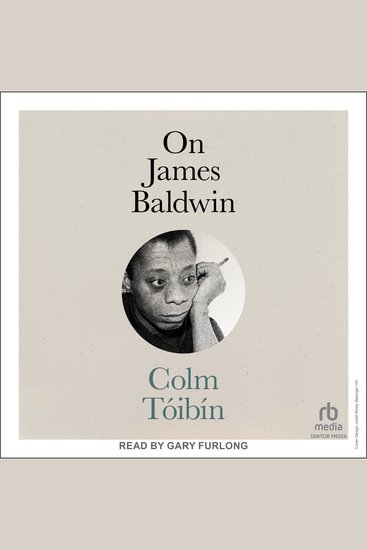
    Acclaimed Irish novelist Colm Tóibín first read James Baldwin just after turning eighteen. He had completed his first year at an Irish university and was struggling to free himself from a religious upbringing. Inspired by the novel Go Tell It on the Mountain, Tóibín found a writer who would be a lifelong companion and exemplar. 


    From On James Baldwin: 


    Baldwin was interested in the hidden and dramatic areas in his own being, and was prepared as a writer to explore difficult truths about his own private life. In his fiction, he had to battle for the right of his protagonists to choose or influence their destinies. He knew about guilt and rage and bitter privacies in a way that few of his White novelist contemporaries did. And this was not simply because he was Black and homosexual; the difference arose from the very nature of his talent, from the texture of his sensibility. "All art," he wrote, "is a kind of confession, more or less oblique. All artists, if they are to survive, are forced, at last, to tell the whole story, to vomit the anguish up." 


    On James Baldwin is a magnificent contemporary author's tribute to one of his most consequential literary progenitors.
    Show book
  • The History of Cleveland's Underground Railroad - A Collection of True Historical Accounts - cover

    The History of Cleveland's...

    Herbert Addison Burns

    • 0
    • 0
    • 0
    This is a collection of documented records of the Underground Railroad in Cleveland, Ohio. This audiobook has an enjoyable storybook style along with a vivid description of the political culture which set the tone for the underground railroad, in addition are the names of railroad conductors, fugitive slaves, and conflicting views within the church and the Ohio legislature in the 19th century.
    Show book
  • Black Folk - The Roots of the Black Working Class - cover

    Black Folk - The Roots of the...

    Blair L.M. Kelley

    • 0
    • 0
    • 0
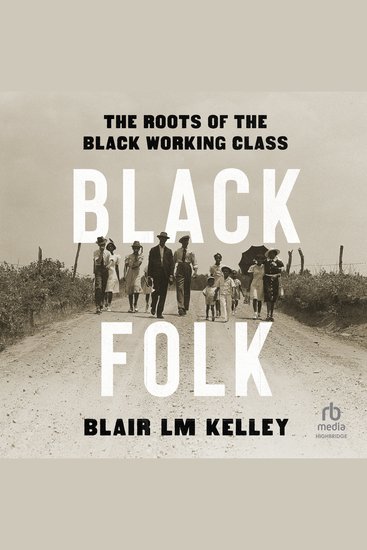
    There have been countless books, articles, and televised reports in recent years about the almost mythic "white working class," a tide of commentary that has obscured the labor, and even the very existence, of entire groups of working people, including everyday Black workers. In this brilliant corrective, Black Folk, acclaimed historian Blair LM Kelley restores the Black working class to the center of the American story. 


    Spanning two hundred years—from one of Kelley's earliest known ancestors, an enslaved blacksmith, to the essential workers of the Covid-19 pandemic—Black Folk highlights the lives of the laundresses, Pullman porters, domestic maids, and postal workers who established the Black working class as a force in the late nineteenth and early twentieth centuries. Taking jobs white people didn't want and confined to segregated neighborhoods, Black workers found community in intimate spaces, from stoops on city streets to the backyards of washerwomen, where multiple generations labored from dawn to dusk, talking and laughing in a space free of white supervision. As millions of Black people left the violence of the American South for the promise of a better life in the North and West, these networks of resistance and joy sustained early arrivals and newcomers alike and laid the groundwork for organizing for better jobs, better pay, and equal rights.
    Show book
  • Secession of the South The: The History of the Confederacy’s Establishment Before the Civil War - cover

    Secession of the South The: The...

    Jonathan Gianos-Steinberg,...

    • 0
    • 0
    • 0
    The election of Abraham Lincoln was the impetus for the secession of the South, but that was merely one of many events that led up to the formation of the Confederacy and the start of the Civil War. Sectional hostility over the issue of slavery had been bubbling for most of the 19th century, and violence had already broken out in places like Bleeding Kansas. Political issues like the Missouri Compromise, popular sovereignty, and the Fugitive Slave Act all added to the arguments.  
    	The secession of the South was one of the seminal events in American history, but it also remains one of the most controversial. Over the last 160 years, the greatest debate over the Civil War has remained just what caused it, and as recently as April 2010, Virginia’s governor declared April “Confederate History Month in Virginia,” issuing a proclamation that made no mention of slavery. Facing an intense backlash, Virginia’s governor first defended his proclamation by noting "there were any number of aspects to that conflict between the states.” Days later, the governor apologized for the omission of slavery. In turn, the governor’s backtracking was criticized by many Southerners, most prominently the Sons of Confederate Veterans, a large organization dedicated to commemorating the Confederates. The governor later declared that there would be no Confederate History Month in 2011.    
    	Arguments over the war’s causes are nothing new. Before the war had even ended, Confederate soldiers were asserting that they were fighting for states’ rights. In the early 20th century, prominent historians such as Charles Beard theorized that the war was based on economic differences between the North and South. Although slavery had been the dominant political issue in the 50 years leading up to the Civil War, these historians began to assert that slavery was not necessarily a factor.
    Show book
  • The Navy - cover

    The Navy

    Harold Clark

    • 0
    • 0
    • 0
    "The Navy" by Harold Clark takes you from the streets of Baltimore to the dark thirty chaos of Grenada's invasion, where Marines hit the beaches with guns blazing. The book displays what the real Navy looks like—where sailors live by mottos like 'Keep the screws turning and the lights burning' and learn hard lessons like 'tonnage has its privileges in the shipping channel.' Relive the Gator Navy days aboard LCU 1655 during Operation Northern Wedding, when a near-collision with a tanker in the Norwegian Sea taught Clark's crew to scan everything—high and low. Feel the tension of Beirut's Red Beach operations and the bitter retreat when the American flag came down, and the Syrian flag went up. Clark tells about his distinctive journey—a Navy life—told straight from the gut by a sailor who lived every minute of it, from boot camp to his final voyage aboard the USS Whidbey Island.
    Show book