Join us on a literary world trip!
Add this book to bookshelf
Grey
Write a new comment Default profile 50px
Grey
Subscribe to read the full book or read the first pages for free!
All characters reduced
Escaping the Matrix - cover

Escaping the Matrix

Xena Mindhurst

Translator A AI

Publisher: Publifye

  • 0
  • 0
  • 0

Summary

"Escaping the Matrix" explores how societal conditioning subtly shapes our thoughts and behaviors, often limiting our potential. The book delves into the "matrix" of societal programming, examining how institutions like education and media influence our values and aspirations. Intriguingly, the book highlights how these unseen forces can dictate our limitations, making it harder to realize our true selves. It provides tools for critical thinking, self-reflection, and cognitive restructuring, empowering readers to question assumptions and form independent conclusions, ultimately reclaiming mental sovereignty. 

 
The book progresses by first defining the "matrix" and its mechanisms, then analyzing specific life areas affected by societal programming, such as career and relationships. Drawing on philosophy and psychology, the book uses historical examples and research from behavioral psychology and cognitive science to support its arguments. 

 
"Escaping the Matrix" emphasizes the importance of mindfulness and self-awareness in challenging ingrained thought patterns, making it a valuable guide for personal transformation and fostering a more conscious and intentional life.
Available since: 02/13/2025.
Print length: 78 pages.

Other books that might interest you

  • The Social Contract - cover

    The Social Contract

    Jean-Jacques Rousseau

    • 0
    • 0
    • 0
    The Social Contract outlines Rousseau's views on political justice, explaining how a just and legitimate state is to be founded, organized and administered. Rousseau sets forth, in his characteristically brazen and iconoclastic manner, the case for direct democracy, while simultaneously casting every other form of government as illegitimate and tantamount to slavery. Often hailed as a revolutionary document which sparked the French Revolution, The Social Contract serves both to inculcate dissatisfaction with actually-existing governments and to allow its readers to envision and desire a radically different form of political and social organization. (Summary by Eric Jonas)
    Show book
  • Write With Me! - The ultimate guide to WRITE & SELF-PUBLISH that book on your heart! - cover

    Write With Me! - The ultimate...

    Eric Elder

    • 0
    • 0
    • 0
    Do you have a book on your heart? Don’t know where to start? Don’t know how to finish? I’ll show you how! I’ve written and self-published over 35 books (this is #36!) and helped dozens of others do the same. I’d love to help you!  
    Eric Elder 
    TABLE OF CONTENTS 
    1. Write with me!  
    2. The beauty of self-publishing  
    3. Think “books,” not “book”  
    4. Which book to write FIRST?  
    5. What’s your main theme?  
    6. Which stories support your theme?  
    7. No scene that doesn’t turn  
    8. Now write!  
    9. Flesh out your stories  
    10. Tips for self-editing  
    11. Send it to a few trusted readers  
    12. Receiving feedback  
    13. Getting endorsements  
    14. Formatting your book  
    15. Interior design  
    16. Cover design  
    17. Uploading your book  
    18. Creating your eBook & hardcover  
    19. Turning your writing into speaking  
    20. Seven touches  
    21. To market, to market 
    22. Start writing your NEXT book!  
    23. I'd love to help you with your book! 
    Visit: ericelder.com
    Show book
  • How One Brain Chemical Fuels Our Desires and Shapes Humanity - Elevate Your Understanding! Discover how one brain chemical fuels desires and shapes humanity with engaging audio lessons - cover

    How One Brain Chemical Fuels Our...

    Thaddeus Larkwood

    • 0
    • 0
    • 0
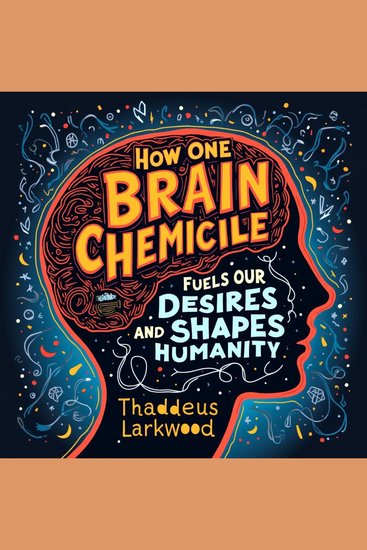
    How One Brain Chemical Fuels Our Desires and Shapes Humanity 
    ⭐⭐ Simplified Audio Guide ⭐⭐ 
    Are you eager to delve into the intricacies of human behavior and understand the underlying chemical drivers of our desires? 
    Searching for a comprehensive resource that encapsulates all you need to understand how a single brain chemical can shape humanity? 
    Your quest ends here! 
    This guide acts as your ultimate companion for deepening your understanding, applying your knowledge, and engaging with practical insights. With this, you are set for success. 
    Updated Content to Include the Latest Research Findings and Insights 
    Key features of this enriched guide: 
    - Profound insights about the role of brain chemicals in shaping human behavior 
    - Detailed explanation of how one specific chemical drives our desires 
    - Effective strategies for understanding and applying these principles 
    Our guide stands out for its comprehensive coverage, ensuring your profound understanding. Concepts aren't merely touched upon; they are explored in depth with precision. 
    Please note that this guide is an independent resource for your benefit. 
    Designed with clarity and simplicity, our guide ensures smooth transitions between topics. Say goodbye to dense jargon and embrace clear, precise, and technically accurate content. 
    So, why wait? Click the BUY NOW button, secure your guide, and begin your journey to mastering how brain chemicals fuel our desires and shape humanity! 
    Discover, Learn, and Apply. Embrace the journey to understanding the brain's most fascinating driver of behavior.
    Show book
  • Violence - A Very Short Introduction - cover

    Violence - A Very Short...

    Philip Dwyer

    • 0
    • 0
    • 0
    Violence is part and parcel of human history and of human nature. It is one of our most distinctive traits, the one thing that all cultures and societies, across time, share in common. It has defined not only the ways in which individuals relate to each other, but also how collective entities and states have interacted with each other over the millennia. All societies are violent and all individuals have the capacity for violence. However, not all societies and not all individuals are equally violent, and nor does violence exist with the same intensity across cultures. 


    This Very Short Introduction examines the more visible, physical acts of violence—interpersonal, gendered, collective, religious, sexual, criminal, and political—in the modern world. It explores how violence in the pre-modern world was different from the modern world, and what is significant about those differences. It also discusses what violence is by examining understandings of the ideas, values, and cultural practices embedded in an act of violence, and considering acts of violence as the outcome of a process dependent on the cultural context in which they take place. Along the way Dwyer considers some core questions, asking whether violence is always 'bad', and if there are any limits to human violence? And, are we becoming more or less violent?
    Show book
  • Mother Teresa: A short biography - 5 Minutes: Short on time – long on info! - cover

    Mother Teresa: A short biography...

    5 Minutes, 5 Minute Biographies,...

    • 0
    • 0
    • 0
    Mother Teresa, nun and Nobel peace prize laureate: Life and work in a short biography! Everything you need to know, brief and concise. Infotainment, education and entertainment at its best!
    Show book
  • Clubland: How the working men’s club shaped Britain - cover

    Clubland: How the working men’s...

    Pete Brown

    • 0
    • 0
    • 0
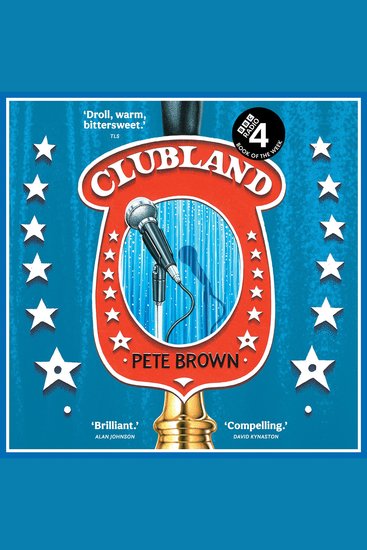
    The untold story of a British institution 
    ‘Brilliant.’ Alan Johnson 
    ‘Compelling.’ David Kynaston 
    ‘The beer drinkers’ Bill Bryson.’ Times Literary Supplement 
    Ferment Magazine’s Best Beer Book of the Year 
    Pete Brown is a convivial guide on this journey through the intoxicating history of the working men’s clubs. From the movement’s founding by teetotaller social reformer the Reverend Henry Solly to the booze-soaked mid-century heyday, when more than 7 million Brits were members, this warm-hearted and entertaining book reveals how and why the clubs became the cornerstone of Britain’s social life – offering much more than cheap Federation Bitter and chicken in a basket. 
    Often dismissed as relics of a bygone age – bastions of bigotry and racism – Brown reminds us that long before the days of Phoenix Nights, 3,000-seat venues routinely played host to stars like Shirley Bassey, Louis Armstrong, and the Bee Gees, offering entertainment for all the family, and close to home at that. Britain’s best-known comedians made reputations through a thick miasma of smoke, from Sunniside to Skegness. For a young man growing up in the pit town of Barnsley this was a radiant wonderland that transformed those who entered. 
    Brown explores the clubs’ role in defining masculinity, community and class identity for generations of men in Britain’s industrial towns. They were, at their best, a vehicle for social mobility and self-improvement, run as cooperatives for working people by working people: an informal, community-owned pre-cursor to the Welfare State. 
    As the movement approaches its 160th anniversary, this exuberant book brings to life the thrills and the spills of a cultural phenomenon that might still be rescued from irrelevance. 
    Pete Brown's Clubland is a cultural exploration of the British institution, weaving humour and criticism into the narrative. The book delves into the popular topic of beverages, specifically alcoholic ones, and their role in shaping regional and ethnic identities. 
    For fans of Adrian Tierney-Jones (London Local Pubs), Albert Jack (The Old Dog and Duck), David Kynaston (A Northern Wind), Marc Morris (The Norman Conquest), and Zadie Smith (Dead and Alive). 
    HarperCollins 2022
    Show book