Join us on a literary world trip!
Add this book to bookshelf
Grey
Write a new comment Default profile 50px
Grey
Subscribe to read the full book or read the first pages for free!
All characters reduced
Digital Downtime Gains - cover

Digital Downtime Gains

Xena Mindhurst

Translator A AI

Publisher: Publifye

  • 0
  • 0
  • 0

Summary

In Digital Downtime Gains, readers discover how brief tech-free pauses can combat digital overwhelm and restore mental well-being. The book’s central theme—that even 10-minute daily disconnections sharpen focus and reduce stress—is grounded in neuroscience and psychology. It reveals startling insights: constant screen exposure spikes cortisol levels, while short breaks activate the brain’s default mode network, fostering creativity. Unlike extreme digital detoxes, the book advocates “mindful modulation,” blending practicality with research. For example, fMRI studies show how dopamine-driven reward pathways keep us hooked on devices, but structured “tech pauses” can reset these patterns.

 
The book offers actionable strategies like the “90/10 Rule” (90 minutes of work followed by 10 offline) and environmental cues to prompt micro-disconnections. Case studies highlight individuals who boosted emotional resilience through tech-free meals or walks, supported by proprietary surveys tracking mood improvements. By merging cognitive science and behavioral economics, it frames disconnection as a skill, not a sacrifice. What sets this approach apart is its rejection of all-or-nothing solutions, instead teaching readers to navigate the attention economy with intentionality.

 
Written in a conversational yet evidence-based style, Digital Downtime Gains transforms self-care into achievable daily habits, proving that small breaks yield big cognitive rewards.
Available since: 01/27/2025.
Print length: 63 pages.


Other books that might interest you

  • Lieutenant General James Longstreet: Innovative Military Strategist - The Most Misunderstood Civil War General - cover

    Lieutenant General James...

    F. Gregory Toretta

    • 0
    • 0
    • 0
    A “fascinating and informative” reassessment of the underappreciated Confederate general’s achievements and ahead-of-his-time military strategy (Midwest Book Review).   Lieutenant-General James Longstreet, commander of the First Corps of the Army of Northern Virginia, was a brilliant tactician and strategist. Prior to the Civil War there were many technological developments, of which the rifled musket and cannon, rail transport, and the telegraph were just a few. In addition, the North enjoyed a great advantage in manpower and resources. Longstreet adapted to these technological changes and the disparity between the belligerents, making recommendations on how the war should be fought.   Longstreet made a mental leap to adjust to this new type of warfare. Many others didn’t make this leap, including Lee, Jackson, Bragg, Hood, and Jefferson Davis, and Longstreet’s advice went unheeded. In contrast to many southern generals, he advocated for defensive warfare, using entrenchments and trying to maneuver the enemy to assault his position, conserving manpower, resources, and supplies. With the advent of the highly accurate and long-range rifled musket, offensive tactics became questionable and risky. This caused Longstreet to come into conflict with General Robert E. Lee at Gettysburg, and with General Bragg at Chickamauga.   Longstreet, a pragmatic and methodical general, was never given full authority over an army in the field. Had his suggestions been utilized there would have been a better outcome for the South. Many historians and biographers have misunderstood Longstreet and his motives, but this work offers a fresh perspective. It takes a new viewpoint of the Civil War and the generals who tailored their designs to pursue the war, analyzes Longstreet’s views of the generals and the tactics and strategy they employed, and examines why Longstreet proposed and urged a new type of warfare.
    Show book
  • Beyond Good and Evil - cover

    Beyond Good and Evil

    Friedrich Nietzsche

    • 0
    • 0
    • 0
    Friedrich Nietzsche's 'Beyond Good and Evil' is a philosophical tour de force challenging traditional morality. With aphoristic brilliance, Nietzsche dismantles moral dichotomies, advocating for a re-evaluation of values. This profound work explores the complexities of human nature, power, and individuality, inviting readers to question and transcend conventional notions of good and evil, offering a provocative journey into the realms of philosophy and existential inquiry. Read in English, unabridged.
    Show book
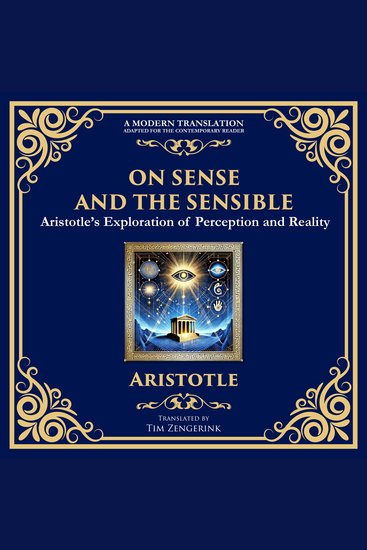
  • On Sense and the Sensible - Aristotle’s Exploration of Perception and Reality - cover

    On Sense and the Sensible -...

    Aristotle, Tim Zengerink

    • 0
    • 0
    • 0
    What if you could explore the very foundation of how we perceive the world and challenge your understanding of reality? 
    Step into Aristotle’s groundbreaking inquiry into the senses and discover how vision, hearing, and other faculties shape our experiences. Adapted for the contemporary reader, this work offers timeless insights into the intricate connections between perception, knowledge, and existence—guiding you toward a richer, more informed way of seeing the world around you. 
    What You’ll Discover in This Modern Translation: 
    - How our senses function and influence our interpretation of reality 
    - The relationship between perception, thought, and understanding 
    - Ways to question and refine your perceptions for deeper clarity 
    - Timeless insights that bridge ancient wisdom and modern scientific thought 
    Imagine gaining an elevated perspective on how you perceive everyday life—leading to heightened awareness and a clearer sense of self. Aristotle’s exploration illuminates the path to discerning truth in a world of ever-shifting appearances. 
    Take the first step toward seeing reality more clearly. Get your copy now and embrace the wisdom that has shaped philosophical thought for centuries.
    Show book
  • Swift Boats at War in Vietnam - cover

    Swift Boats at War in Vietnam

    John Yeoman, Guy Gugliotta, Neva...

    • 0
    • 0
    • 0
    In this oral history, Vietnam veterans recount their stories of patrol and combat on the coast and in the Mekong Delta. Developed specifically for the Vietnam War, Swift Boats were versatile craft “big enough to outrun anything they couldn’t outfight” but too small to handle even a moderate ocean chop, too loud to sneak up on anyone, and too flimsy to withstand the mildest of rocket attacks. This added challenges to an already tough mission: navigating coastal waters for ships and sampans smuggling contraband to the Viet Cong, disrupting enemy supply lines on the rivers and canals of the Mekong Delta, and inserting SEALs behind enemy lines.   The stories in this book cover the Swift Boats’ early years, which saw search-and-inspect operations in Vietnam’s coastal waters, and their later years, when the Swift Boats' mission shifted to the Mekong Delta’s labyrinth of three-thousand miles of rivers, streams, and canals. This is an intimate, exciting oral history of Swift Boats at war in Vietnam.
    Show book
  • The Dispossessed Generation - Youth in the Middle East and North Africa - cover

    The Dispossessed Generation -...

    Jörg Gertel, David Kreuer,...

    • 0
    • 0
    • 0
    The Arab uprisings of the early 2010s raised hopes for the development of more democratic structures and better living conditions for millions in the region. Instead, they were followed by authoritarian backlash, civil wars, economic collapse and food and energy insecurity.
    
    
    Young people are often the ones hit hardest by the conjunction of these problems. How do they cope with insecurities and growing uncertainties, and what drives them to pursue their own dreams in spite of being disenfranchised?
    
    The Dispossessed Generation is the most comprehensive, in-depth study of young people in the MENA region to date, providing invaluable insights into their self-perceptions and life chances. In this volume, an interdisciplinary team of researchers assess a survey of 12,000 sixteen- to thirty-year-olds from Algeria, Egypt, Iraq, Jordan, Lebanon, Libya, Morocco, Palestine, Sudan, Syria, Tunisia and Yemen. They illuminate the extent to which young people engage with their societies and mine new opportunities from a multiplicity of crises.
    Show book
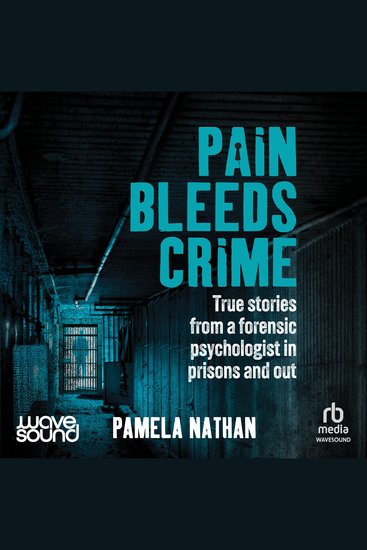
  • Pain Bleeds Crime - cover

    Pain Bleeds Crime

    Pamela Nathan

    • 0
    • 0
    • 0
    True stories from a forensic psychologist in prisons and out.  
     
     
    ‘The most dangerous people I met weren’t monsters. They were broken children wearing adult faces.’ 
     
    Pamela Nathan, clinical and forensic psychologist and psychoanalytic psychotherapist, uncovers the inner worlds of society’s most dangerous and broken—whether behind bars or hidden in plain sight. 
     
    In Pain Bleeds Crime, she shares twenty-three gripping true stories from her decades working in maximum-security prisons, courts, and forensic hospitals. The crimes are shocking—murder, rape, paedophilia, assault, fetishism, bestiality, and more—but what lies beneath is often even more confronting. 
     
    Each offender, whether male, female or transgender, reveals a hidden world shaped by trauma, pain, and silence. Pamela enters these inner worlds to feel and then to have revealed the internal crime scenes, to see what made them break—mentally, emotionally, morally. These aren’t excuses. They’re revelations. 
     
    You’ll come face-to-face with people whose crimes horrified the public—people who insist they’re not violent, or that “it just happened”—and come face-to-face with the dark truth: the past never really goes away. With unflinching honesty and rare insight, Pamela shows how the past never really stays buried—and how behind every act of violence, there’s a story waiting to be told. 
     
    Brutally honest, deeply unsettling, and impossible to forget, Pain Bleeds Crime is a journey into the darkest parts of humanity. 
     
     
    ‘Mad, bad, or sad—when we listen to the story, we see the person.’ 
     
     
    ‘A chilling exploration of the trauma and pain behind the most heinous crimes.’
    Show book