Join us on a literary world trip!
Add this book to bookshelf
Grey
Write a new comment Default profile 50px
Grey
Subscribe to read the full book or read the first pages for free!
All characters reduced
Cultural Bonds - cover

Cultural Bonds

Xena Mindhurst

Translator A AI

Publisher: Publifye

  • 0
  • 0
  • 0

Summary

"Cultural Bonds" explores the fascinating intersection of psychology and human connection by examining how cross-cultural friendships shape our understanding of ourselves and the world around us. This comprehensive work investigates three fundamental aspects: the psychological mechanisms behind cross-cultural bonds, their impact on personal growth, and their role in building broader societal connections.Through a blend of scientific research and real-world examples from five continents, the book demonstrates how stepping outside our cultural comfort zones can enhance cognitive flexibility and reduce implicit bias. The book progresses from a foundation in neuroscience, showing how intercultural interactions affect brain plasticity and emotional intelligence, to practical applications in educational and professional settings.Particularly compelling are the findings that students in multicultural friendship groups demonstrate enhanced creativity and critical thinking skills. The research draws from multiple disciplines, including cognitive science and anthropology, to present a holistic understanding of cross-cultural relationships.What sets this book apart is its balanced approach to addressing both the challenges and rewards of cross-cultural friendships, supported by longitudinal studies and case analyses. The final section provides evidence-based strategies for overcoming cultural barriers and building lasting connections across cultural divides.While maintaining academic rigor, the book remains accessible to general readers, making it an invaluable resource for educators, international professionals, and anyone interested in developing cultural competence in our increasingly interconnected world.
Available since: 01/30/2025.
Print length: 126 pages.

Other books that might interest you

  • The Communist Manifesto - cover

    The Communist Manifesto

    Karl Marx

    • 0
    • 0
    • 0
    "Workers of the world, unite! You have nothing to lose but your chains".
    The Communist Manifesto lays out the principles of Marxism, analysing the historical development of class struggles and the dynamics of capitalism. Marx and Engels argue that all history is the history of class conflict, and that capitalism, like previous systems, contains the seeds of its own destruction. Written in 1848, The Communist Manifesto remains one of the most influential political documents ever written, presenting a laser-sharp critique of inequality and presenting a vision for a radically different, classless society where "the free development of each is the condition for the free development of all."
    
    But the Manifesto is most valuable as an historical document, one that led to the greatest political upheavals of the nineteenth and twentieth centuries and to the establishment of the Communist governments that until recently ruled half the globe.
    Karl Marx (1818–1883) was a German philosopher, historian, sociologist, economist, and revolutionary socialist best known for co-authoring The Communist Manifesto and writing Das Kapital. Due to his political writings, he was forced to live in exile in London, where he continued to develop his thought in collaboration with German thinker Friedrich Engels and publish his writings. His ideas have had enormous influence on political and philosophical thought, laid the foundation for modern communism and have influenced political movements worldwide.
    Friedrich Engels (1820–1895) was a German philosopher, social scientist, and political theorist best known for his collaboration with Karl Marx. Born in Barmen, Prussia (now Wuppertal, Germany), Engels came from a wealthy textile manufacturing family. His early experiences in the family business exposed him to the harsh realities of industrial capitalism, which shaped his views on class struggle and social justice. Engels was a strong advocate for workers' rights and played a key role in the development of Marxist thought. He died in 1895 in London, leaving a lasting legacy in political theory.
    Show book
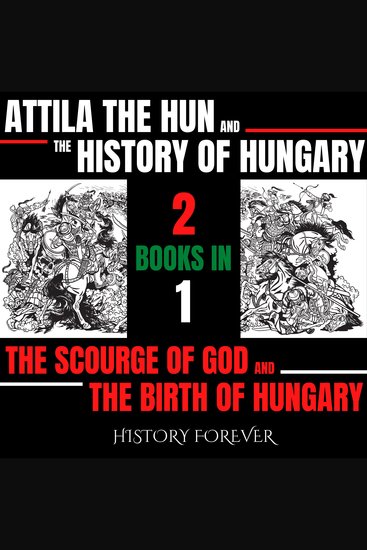
  • Attila The Hun And The History Of Hungary: 2 Books In 1 - The Scourge Of God & The Birth Of Hungary - cover

    Attila The Hun And The History...

    HISTORY FOREVER

    • 0
    • 0
    • 0
    ★ Did you know that Hungary once was considered one of the greatest powers in Central Europe? ★ 
    ★ Did you know that Attila The Hun was one of the greatest barbarian rulers in history? ★ 
    THIS BOOK INCLUDES 2 MANUSCRIPTS: 
    BOOK 1 - HUNGARIAN HISTORY: HUNGARY IN WORLD WAR 1 & 2, THE GOLDEN AGE OF FOOTBALL, THE WORST INFLATION EVER RECORDED AND THE COLLAPSE OF COMMUNISM 
    BOOK 2 - ATTILA THE HUN: THE SCOURGE OF GOD: A BRIEF HISTORY OF ATTILA AND THE HUNS TAKING OVER CENTRALL EUROPE (TODAYS HUNGARY) AND INVADING ROME 
    ★ GET THIS BOOK NOW AND DISCOVER WHAT IT TAKES TO BE A HUN TODAY! ★ 
    In book 1 you will discover;Austria-Hungary in World War 1The Hungarian Romanian War - 1919The Hungarian Soviet RepublicThe Treaty of Trianon - 1920Hungary Joining the Axis PowersHungary Attacking the USSR - 1941The German Invasion of Hungary - 1944Hungary before the Revolution of 1956The Hungarian Revolution of 1956The Golden Age of Hungarian footballWorst Inflation In World HistoryThe Collapse of Communism in Hungary 
    In book 2 you will discover;Why Attila was The Most Evil Men In HistoryAttila and the Huns OriginHow Attila took over GneissesHow Attila took over ConstantinopleWhy Attila went against the VisigothsBattle of the Catalaunian PlainsHow Attila Invaded the Western Roman EmpireHow Attila Broke RomeSeveral Disturbing Facts about Attila and the Huns 
    ★ GET THIS BOOK NOW AND DISCOVER WHAT IT TAKES TO BE A HUNGARIAN! ★
    Show book
  • How to Think More and Better - Being Reasonable in Unreasonable Times - cover

    How to Think More and Better -...

    William B. Irvine

    • 0
    • 0
    • 0
    William B. Irvine, author of the popular book "A Guide to the Good Life," offers much needed philosophical advice on how to become a more rational and critical thinker in today's emotionally-driven and complex world. 
      
    Even the most reasonable of us can be selective about when we think reasonably. We may realize that the best thing to do is to take the advice of our doctor when facing a medical issue. When shopping for a new car or appliance we might carefully assess online reviews and weigh our options calmly before making an informed decision. But when it comes to things that feel more fraught—voting, navigating a challenge in our family, figuring out what to do in a difficult professional situation—we might throw this approach out the window, dismissing facts and patterns that form a body of evidence, and trust our gut. (Of course, there is a time and place for this, but not every big decision is purely a matter of the heart.) Likewise, when we think about big ideas, about right and wrong, or about concepts so complex they make anyone's head spin, we can freeze, jumping to conclusions rather than wading into the details, or considering the existing arguments that others offer as a trail through challenging terrain. How can we do better? How can we train our minds to be more consistent? How can we practice using the best of our rational abilities when it matters most? 
      
    How to Think More and Better offers a philosopher's advice on becoming a more rational and critical thinker, rather than relying on emotions or hearsay to reach important decisions. It trains the reader in open-minded critical thinking. This thinking is crucial in a time of political polarization, social media, politicized news media, and echo chambers, to help us pursue truth and understanding in a world of rabbit holes, echo chambers, and disinformation. Irvine explains the prevalence of emotion-driven thinking is often at the expense of engagement with evidence, and then lays out strategies readers can use to train themselves to think more critically, drawn from what worked for him in the classroom. He also covers important areas to aid intellectual self-transformation, such as Mindcare and Mindcleaning.  
      
    With practice, most people can become evidence-based thinkers. Seemingly intractable contemporary problems might be solved if we all start engaging more in this kind of slow and careful thinking, considering arguments and evidence even from those on opposite sides of key debates. 
      
    "William B. Irvine is the voice of reason—and reasoned thinking—in a world that feasts on attention and spectacle and drama. How to Think More and Better is a guide to recovering our senses not only as citizens, but as judicious and thoughtful human beings."—Tom Nichols, author of The Death of Expertise
    Show book
  • Apartheid - Britain’s Bastard Child - cover

    Apartheid - Britain’s Bastard Child

    Helene Opperman Lewis

    • 0
    • 0
    • 0
    "What cannot be contained, mourned, and worked through in one generation is transmitted, for the most part unconsciously, as affect, mission, and task to the next generation...the fate of repression and dissociation is enactment." 
    Howard Stein, Ph.D. 
    Psychohistorian, Psychoanalyst. Professor Emeritus, University of Oklahoma Health Science Centre.
    Show book
  • Early Chinese Dynasties - The Dawn of Chinese Civilization (3 in 1) - cover

    Early Chinese Dynasties - The...

    Rolf Hedger

    • 0
    • 0
    • 0
    In the fertile valleys along the Yellow and Yangtze Rivers, where mist clings to rugged mountains and flows through ancient bamboo forests, the foundations of one of humanity's most enduring civilizations were laid thousands of years ago. "Early Chinese Dynasties: The Dawn of Chinese Civilization" invites readers on a captivating journey through three formative dynasties that shaped the cultural, political, and philosophical landscape of China for millennia to come. 
    The semi-legendary Xia Dynasty emerges from the shadows of prehistory as China's first hereditary state, traditionally dated to the third millennium BCE. While archaeological evidence remains elusive, the stories of Yu the Great taming floods and establishing systems of governance provided the foundational mythology for Chinese civilization. Here, we explore both the historical debates surrounding the Xia and the archaeological discoveries at sites like Erlitou that may represent this elusive first dynasty. 
    With the Shang Dynasty, we step onto firmer historical ground. From their capital cities at Zhengzhou and later Anyang, Shang kings presided over a sophisticated bronze-working civilization that developed China's earliest known writing system. The oracle bones—animal scapulae and turtle shells inscribed with divination records—offer unprecedented insights into the religious practices, military campaigns, and royal genealogies of this brilliant Bronze Age society. The magnificent ritual bronze vessels they created, with their intricate designs and ceremonial significance, remain among humanity's greatest artistic achievements. 
    The Zhou Dynasty—China's longest-lasting royal house—would build upon these foundations while introducing revolutionary concepts that would define Chinese civilization for thousands of years.
    Show book
  • Swifterature - A Love Story: English Literature and Taylor Swift - cover

    Swifterature - A Love Story:...

    Elly McCausland

    • 0
    • 0
    • 0
    A daring literary fusion of pop culture and feminism, Swifterature captures the special connection between English literature and the worldwide phenomenon of Taylor Swift. 
    Swifterature captures a unique fusion of different elements: fandom, feminism, and a defense of both literature and popular culture. 
    The narrative is split into thirteen chapters that use Swift's lyrics as departure points. The listener experiences the inspiring influence of English literature as Swift’s lens breathes new vitality and urgency into older texts. McCausland also writes about her own experiences as she copes with intense media scrutiny and is forced to defend her academic integrity. 
    She argues that Swift, through her self-conscious engagement with classic works of literature and her extraordinary popularity, invites us to reflect not only on the culture of our past but also of our present. Swifterature shows how Swift’s place on the world’s stage can teach us about many things, from feminism to politics, nature to childhood. In the process the book makes a compelling case that studying Taylor Swift also turns us into better readers, not only of literature but of ourselves and each other.
    Show book