Join us on a literary world trip!
Add this book to bookshelf
Grey
Write a new comment Default profile 50px
Grey
Subscribe to read the full book or read the first pages for free!
All characters reduced
Buenos Ayres and the Provinces of the Rio de La Plata - Their Present State Trade and Debt - cover

Buenos Ayres and the Provinces of the Rio de La Plata - Their Present State Trade and Debt

Woodbine Parish

Publisher: Good Press

  • 0
  • 0
  • 0

Summary

In "Buenos Ayres and the Provinces of the Rio de La Plata," Woodbine Sir Parish presents a meticulous account of the socio-economic landscape and cultural dynamics of 19th-century Argentina. Through his keen observations and detailed descriptions, Parish employs a vivid narrative style that intertwines personal anecdotes with critical analysis, granting readers both an intimate and expansive view of the region. Set against the backdrop of post-colonial tensions and burgeoning nationalism, the book serves as an essential primary source that captures the essence of Argentine life and the complexities of its evolving identity during this transformative era. Woodbine Sir Parish, a British traveler and writer, was deeply influenced by his experiences in the Americas, which motivated his desire to document and understand the cultures he encountered. His penchant for exploring uncharted territories and engaging with local populations provided him with unique insights that are reflected in his writing. Parish'Äôs background as an observer of colonial societies allowed him to navigate the nuances of Argentine society, making his work invaluable for understanding the historical context of the region. This book is highly recommended for readers interested in Latin American history, travelers' narratives, and those seeking to gain a deeper understanding of Argentina'Äôs rich heritage. Parish'Äôs engaging prose not only informs but also invites reflection on the complexities of identity and nation-building in a post-colonial world.
Available since: 10/12/2023.
Print length: 271 pages.

Other books that might interest you

  • Life Skills for a Broken World - cover

    Life Skills for a Broken World

    Ahona Guha

    • 0
    • 0
    • 0
    A revolutionary framework for living well in a broken world, from acclaimed author and psychologist. 
     
    How can I manage heartbreak? How do I cope with death? How can I learn to tolerate anxiety and have hope? 
    In this helpful, practical, and realistic guide to good psychological health, Dr Ahona Guha shows us how to cope, thrive, and still feel hopeful for the future. Combining techniques from a range of therapeutic modalities, she demonstrates how we can build a range of essential psychological skills, and apply them to live a more tranquil and joyful life. 
    Life Skills for a Broken World is a breath of fresh air, cutting through the confusion to provide solid, practical, and evidence-based answers to existential questions, big and small. 
     
    ‘Give this book as a gift to someone you love who is struggling — and that might be yourself. I already know this book is going to live on my bedside table. Dr Guha puts language and frameworks to help order the mess in our heads and hearts. Life Skills for a Broken World is grounding, consoling, and so practical.’ BENJAMIN LAW, AUTHOR OF THE FAMILY LAW AND GAYSIA 
     
    ‘Dr Guha's book is like therapy, activism, and a pep talk all rolled into one. Whether you're stressing about the state of the world or just trying to level-up your own life, she's got your back. It's all about taking baby steps to make big leaps — not just for you but for the world at large. So, give it a read and prepare to be the change you’ve been waiting for.’ CHANTELLE OTTEN, SEXOLOGIST AND AUTHOR OF THE SEX ED YOU NEVER HAD 
     
    ‘Reclaim is one of those books I will revisit again, whenever I need to process certain events or experiences.’ DR YUMIKO KADOTA, AUTHOR OF EMOTIONAL FEMALE
    Show book
  • Life in the UK Test 2026 - The Ultimate & Updated Exam Study Guide - Practice with 500+ Official Questions & Answers - cover

    Life in the UK Test 2026 - The...

    GreatBrit Education

    • 0
    • 0
    • 0
    Are you looking for the perfect way to study for your upcoming Life in the UK Test in 2026?


    Do you dream of passing for the first time, and becoming a British Citizen? Maybe you just want settled status? 


    Whatever your motivation is to stay in the UK - whether for work, family, or love - we get it.


    The problem you have - the test is DIFFICULT. Which means many people fail on their first try.


    This comprehensive study guide is designed to guide you through passing the exam as fast and easily as possible.


    Inside our new audiobook, here's a small piece of what you'll get:


    •   	More than 500 Practice Questions & Answers - that you can listen to over & over again - wherever you are.
     
    •   	Up-to-date content for 2026 & beyond - including the new King, the new government, new taxes and policies, Brexit updates, and more.
     
    •   	Written by British Historians - With Expert Knowledge - Triple Checked for Accuracy
     
    •   	A highly experienced British Narrator (listen to the audio sample to hear what he sounds like)
     
    •   	This audiobook has been edited & completely re-narrated since last year's version. 
     
    •   	And much, much more.


    No matter whether you're from India, Albania, Poland, Pakistan or anywhere else - this audiobook is all you'll need to succeed.


    So, if you don’t want to fail this hard test…


    Then listen to this audiobook now!
    Show book
  • The Shocking Truth about International Aid - cover

    The Shocking Truth about...

    Zoey Fraisers

    • 0
    • 0
    • 0
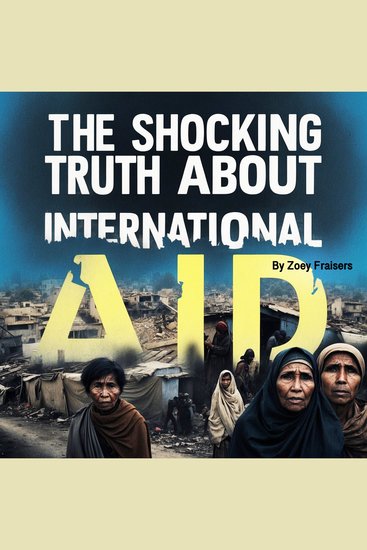
    International aid has long been heralded as a solution to the world’s most pressing problems, from poverty and hunger to disease and disaster recovery. It is a system built on the idea that wealthier nations and organizations have the responsibility to assist those in need, providing the necessary resources to help vulnerable populations rise above their circumstances. With trillions of dollars allocated to aid efforts across the globe, it would seem that international aid is fulfilling its mission to promote global well-being. However, a closer examination reveals a far more complex, and often disheartening, reality. 
      
    While aid is essential in times of crisis, its long-term effects are often overlooked. Far too frequently, the aid process is tainted by inefficiencies, corruption, and political agendas, which hinder its effectiveness and frequently exacerbate the problems it seeks to solve. Donor countries may provide aid with specific political or economic interests in mind, making the assistance less about altruism and more about advancing a nation's own objectives. Likewise, organizations tasked with distributing aid can become bogged down by bureaucratic red tape, mismanagement, and a lack of accountability, leading to resources being squandered or diverted from the people who need them most. 
      
    The impact of international aid is not always as straightforward as it appears. While some projects undoubtedly achieve their goals, many others fail to deliver lasting results, leaving behind a trail of dependency rather than empowerment. Aid can often unintentionally disrupt local economies and social structures, creating reliance on external support rather than fostering self-sufficiency. In some cases, aid even perpetuates cycles of poverty by undermining local industries or creating a mindset of dependency that stifles innovation and growth.
    Show book
  • Kaiser Wilhelm II - Biography of the Last German Emperor and King of Prussia - cover

    Kaiser Wilhelm II - Biography of...

    Kelly Mass

    • 0
    • 0
    • 0
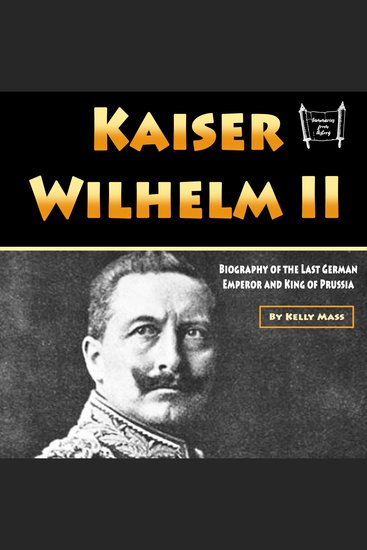
    Wilhelm II, the last German Emperor (Kaiser) and King of Prussia, ruled from June 15, 1888, until his abdication on November 9, 1918, marking the end of the German Empire. His reign was tumultuous, characterized by grand ambitions and disastrous decisions that not only reshaped Germany but also contributed to the broader context of global conflict. Although Wilhelm's creation of a powerful navy and his drive to position Germany as a dominant world power earned him recognition, his erratic public statements and volatile foreign policy alienated many, making him a central figure in the lead-up to World War I. 
    Born in 1859 to Prince Frederick William of Prussia and Victoria, Princess Royal of the United Kingdom, Wilhelm II was part of a deeply interconnected European royal family. His mother, Queen Victoria’s eldest daughter, brought him into a web of political alliances that spanned several major European nations. Wilhelm’s father, Frederick III, briefly held the throne for only 99 days in 1888 before his untimely death, making it a year of remarkable transitions. Just months after his father’s passing, Wilhelm succeeded to the throne during what historians refer to as the "Year of the Three Emperors," as Wilhelm’s grandfather, Wilhelm I, had also died earlier that year.
    Show book
  • Germanic Mythology - Legends Deities and the Heroic Narratives of Ancient Germany - cover

    Germanic Mythology - Legends...

    Christiano Farrezi

    • 0
    • 0
    • 0
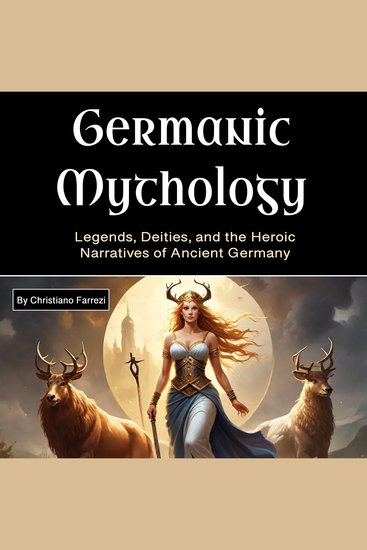
    Germanic mythology is a rich tapestry of myths, legends, and folklore that reflects the beliefs and values of ancient Germanic peoples. Encompassing a variety of tribes, including the Goths, Vandals, Saxons, and Norse, this mythology served as a crucial part of cultural identity and social cohesion. It provided a shared narrative framework that connected communities, reinforcing a sense of belonging among individuals. 
    The importance of mythology in Germanic culture lies not only in its role in explaining natural phenomena and human experiences but also in its function as a moral and ethical framework that guided the behavior of individuals and communities. Myths served to articulate values such as honor, bravery, and loyalty, which were central to the warrior ethos of many Germanic societies. Through heroic tales, individuals were taught the significance of courage in the face of adversity and the importance of kinship and loyalty to one’s tribe.
    Show book
  • Peter Singer - Ethics in the Modern World - cover

    Peter Singer - Ethics in the...

    Hector Davidson

    • 0
    • 0
    • 0
    Peter Singer is one of the most influential philosophers in contemporary ethics, known for his contributions to utilitarianism, animal rights, global poverty, bioethics, and environmental ethics. His ethical philosophy is grounded in the principle of utilitarianism, which holds that the right course of action is the one that produces the greatest overall happiness or well-being. Singer’s work is characterized by a practical, results-oriented approach, focusing on how ethical principles can be applied to real-world issues to alleviate suffering and promote well-being. His influential works, such as Animal Liberation and The Life You Can Save, challenge readers to consider the moral implications of their actions in a variety of contexts, from how they treat animals to how they engage with global poverty. 
    At the core of Singer’s ethical framework is the idea that all sentient beings, regardless of their species, deserve equal consideration. This principle of equal consideration of interests leads to his advocacy for the rights of animals, arguing that their capacity to suffer should give them moral consideration equal to that of humans. Singer’s call for animal liberation challenges the traditional view of animals as resources for human consumption and urges society to rethink its treatment of non-human creatures. 
    In addition to his work in animal ethics, Singer has profoundly impacted discussions on global poverty and humanitarian aid. Through his concept of effective altruism, he argues that individuals in affluent societies have a moral obligation to help those in extreme poverty. Using the famous “drowning child” analogy, Singer demonstrates that if we are morally obligated to save a child from drowning in a shallow pond, we should equally be compelled to help those suffering from poverty and preventable diseases, no matter the physical distance.
    Show book