¡Acompáñanos a viajar por el mundo de los libros!
Añadir este libro a la estantería
Grey
Escribe un nuevo comentario Default profile 50px
Grey
Suscríbete para leer el libro completo o lee las primeras páginas gratis.
All characters reduced
Cosmos and Republic - Arendtian Explorations of the Loss and Recovery of Politics - cover

Cosmos and Republic - Arendtian Explorations of the Loss and Recovery of Politics

Wolfgang R. Heuer

Editorial: transcript Verlag

  • 0
  • 0
  • 0

Sinopsis

In 20 essays inspired by Hannah Arendt's analysis of crisis-ridden modernity, Wolfgang R. Heuer addresses aspects of depoliticization and the loss of politics, and thus of freedom. The wide-ranging essays are grouped in five sections: When Politics Vanishes, The Call of Responsibility, Images and Emotions, Federations, and From Plurality to Cosmos. They lead to the insight that the crises of our time require a common change of perspective towards ecological and political sustainability, the unity of »Cosmos and Republic«.
Disponible desde: 31/08/2023.


Otros libros que te pueden interesar

  • A Question of RESPECT - Bringing Us Together in a Deeply Divided Nation - cover

    A Question of RESPECT - Bringing...

    Ed Goeas, Celinda Lake

    • 0
    • 0
    • 0
    A Wall Street Journal–bestseller, Republican Ed Goeas and Democrat Celinda Lake present political strategies to resolve national and civil tensions.A Question of Respect speaks to voters who are tired of a political environment that ends in immovable stalemate, grounded by a political party’s voter base without addressing solutions or attempting to understand the opposing side. With more than thirty years of their joint Battleground Poll exploring the concerns of the American public, Ed and Celinda reveal that only through mutual respect will the nation be able to heal its divisions. “In providing a roadmap to respect and bipartisanship, liberal Lake and conservative Goeas offer up a very personal lesson for all of us on the final page. In acknowledging how their politically divided relationship changed over the two-year writing project, they basically said that time and listening were the best medicine. . . . Theirs is not only a cure for what ails Washington, but maybe the slave to our divided nation, packed in a powerful and concise read. Bravo.” —Paul Bedard, Washington Secrets columnist for the Washington Examiner“A very good book by very good people about a very good country in very bad times. I could not put it down. Get copies for everyone you know, especially those with whom you’ve stopped communicating.” —Mary Matalin, American political consultant “Ed and Celinda, two experienced veterans of political combat, have written a thoughtful examination of where the problems lie, and what we can do about them. It’s not a solution, that’s up to us, but it’s an invaluable roadmap that each of us should carry.” —General Stan McChrystal (Ret.)
    Ver libro
  • Common Sense: Book Summary & Analysis - cover

    Common Sense: Book Summary &...

    Briefly Summaries

    • 0
    • 0
    • 0
    This is a concise summary and analysis of Common Sense, by Thomas Paine.
    It is not the original book and is not affiliated with or endorsed by Thomas Paine.
    Ideal those seeking a quick and insightful overview.
     
    Common Sense is a groundbreaking political pamphlet that challenges the status quo and advocates for independence, freedom, and self-governance. Written during a pivotal moment in history, this work lays out a compelling case for rejecting colonial rule and embracing democracy. With its accessible language and powerful arguments, the text has inspired generations to question authority and strive for a better society. A timeless call to action, it remains a cornerstone of revolutionary thought and an essential read for those interested in political philosophy and history.
    Ver libro
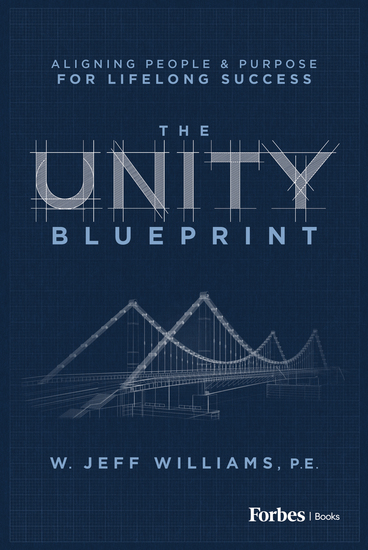
  • The Unity Blueprint - Aligning People & Purpose for Lifelong Success - cover

    The Unity Blueprint - Aligning...

    W. Jeff Williams

    • 0
    • 0
    • 0
    What if the greatest achievements in your organization, community, or life weren't dependent on your brilliance alone but on your ability to unite people around shared purpose? In The Unity Blueprint, W. Jeff Williams draws from decades of leadership experience to show how intentional unity creates extraordinary results.
    Ver libro
  • No Apologies - How to Find and Free Your Voice in the Age of Outrage―Lessons for the Silenced Majority - cover

    No Apologies - How to Find and...

    Katherine Brodsky

    • 0
    • 0
    • 0
    We as a society are self-censoring at record rates. Say the wrong thing at the wrong moment to the wrong person and the consequences can be dire. Think that everyone should be treated equally regardless of race? You're a racist who needs to be kicked out of the online forum that you started. Believe there are biological differences between men and women? You're a sexist who should be fired with cause. Argue that people should be able to speak freely within the bounds of the law? You're a fascist who should be removed from your position of authority. When the truth is no defense and nuance is seen as an attack, self-censorship is a rational choice. Yet, our silence comes with a price. When we are too fearful to speak openly and honestly, we deprive ourselves of the ability to build genuine relationships, we yield all cultural and political power to those with opposing views, and we lose our ability to challenge ideas or change minds, even our own. 
      
    In No Apologies, Katherine Brodsky argues that it's time for principled individuals to hit the unmute button and resist the authoritarians among us who name, shame, and punish. Recognizing that speaking authentically is easier said than done, she spent two years researching and interviewing those who have been subjected to public harassment and abuse for daring to transgress the new orthodoxy or criticize a new taboo. While she found that some of these individuals navigated the outrage mob better than others, and some suffered worse personal and professional effects than others, all of the individuals with whom she spoke remain unapologetic over their choice to express themselves authentically. In sharing their stories, which span the arts, education, journalism, and science, Brodsky uncovers lessons for all of us in the silenced majority to push back against the dangerous illiberalism of the vocal minority that tolerates no dissent— and to find and free our own voices.
    Ver libro
  • The Venlo Sting - MI6's Deadly Fiasco - cover

    The Venlo Sting - MI6's Deadly...

    Norman Ridley

    • 0
    • 0
    • 0
    "I would recommend the book to intelligence practitioners, scholars, and other persons interested in World War II intelligence history." —Michael Nady, American Intelligence JournalOn 9 November 1939, two unsuspecting British agents of the Special Intelligence Services walked into a trap set by German Spymaster Reinhard Heydrich. Believing that they were meeting a dissident German general for talks about helping German military opposition to bring down Hitler and end the war, they were instead taken captive in the Dutch village of Venlo and whisked away to Germany for interrogation by the Gestapo. The incident was a huge embarrassment for the Dutch government and provided the Germans with significant intelligence about SIS operations throughout Europe.  The incident itself was an intelligence catastrophe but it also acts as a prism through which a number of other important narrative strands pass. Fundamental to the subterfuge perpetrated at Venlo were unsubstantiated but insistent rumours of high-ranking German generals plotting to overthrow the Nazi regime from within. After the humiliation suffered when Hitler tore up the Munich Agreement, British Prime Minister Neville Chamberlain was anxious to see just how much truth there was in these stories; keen to rehabilitate his reputation through one last effort to find a peaceful rapprochement with Germany.  When Franz Fischer, a small-time petty crook and agent provocateur, persuaded British SIS operatives in the Netherlands that he could act as a go-between for the British government with disaffected German generals, the German Security chief Reinhard Heydrich stepped in and quietly took control of the operation. Heydrich’s boss, head of the Gestapo Heinrich Himmler, was anxious to explore the possibility of peace negotiations with Britain and saw an opportunity to exploit the situation for his personal benefit.  On the day before a crucial meeting of conspirators and British agents on the Dutch-German border, a bomb exploded in the Bürgerbräukeller in Munich in the exact spot where Hitler had stood to deliver a speech only minutes earlier. The perpetrator was quickly arrested, and Hitler demanded that Himmler find evidence to show that the two events were intimately connected—the British agents were snatched hours later.  While the world was coming to terms with the fearsome power of German military might the British intelligence capability in northern Europe was consigned to the dustbin in the sleepy Dutch town of Venlo. This first full account of the Venlo incident explores the wider context of this German intelligence coup, and its consequences.
    Ver libro
  • The Poverty of Philosophy - cover

    The Poverty of Philosophy

    Karl Marx

    • 0
    • 1
    • 0
    Marx started work on this book in January 1847, as can be judged from Engel's letter to Marx on January 15, 1847. By the beginning of April 1847, Marx's work was completed in the main and had gone to the press. On June 15, 1847, he wrote a short foreword.Published in Paris and Brussels in 1847, the book was not republished in full during Marx's lifetime. Excerpts from section five of Chapter Two appeared in different years, mostly between 1872 - 1875 in papers such as La Emancipacion, Der Volksstaat, Social-Demokrat, and others. In 1880 Marx attempted to publish the Poverty of Philosophy in the French socialist newspaper L'Égalité, the organ of the French Workers' Party, but only the foreword and section one of Chapter One were published.This translation is from the original 1847 French edition. It has been updated to also include the changes/corrections Marx made in the copy of the book he presented to N. Utina in 1876, as well as the corrections made by Frederick Engels in the second French edition and the German editions of 1885 and 1892. The first English edition of this work was published in 1900 by Twentieth Century Press.
    Ver libro