

Join us on a literary world trip!
Add this book to bookshelf
Grey
Write a new comment Default profile 50px
Grey
Subscribe to read the full book or read the first pages for free!
All characters reduced
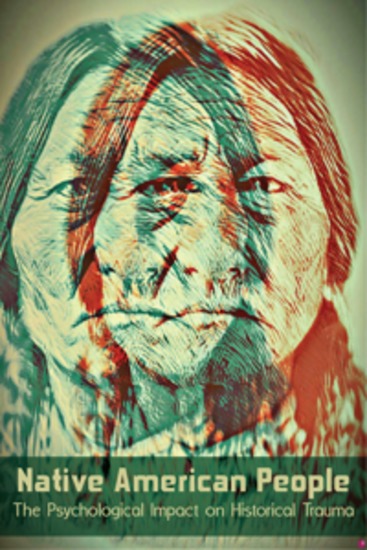
Native American People The Psychological Impact of Historical Trauma - cover

Native American People The Psychological Impact of Historical Trauma

Wilson Bellacoola

Publisher: Wilson Bellacoola

  • 0
  • 0
  • 0

Summary

The Psychological Impact of Historical Trauma on Native American People. Native American historical trauma is similar to other massive generational group traumas. Past examples include the Jewish holocaust, the slavery of the African people in the United States, and the treatment of Japanese Americans in the U.S. during World War II. Understanding the history of Native Americans enables the design of culturally specific preventive and therapeutic interventions. Contrary to what is often taught in modern history books, Native Americans were a highly advanced culture deeply immersed in their environments. From the invasion by the Spanish in the 1400s to the scorched earth extermination policies of the United States in the 1800s, Native Americans endured attempted genocide, forced relocation and confinement to reservations, and forced assimilation. Historical trauma is generational and dwells deep in the souls of Native American individuals and communities across the United States. For any healing to occur, one must take a close look at the root cause of historical trauma for the Native American people. The focus of this book is to explore and develop ideas that will assist Native Americans in accessing which old ways are too biologically ingrained to abandon and what new ways must be adopted to come to terms with such a vastly different environment.It is essential to understand the environment in which Native American people live, know their history, and see how this history has shaped them. It is equally important to understand and respect their worldview, which describes the thought process of a people or a culture. Native Americans were displaced from their traditional lands, their sacred sites were excavated, and their sacred objects were placed in private collections and museums. Their remains were exhumed from traditional burial sites to make room for ranching and industry. Their artwork was never seen as separate from their culture. It was commercially reproduced and modified for Western tastes. Traditional ceremonies and stories were often depicted inaccurately in novels, movies, and on television. Their way of life was disrupted, and they were forced to accept religious institutions whose dogmas often conflicted with Native American values.A variety of terms have been used interchangeably to refer to America's indigenous populations — "Indians," "Native Americans," "American Indians," and" Native peoples." The problem of terminology began with Columbus. He was lost. The people he met were not Indians because he was not in India at the time. Still, these people have been called "Indians for six centuries." There are many different people and nations, each with its language. To justify the use of "Indians," which some scholars find offensive, I refer to Sherman Alexie's remark during a reading in Milwaukee, Wisconsin, in March 1993: "The white man tried to take our land, our sovereignty, and our languages. He gave us the word "Indian." Now he wants to take the word "Indian" away from us, too. Well, he can't have it." All these terms have been used interchangeably throughout this book to reflect best the subject being discussed.
Available since: 07/28/2025.


Other books that might interest you

  • Alien Conspiracy - cover

    Alien Conspiracy

    Phil G

    • 0
    • 0
    • 0
    Many thousands of years ago aliens came to Earth, genetically engineered mankind, created civilizations and were worshipped as Gods by their new creations. 
     
    This is the story of how ancient aliens made us what we are and still control us. This is a tale so big that it is derided and hidden by the ruling elite. They don’t want you to know that their so-called royal bloodlines are in fact alien offspring. Prepare to discover the hidden truth...
    Show book
  • The Dogma of Christ - And Other Essays on Religion Psychology and Culture - cover

    The Dogma of Christ - And Other...

    Erich Fromm

    • 0
    • 0
    • 0
    “Fromm’s developing thought merits the critical attention of all concerned with the human condition and its future.” —The Washington Post The essays in this fascinating volume examine present-day psychological and cultural problems with the keen insight and humanistic sympathies characteristic of Erich Fromm’s work.The Dogma of Christ provides some of the sharpest critical insights into how the contemporary world of human destructiveness and violence can no longer separate religion, psychology, and politics. The book brilliantly summarizes Fromm’s ideas on how culture and society shape our behavior. “It’s the new post-religious theme song. The Fromm exhortations are imaginative and he has a definite audience.” —Kirkus Reviews “Of all the psychological theorists who have tried to formulate a system better than Freud’s to approach problems of contemporary life, no one has been more creative or influential than Erich Fromm. He is the most articulate advocate on the role of social forces in molding our character and on our manner of relating to others. This volume is an expansion of his systematic doctrine.” —Louis L. Lunsky, MD, Archives of Internal Medicine
    Show book
  • Meet The Three Princesses - cover

    Meet The Three Princesses

    Judith Annique Francois

    • 0
    • 0
    • 0
    “Meet the Three Princesses” is a heart-warming story about a loving family who live in Haiti. Readers will enjoy the bright, beautiful illustrations and interesting story details that highlight the unique, lovely charm of a small island town.Esther, Cassandra and Rosa are happy girls, but they miss their father when he is away at work. They don’t know he has a wonderful surprise in store! Will this surprise show his sweet daughters how much he thinks of them all throughout the day?  Read along and share the special love, joy and pride that Mama and Papa have for their three princesses. A beautiful, uplifting family tale.
    Show book
  • Slavery Gone For Good - Modern Abolitionism - cover

    Slavery Gone For Good - Modern...

    Cory Edmund Endrulat

    • 0
    • 0
    • 0
    What Is Slavery? Do YOU Know How To Define Slavery? 
    Does Slavery Still Exist? 
    Is Slavery Natural? 
    You may have been taught about Slavery in school, but there's more to what you must know! In this easy-to-read light-weight book, you will learn everything you need to know about Slavery. 
    What you will learn in "Slavery Gone For Good": 
    - Simple and clear definitions about Slavery, freedom, rights and more! 
    - A brief history of Slavery 
    - How slavery manifests 
    - The different forms of Slavery 
    - A unique perspective based solely on common sense (reason), equality and justice, not any ideology 
    - Over 50 quotes from former slaves, abolitionists, philosophers and more! 
    - The mentalities involved with Slavery 
    - What you can teach others and your children, and for generations to come! 
    - Unifying and timeless principles that can be learned and utilized worldwide! 
    - A more inquisitive view of Slavery with a unique question and answer format 
    - Practical action-steps, both individual and collective, for freedom! 
    - Requirements for the abolition of Slavery 
    - How YOU are contributing to Slavery 
    - Common views of definitions versus more clarified and descriptive definitions 
    - Resources to expand upon the topics presented, for this knowledge that few peoples are presently aware about! 
    “Once you learn to read, you will be forever free” - Frederick Douglass, Former Slave, Abolitionist
    Show book
  • History of Armenia - The People and Culture of Armenia and a Historical Perspective - cover

    History of Armenia - The People...

    Will Forrest

    • 0
    • 0
    • 0
    Do you want to learn more about Armenia and its culture? 
    Are you interested in understanding the history of this fascinating country? 
    If so, then you need to check out this audiobook that will take you on a journey through the history of this fascinating country. 
      
    This audiobook will give you a quick look into the culture, economy, geography, and history of Armenia. You'll learn about the country’s most influential rulers and important occupations, from Iran, Ottoman Empire, and the Byzantine Empire. You'll get an understanding of the country’s history from ancient times to the present day. 
      
    This audiobook is perfect for anyone who wants to gain a better understanding of Armenia. Whether you're a student, an amateur historian, or a traveler, this audiobook will provide you with the knowledge you need to deepen your understanding and appreciation of this country. 
    Don't wait any longer - purchase "History of Armenia: The People and Culture of Armenia, and a Historical Perspective" NOW! And dive into the fascinating history of Armenia. 
    Show book
  • Ejaculate Responsibly - A Whole New Way to Think About Abortion - cover

    Ejaculate Responsibly - A Whole...

    Gabrielle Stanley Blair

    • 0
    • 0
    • 0
    In Ejaculate Responsibly, Gabrielle Blair offers a provocative reframing of the abortion issue in post-Roe America. In a series of 28 brief arguments, she deftly makes the case for moving the abortion debate away from controlling and legislating women’s bodies and instead directs the focus on men’s lack of accountability in preventing unwanted pregnancies.  Highly readable, accessible, funny, and unflinching, Blair builds her argument by walking readers through the basics of fertility (men are 50 times more fertile than women), the unfair burden placed on women when it comes to preventing pregnancy (90% of the birth control market is for women), the wrongheaded stigmas around birth control for men (condoms make sex less pleasurable, vasectomies are scary and emasculating), and the counterintuitive reality that men, who are fertile 100% of the time, take little to no responsibility for preventing pregnancy.  The result is a compelling and convincing case for placing the responsibility—and burden—of preventing unwanted pregnancies away from women and onto men.
    Show book
