Join us on a literary world trip!
Add this book to bookshelf
Grey
Write a new comment Default profile 50px
Grey
Subscribe to read the full book or read the first pages for free!
All characters reduced
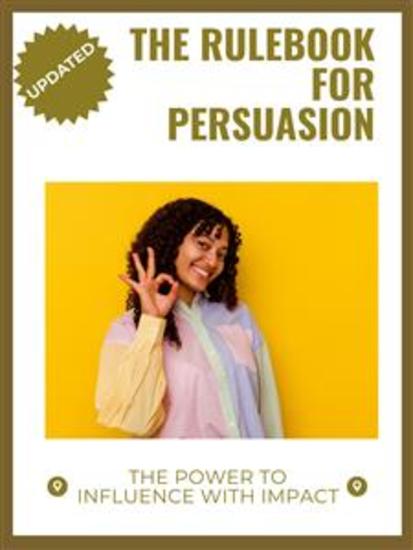
The Rulebook for Persuasion - The Power to Influence with Impact - cover

The Rulebook for Persuasion - The Power to Influence with Impact

Willow R.

Publisher: Xspurts.com

  • 0
  • 0
  • 0

Summary

for Ethical PracticesUnleash your potential and enhance your ability to persuade effectively with "The Rulebook for Persuasion: The Power to Influence with Impact." This comprehensive guide is a must-have tool for anyone who wants to master the art of persuasive communication, be it in a personal, professional, or a public speaking context.The book starts with delving into the power and significance of persuasion, giving a clear understanding of the basics and drawing a line between persuasion and manipulation. The guide stresses the important role persuasion plays in our everyday life, setting the stage for a journey towards becoming a more persuasive individual."The Rulebook for Persuasion" takes you through the essential principles that lay the foundation for effective persuasion — credibility, emotional appeal, and logical argumentation. You will discover the psychology behind persuasion, including the factors influencing decision-making processes and the role of emotions and suggestions.The book also unveils both verbal and non-verbal tools imperative for persuasion, touching on the impact of words, tone of voice, body language, and gestures in delivering your message. Delving deeper into communication skills, it explores active listening, conflict management, and the importance of building strong, trust-based relationships.The guide dynamically incorporates storytelling and metacommunication, teaching you how to script an engaging narrative that can effectively convey your ideas. Learn to utilize these skills in various scenarios like sales, public speaking, writing, online content creation, and advertising, making your audience more receptive to your ideas.Explore the realm of online persuasion, using strategies to craft compelling content and utilize social media and SEO for influence. The book culminates with a deep-dive into ethical persuasion, stressing the importance of understanding boundaries, advocating for honesty, transparency, and ethical practices.Whether you're a sales professional looking to enhance your pitch, a budding writer aiming to captivate audiences with compelling narratives, or an everyday individual aiming for more successful interactions, "The Rulebook for Persuasion: The Power to Influence with Impact" will be your trusty guide, equipping you to communicate and convince with confidence. Unfold your persuasive prowess now!
Available since: 03/13/2024.
Print length: 168 pages.

Other books that might interest you

  • Mr Vic’s X-Rated Television: Last Man Standing - X-Rated Baxter Day ay the Spa - cover

    Mr Vic’s X-Rated Television:...

    VIC VITALE

    • 0
    • 0
    • 0
    "Baxter Day At The Spa!" 
    When an exhilarated Mandy Baxter comes home from the spa, she has a very exciting story to tell.  
    The only thing is, she isn't quite sure how her two straight siblings will take hearing what she's going to tell them.  
    Mandy is somewhat reluctant to tell her also shapely sisters that she engaged in a heated sixty-nine with another woman and that she liked it so much, she wants her two sisters joining her for a second time. 
     
    Show book
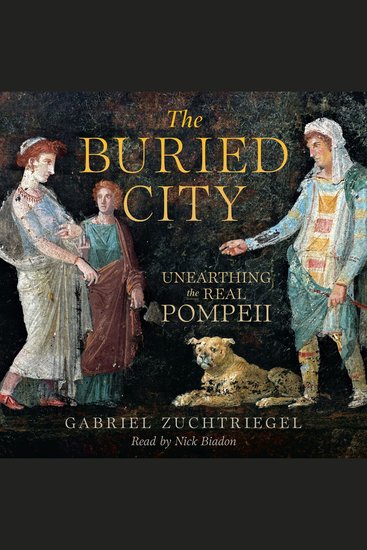
  • The Buried City - Unearthing the Real Pompeii - cover

    The Buried City - Unearthing the...

    Gabriel Zuchtriegel, Jamie Bulloch

    • 0
    • 0
    • 0
    The director of the Pompeii Archaeological Park offers a vivid view of daily life in the lost city, shares the latest discoveries, and reflects on preserving heritage. In The Buried City, Gabriel Zuchtriegel takes us on a behind-the-scenes tour of Pompeii and reveals new archaeological finds that are being unearthed at the site’s biggest dig in a generation. As director of the Pompeii Archaeological Park, Zuchtriegel presents a uniquely intimate perspective on this city that was tragically destroyed and frozen in time by the eruption of Mount Vesuvius in 79 CE. Among the ruins, we find unmade beds, dishes left drying, and bodies of victims encased in ash, but Zuchtriegel shows that we’ve only begun to understand this fascinating place, as a third of the site remains unexcavated. Zuchtriegel leads us into the heart of the city, reconstructing Pompeii as it would have been, showing us who lived there, what mattered to them, and what happened in their final hours. The Buried City reveals the latest discoveries unearthed at Pompeii—including a banquet hall with murals of Greek gods, a fresco of what appears to be a pizza, and the remains of individuals crushed by debris—all buried for almost two thousand years. Zuchtriegel offers a vivid portrait of this World Heritage site as a vibrant and diverse city, connecting us to a past that is much closer than we think and inviting us to reflect on our role as keepers of the site and its history.
    Show book
  • Islamic Empires of India The: The History of the Muslim Dynasties that Ruled India Before the British - cover

    Islamic Empires of India The:...

    Editors Charles River

    • 0
    • 0
    • 0
    India has been the location of many different empires throughout its long history. The Indus Valley Civilization was home to one of the world’s first civilizations more than 5,000 years ago, and despite India’s tradition of cultural and political pluralism, several rulers attempted to place the entire Sub-Continent under the rule of one dynasty or government with a dominant religion. Most of these would-be rulers were far from successful, although a few came close, setting the template for later conquerors. 
    The religion of Islam had entered India centuries earlier through merchants and missionaries, but, in the 10th century, warrior bands of Muslims began establishing themselves permanently in what is today Pakistan. From their permanent strongholds, these Muslim warriors of Turkish descent raided northern India, eventually capturing the city of Delhi and establishing what would become the Delhi Sultanate.  
    The Delhi Sultanate was comprised of five dynasties that expanded their borders, and Islam, at sword point, but also through diplomacy and trade. The Delhi Sultanate became known as a state that welcomed the expertise of foreigners, no matter their religion, and promoted the welfare of its citizens through a host of social programs. Eventually, the Delhi Sultanate grafted ideas and inspiration from India’s pre-Islamic past with those of Islam to create a state that was quite unique and powerful. 
    The Mughals, a group with Turkish and Mongolian roots, used gunpowder weapons to sweep into northern India, topple the existing Islamic dynasty in Delhi, and eventually subject most of India to their rule. The term “gunpowder empire” was originally coined by Russian scholar V. V. Bartold and popularized by American historians William McNeil and Marshall Hodgson in the mid-20th century to describe the Islamic Ottoman, Safavid, and Mughal empires, which they claimed came to power through gunpowder.
    Show book
  • A Therapist's Guide to Consensual Nonmonogamy - Polyamory Swinging and Open Marriage - cover

    A Therapist's Guide to...

    Rhea Orion

    • 0
    • 0
    • 0
    Consensual nonmonogamy (CNM) means that all partners in a relationship consent to expanded monogamy or polyamory. Clinicians are on the front line in providing support for the estimated millions pioneering these modern relationships. This first available guide for therapists provides answers to prevalent questions: What is the difference between expanded monogamy and polyamory? Is CNM healthy and safe? Why would someone choose the complexities of multiple partners? What about the welfare of children? Through illustrative case studies from research and clinical practice, therapists will learn to assist clients with CNM agreements, jealousy, sex, time, family issues, and much more. A Therapist's Guide to Consensual Nonmonogamy serves as a step forward toward expanding standard clinical training and helps inform therapists who wish to serve the CNM population.
    Show book
  • Reading Black Books - How African American Literature Can Make Our Faith More Whole and Just - cover

    Reading Black Books - How...

    Claude Atcho

    • 0
    • 0
    • 0
    Learning from Black voices means listening to more than snippets. It means attending to Black stories. Reading Black Books helps Christians hear and learn from enduring Black voices and stories as captured in classic African American literature. 


    Pastor and teacher Claude Atcho offers a theological approach to ten seminal texts of twentieth-century African American literature. Each chapter takes up a theological category for inquiry through a close literary reading and theological reflection on a primary literary text, from Ralph Ellison's Invisible Man and Richard Wright's Native Son to Zora Neale Hurston's Moses, Man of the Mountain and James Baldwin's Go Tell It on the Mountain. The book includes end-of-chapter discussion questions. 


    Reading Black Books helps readers of all backgrounds learn from the contours of Christian faith formed and forged by Black stories, and it spurs continued conversations about racial justice in the church. It demonstrates that reading about Black experience as shown in the literature of great African American writers can guide us toward sharper theological thinking and more faithful living.
    Show book
  • Romantic Things - A Tree A Rock A Cloud - cover

    Romantic Things - A Tree A Rock...

    Mary Jacobus

    • 1
    • 1
    • 0
    Our thoughts are shaped as much by what things make of us as by what we make of them. Lyric poetry is especially concerned with things and their relationship to thought, sense, and understanding. In Romantic Things, Mary Jacobus explores the world of objects and phenomena in nature as expressed in Romantic poetry alongside the theme of sentience and sensory deprivation in literature and art. Jacobus discusses objects and attributes that test our perceptions and preoccupy both Romantic poetry and modern philosophy. John Clare, John Constable, Rainer Maria Rilke, W. G. Sebald, and Gerhard Richter make appearances around the central figure of William Wordsworth as Jacobus explores trees, rocks, clouds, breath, sleep, deafness, and blindness in their work. While she thinks through these things, she is assisted by the writings of Maurice Merleau-Ponty, Jacques Derrida, and Jean-Luc Nancy. Helping us think more deeply about things that are at once visible and invisible, seen and unseen, felt and unfeeling, Romantic Things opens our eyes to what has been previously overlooked in lyric and Romantic poetry.
    Show book