Join us on a literary world trip!
Add this book to bookshelf
Grey
Write a new comment Default profile 50px
Grey
Subscribe to read the full book or read the first pages for free!
All characters reduced
Cultivating Effective Interpersonal Skills - Enhancing Interpersonal Skills - cover

Cultivating Effective Interpersonal Skills - Enhancing Interpersonal Skills

Willow R.

Publisher: Xspurts.com

  • 0
  • 0
  • 0

Summary

Take your interpersonal skills to the next level with the invaluable insights from our book, "Cultivating Effective Interpersonal Skills: Enhancing Interpersonal Skills."Written with comprehensive clarity and structured systematically, this book presents a masterful exploration of interpersonal skills. Beginning with the fundamental concepts, it emphasizes the importance and applications of interacting effectively with others. The book extensively covers communication foundations. Improve your understanding of verbal and nonverbal interactions, and explore the active listening techniques to overcome barriers."Cultivating Effective Interpersonal Skills" emphasizes the roles of trust and credibility. Learn strategies to establish trust, cultivate credibility, and apply emotional intelligence in your daily interactions. The book equips readers to understand and manage their emotions, fostering empathy for improved relationships.The toolkit provided in this book enables readers to unlock their assertiveness and confidence. Unearth the subtle balance between assertiveness and cooperation. The book delivers expert advice on conflict resolution, dissecting the nature of disputes, and providing tested techniques for resolving conflicts.Embark on a journey of creating powerful connections and maintaining long-term relationships. Master the art of giving and receiving feedback, and polish your persuasion skills for ethical influence. Deep-dive into empathy, understanding its pivotal role in interactions, and uncovering its many benefits.The book impresses upon the importance of group dynamics and team-building. It provides readers with strategies to understand group behavior and construct an effective team. Learn effective techniques to resolve misunderstandings and boost your cultural competence. Embrace cultural diversity and enhance your interpersonal skills in diverse environments.The final section of the book underscores the necessity of continuous improvement by championing self-assessment, reflection, lifelong learning, and adaptation."Cultivating Effective Interpersonal Skills" serves as a manual for personal and professional growth, empowering you to navigate your social world successfully. Whether you are entering the workforce, climbing the corporate ladder, or just looking to improve your interpersonal relationships, this book is an essential read. Gain the tools and techniques that will enhance your communicative ability, foster successful relationships, and ultimately transform your life. Transform your life - one interaction at a time.
Available since: 03/12/2024.
Print length: 141 pages.


Other books that might interest you

  • Aliens - The Chequered History of Britain's Wartime Refugees - cover

    Aliens - The Chequered History...

    Paul Dowswell

    • 0
    • 0
    • 0
    The welcome given to refugees from fascist Europe is part of our fond nostalgia for Britain's role in the Second World War, nestling in our imagination next to images of evacuees clutching teddy bears, and milkmen picking their way through bomb rubble during the Blitz. But there is a darker side to this story. Then, as now, there was great suspicion, resentment and fear towards new arrivals, much of it kindled by the tabloid press. Then, as now, politicians dealt with a reluctance to accommodate refugees by hiding behind bureaucratic hurdles and obfuscation.
    Many of the 10,000 Kindertransport children who arrived here in the late 1930s have warm memories of the kindness they were shown, but half a million refugees were refused entry and most of them died as a result. And those who were accepted found their troubles far from over. While Britain fearfully awaited invasion in 1940, 30,000 Jews were interned as 'enemy aliens' and some were sent off to the colonies on dangerous and sometimes fatal voyages. Nor were Jews the only refugees clamouring for the thin gruel of public sympathy. Those fleeing fascism and civil war elsewhere in Europe found that whether they were met with kindness or hostility depended on the locals' political affiliations and newspapers of choice.
    Interweaving personal testimonies with historical sources, Paul Dowswell casts a fresh eye on the wartime era, painting a vivid picture of what life was really like for Britain's refugees.
    Show book
  • Asian and Polynesian Lore - Deities Spirits and Legends of the East (3 in 1) - cover

    Asian and Polynesian Lore -...

    Odessa Nightshade

    • 0
    • 0
    • 0
    Journey across the vast and diverse regions of Asia and the Pacific in this captivating exploration of ancient mythologies, mysterious spirits, and powerful gods. Asian and Polynesian Lore is a 3-in-1 collection that uncovers the spiritual roots, cultural narratives, and timeless tales that have shaped Eastern and Oceanic traditions. 
    Begin with Asian Deities and Demons, where fearsome creatures and benevolent gods dwell in complex realms of light and darkness. Discover the rich oral traditions in Japanese Folktales, where fox spirits, ghostly encounters, and brave warriors reveal deeper truths about honor, nature, and the human soul. Finally, voyage to the islands of the Pacific with Polynesian Mythology, where tales of creation, sea gods, and heroic demigods like Maui echo across the waves. 
    Perfect for lovers of global folklore and seekers of ancient wisdom, this volume offers a rare look into the myths that continue to influence art, belief, and identity across generations.
    Show book
  • Telepathy in treatment - cover

    Telepathy in treatment

    M.D. Howard Eisenberg

    • 0
    • 0
    • 0
    A psychotherapist discusses the use of telepathy in the treatment of emotional disorders.
    Show book
  • Start of World War I The: The History of the Events at the Beginning of the Great War - cover

    Start of World War I The: The...

    Editors Charles River

    • 0
    • 0
    • 0
    By the 20th century, warfare was nothing new to the European powers, especially when it came to fighting each other. Conflicts had been a mainstay on the European continent for over two millennia. Even after the Napoleonic wars had enveloped Europe in large scale war for nearly 20 years in the 19th century, the Europeans’ imperialism continued unabated. It would take the devastation of World War I to shock Europe and jolt the world’s superpowers out of their imperialistic tendencies.  
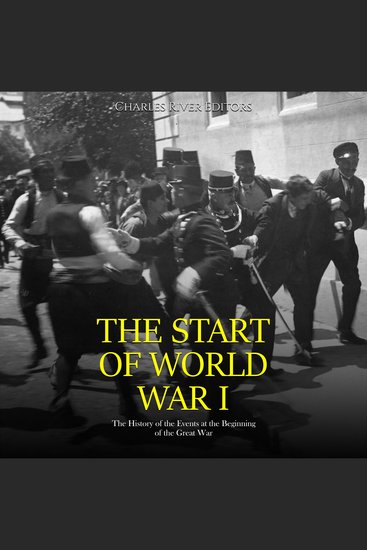
    	 The final straw came June 28, 1914, when a Serbian assassinated Archduke Franz Ferdinand, the heir to the throne of Austria-Hungary, in Sarajevo, Bosnia. Austria-Hungary immediately issued ultimatums to Serbia. When they declared war on Serbia July 28, 1914, Russia mobilized for war as well. The Germans mobilized in response to Russia on July 30, and the French, still smarting from the Franco-Prussian War, mobilized for war against Germany. The British also declared war on Germany on August 4. Thus, in the span of one week, six nations had declared war, half of which had no interest in the Balkans.  
    	Needless to say, the First World War came at an unfortunate time for those who would fight in it. After an initial period of relatively rapid maneuver during which the German forces pushing through Belgium and the French and British forces attempting to stymie them made an endless series of abortive flanking movements that extended the lines to the sea, a stalemate naturally tended to develop. The infamous trench lines soon snaked across the French and Belgian countryside, creating an essentially futile static slaughterhouse whose sinister memory remains to this day, but if trench warfare was an inevitability during the war, it is only because the events leading up to the initial battles were quite different.
    Show book
  • Revolution - History of the French Revolution and Industrial Revolution - cover

    Revolution - History of the...

    Kelly Mass

    • 0
    • 0
    • 0
    These two titles are included in this audiobook: 
    1 - French Revolution: The Reign of terror was a period of considerable political and social change in France that started in 1789 with the starting of the Estates General and ended in the month of November 1799 with the development of the French Consulate. Tons of its ideas are now regarded important structures of liberal democracy, while terms like Liberté, égalité, and fraternité resurfaced in following revolts, which includes as the 1917 Russian Revolution, and stimulated efforts to eliminate oppression and attain universal suffrage. The causes are commonly accepted to be a mix of social, political, and financial concerns that the existing routine was not able to resolve. The Estates-General were assembled in May 1789 in reaction to considerable social discontent, and in the month of June they were become a National Assembly. The Assembly passed some remarkable reforms, and that includes the removal of feudalism, governmental control of the Catholic Church. 
    2 - Industrial Revolution: The Industrial Revolution was a period of shift in Britain, continental Europe, and the USA from around 1760 till at some point between 1820 and 1840, when new production innovations were introduced. The shift from hand to device production, new chemical and iron production strategies, increased use of steam and waterpower, the development of device tools, and the rise of the mechanized factory system were all part of this change. The Industrial Revolution also introduced a period of remarkable population growth. In regard to work, output value, and capital invested, fabrics were the most essential market throughout the Industrial Revolution. Textiles were also amongst the first markets to adopt modern production methods.
    Show book
  • The Irish Potato Famine - The Immigration Genocide and Deaths of Ireland - cover

    The Irish Potato Famine - The...

    Kelly Mass

    • 0
    • 0
    • 0
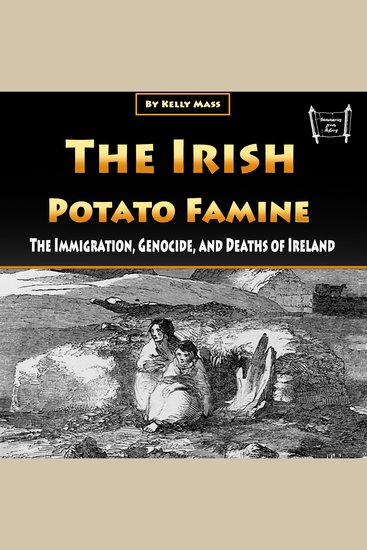
    From 1845 to 1852, the Great Hunger, also referred to as the Potato Famine, was a period of a lot of starvation and illness in Ireland. The period was known in Irish at the time as a Drochshaol, loosely translated as "the hard days," with the most badly affected districts in the west and south of Ireland, where the Irish language was popular (or actually "the bad life"). 
    The year 1847, at times called "Black '47," was the absolute worst year of the period. Around 1 million people died and over a million left the nation throughout the Great Famine, triggering the nation's population to come by 20% to 25%, with certain cities coming by as much as 67 percent between 1841 and 1851. And between the years 1845 and 1855, about 2.1 million people were leaving Ireland, primarily aboard package ships but also on steamboats and barks. This actually made it one of the biggest mass migrations from a single isle in all of history. 
    Let’s explore this tragic event in history, and let’s see what led up to this, what happened afterwards, and how historians look at it now.
    Show book