Join us on a literary world trip!
Add this book to bookshelf
Grey
Write a new comment Default profile 50px
Grey
Subscribe to read the full book or read the first pages for free!
All characters reduced
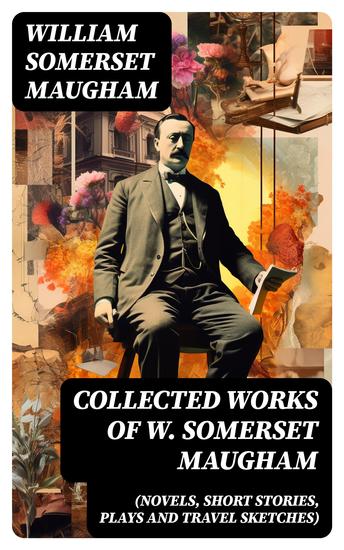
Collected Works of W Somerset Maugham (Novels Short Stories Plays and Travel Sketches) - cover

Collected Works of W Somerset Maugham (Novels Short Stories Plays and Travel Sketches)

William Somerset Maugham

Publisher: DigiCat

  • 0
  • 0
  • 0

Summary

The "Collected Works of W. Somerset Maugham" is a rich anthology that encompasses the breadth of Maugham's literary genius, featuring his novels, short stories, plays, and travel sketches. Renowned for his keen psychological insight and incisive social commentary, Maugham employs a straightforward yet elegant prose style that allows for a profound exploration of human behavior. This collection reflects the early to mid-20th-century literary landscape, capturing the complexities of life during a time of significant social change, and highlights Maugham's ability to intertwine existential themes with elements of irony and humor. William Somerset Maugham, a contemporary of notable literary figures, drew from his eclectic experiences as a playwright, novelist, and traveler. Raised in an English mission in Paris, Maugham's diverse background and exposure to different cultures deeply informed his narratives. His firsthand encounters with the world, coupled with an astute understanding of human nature, facilitated a nuanced perspective that permeates his writing. Maugham's works often reflect his own struggles and observations, making them resonate with authenticity and depth. This comprehensive collection is a must-read for both aficionados of Maugham's work and new readers alike. It offers a unique opportunity to delve into the mind of a writer who deftly navigated the complexities of human relationships and societal norms. Maugham's profound insights and narrative prowess make this anthology not only a significant literary contribution but also a timeless exploration of the human experience.
Available since: 12/03/2023.
Print length: 1056 pages.

Other books that might interest you

  • The Time Machine - cover

    The Time Machine

    H. G. Wells

    • 0
    • 0
    • 0
    The Time Machine is an 1895 dystopian, post-apocalyptic, science fiction novella by H. G. Wells about a Victorian scientist known as the Time Traveller who travels to the year 802,701. The work is generally credited with the popularization of the concept of time travel by using a vehicle or device to travel purposely and selectively forward or backward through time.
    Show book
  • Villette - cover

    Villette

    Charlotte Brontë

    • 0
    • 0
    • 0
    "I am a person of no station."
    
    Leaving behind a life of tragic loss in England, the reserved and observant Lucy Snowe travels alone to the fictional French-speaking city of Villette. Finding work as a teacher at a girls' boarding school, she navigates a labyrinth of cultural tensions, unrequited love, and her own crushing loneliness. Often considered Charlotte Brontë's finest technical achievement, Villette is a startlingly modern exploration of the female psyche and the courage required to live an authentic life.
    
    A Ghostly Psychological Mystery: Is the "Nun" who haunts the dark corridors of the school a supernatural visitation, or a manifestation of Lucy's suppressed emotions? Brontë weaves a masterful Gothic thread through the narrative, using the legend of a buried nun to mirror Lucy's own isolation. As she finds herself torn between the handsome Dr. John and the fiery, irritable, yet deeply kindred Professor Paul Emanuel, Lucy must confront the "buried" parts of her own soul.
    
    The Ultimate Story of Resilience: Unlike the more romanticized heroines of the era, Lucy Snowe is a "shadow" narrator—deeply private and fiercely independent. Villette challenges the conventions of the Victorian marriage plot, offering instead a profound meditation on mental health, self-reliance, and the price of freedom. It is a novel of stunning prose and devastating emotional honesty that remains a touchstone for readers who find power in the quietest voices.
    
    Step into the shadows of the heart. Purchase "Villette" today and experience the crowning achievement of Charlotte Brontë.
    Show book
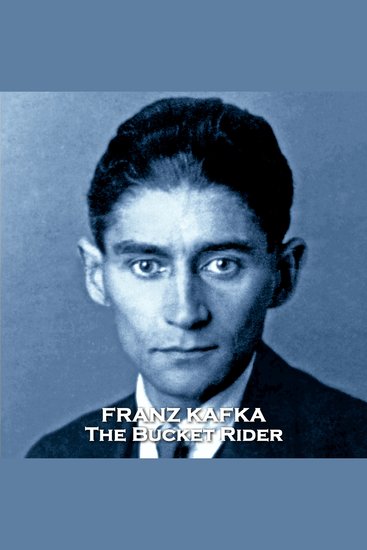
  • The Bucket Rider - A poor man seeks compassion but is found wanting - cover

    The Bucket Rider - A poor man...

    Franz Kafka

    • 0
    • 0
    • 0
    Franz Kafka was born on 3rd July 1883 in Prague, then in Bohemia, the eldest of 6, into a middle-class Jewish family. 
     
    Life for the young Kafka and his passion for literature was often made an ordeal by his over-bearing and domineering entrepreneur of a father.   
     
    In 1889 Kafka was sent to the Deutsche Knabenschule, an elementary school in Prague. His father would only allow him to be educated in German-speaking schools and even went so far as to limit visits to the synagogue to four a year. 
     
    In 1901 he graduated from the classics-oriented Altstädter Gymnasium. Kafka did well there and across a large range of subjects.  He now enrolled at the Charles Ferdinand University, to study chemistry, but quickly switched to law for which he obtained his degree in June 1906 and then performed the mandatory year of unpaid service as clerk at the civil and criminal courts. 
     
    A job at an Italian insurance company left him little time to write and after a year he took another job with the Worker's Accident Insurance Institute for the Kingdom of Bohemia where he stayed until ill health led to his resignation in 1922. 
     
    Although he saw work as a means to pay the bills and to allow him time to write, he received several promotions and was noted as a good employee. 
     
    By 1917 Kafka was suffering from tuberculosis, which required frequent periods of convalescence. Interspersed with this, were several intense affairs before he settled in Berlin with Dora Diamant, a 25-year-old kindergarten teacher who herself having left the ghetto now influenced Kafka's interest in the book of Jewish law, the Talmud. 
     
    Kafka’s on-going health was littered with problems. Apart from TB there were several other ailments, including migraines, insomnia, boils, depression, all usually brought on by excessive stresses and strains. He attempted to counteract all of this by naturopathic treatments, a vegetarian diet and consuming large quantities of unpasteurized milk. 
     
    His tuberculosis still worsened. He returned to Prague, where he died on 3rd June 1924. He was 40. 
     
    His literary works are few in number but towering in influence.  His masterpieces include ‘The Trial’, ‘The Metamorphosis’ as well as a number of short stories which reveal facets of humankind that truthfully could only be born from Kafka’s brain and pen.
    Show book
  • Rinkitink in Oz [The Wizard of Oz series #10] - cover

    Rinkitink in Oz [The Wizard of...

    L. Frank Baum

    • 0
    • 0
    • 0
    "Rinkitink in Oz" is the tenth book in the Land of Oz series. Most of the action takes place on three islands – Pingaree, Regos, and Coregos – and within the Nome King's caverns. Since the original ruler of the nomes, Roquat – who later renamed himself Ruggedo, was deposed in 1914's "Tik-Tok of Oz", Baum had to cleverly rework the tale to accommodate his successor, the well-intentioned – but politically motivated – Kaliko.
    Show book
  • The Legend of Sleepy Hollow - cover

    The Legend of Sleepy Hollow

    Washington Irving

    • 0
    • 0
    • 0
    In a quiet valley where time moves a little slower and shadows fall a little longer, a tale has been whispered for generations. Washington Irving's The Legend of Sleepy Hollow captures the strange charm of a world perched between dream and folklore—where superstition lingers, and the night rides on a restless horse.
    This classic story blends gentle satire, eerie beauty, and a touch of the uncanny. It doesn't just haunt—it hums like a memory just out of reach.
    Show book
  • Genesis of the Doughnut Club The (Unabridged) - cover

    Genesis of the Doughnut Club The...

    L. M. Montgomery

    • 0
    • 0
    • 0
    Lucy Maud Montgomery (November 30, 1874 - April 24, 1942), published as L. M. Montgomery, was a Canadian author best known for a series of novels beginning in 1908 with Anne of Green Gables. The book was an immediate success. The title character, orphan Anne Shirley, made Montgomery famous in her lifetime and gave her an international following.
    The Genesis of the Doughnut Club: When John Henry died there seemed to be nothing for me to do but pack up and go back east. I didn't want to do it, but forty-five years of sojourning in this world have taught me that a body has to do a good many things she doesn't want to do, and that most of them turn out to be for the best in the long run.
    Show book