Join us on a literary world trip!
Add this book to bookshelf
Grey
Write a new comment Default profile 50px
Grey
Subscribe to read the full book or read the first pages for free!
All characters reduced
Twelfth Night - cover

Twelfth Night

William Shakespeare

Publisher: DD Sales & Distributors

  • 0
  • 0
  • 0

Summary

Twelfth Night is one of Shakespeare's most delightful romantic comedies, where love, identity, and mistaken intentions create a whirlwind of comedic confusion. The play centers around Viola, a young woman who, after being shipwrecked, disguises herself as a man and becomes entangled in a web of romantic entanglements. As the characters grapple with their desires and mistaken identities, Shakespeare humorously explores themes of love's unpredictability, the fluidity of gender, and the folly of human emotions. The play is filled with vibrant characters, witty dialogue, and timeless comedic situations, all set within a festive backdrop of revelry and masquerade. At its heart, Twelfth Night is a celebration of love in its many forms, and Shakespeare's exploration of how love transcends appearances and societal expectations makes it an enduring classic.
Available since: 03/30/2025.
Print length: 73 pages.

Other books that might interest you

  • The Jewel of Seven Stars - cover

    The Jewel of Seven Stars

    Bram Stoker

    • 0
    • 0
    • 0
    The Jewel of Seven Stars by Bram Stoker is offered here in a clean English digital edition prepared for fluent ebook reading. The work stands within horror and gives modern readers direct access to a public-domain classic with navigable structure and a restrained typographic presentation. The opening pages establish the book's atmosphere with this first movement: It all seemed so real that I could hardly imagine that it had ever occurred before; and yet each episode came, not as a fresh step in the logic of things, but as something expected. It is in such a wise that memory plays its pranks for good or ill; for pleasure or pain; for weal or woe. It is thus t This edition is suited to readers who want a reliable, uncluttered version of the text for study, rediscovery, and sustained reading.
    Show book
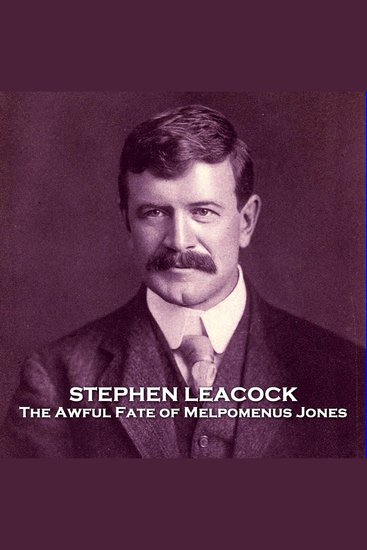
  • The Awful Fate of Melpomenus Jones - From their pens to your ears genius in every story - cover

    The Awful Fate of Melpomenus...

    Stephen Leacock

    • 0
    • 0
    • 0
    Stephen P H Butler Leacock FRSC was born on 30th December 1869 in Swanmore, near Southampton, England.  He was the third of eleven children. 
    The family emigrated to Canada in 1876, settling on a 100-acre farm in Sutton, Ontario.  There Leacock was home-schooled until, funded by his grandfather, he was enrolled into the elite private school Upper Canada College in Toronto.  Academically he was very strong.  In 1887, at age 17, he became head boy and then proceeded on to the University of Toronto to study languages and literature.  Despite completing two years of study in only one, he was obliged to leave the university because his father, an alcoholic, had abandoned the family and finances could not be stretched to continue his attendance.  Leacock now enrolled in a three-month course at Strathroy Collegiate Institute to become a qualified high school teacher with a regular income. 
    He worked at Upper Canada College from 1889 through 1899 and later resumed his studies part-time at the University of Toronto, graduating with a B A in 1891.  It was during this period that he was first published in The Varsity, a campus newspaper.  But his passion was now economics and political theory.  In 1899 he enrolled for postgraduate studies at the University of Chicago and earned his PhD in 1903. 
    Leacock had married Beatrix Hamilton in 1900 and 15 years later the couple had their only child, Stephen.  In time father and son developed a love-hate relationship, partially caused by his son’s diminutive stature of only four feet.  
    Accepting a post at McGill University Leacock would remain there until he retired in 1936.  In 1906, he wrote ‘Elements of Political Science’, quickly adopted as a standard textbook for the next two decades and his most profitable book.  He also began public speaking and lecturing, and took a year's leave of absence in 1907 to speak throughout Canada on the subject of national unity.  
    Leacock had submitted humourous articles to the Toronto magazine Grip in 1894, and was soon published in other Canadian and US magazines.  In 1910, he printed privately a collection of these as ‘Literary Lapses’.  Acquired by the British publisher, John Lane, it was released in London and New York.   He was now a commercially successful writer.  There soon followed ‘Nonsense Novels’ (1911) and the sentimental favourite, ‘Sunshine Sketches of a Little Town’ (1912).  His ‘Arcadian Adventures with the Idle Rich’ (1914) is a darker collection that satirizes city life.  Collections of sketches continued to be published almost annually, filled with a mixture of light-hearted whimsy, parody, nonsense, and satire. 
    In later life, he wrote on the art of humour writing and published biographies on Twain and Dickens.  Together with continued speaking tours he also added to his non-fiction with many well-regarded and award-winning volumes on Canada. 
    Politically Leacock was a social conservative and a partisan Conservative.  He opposed women’s right to vote and had a varied record on non-English immigration.  He was a champion of Empire but an advocate of social welfare legislation and wealth redistribution, but he often caused friction with his racist views towards blacks and Indigenous peoples. 
    Leacock has for some time been forgotten as an economist, but it’s often quoted that in 1911 more people had heard of him than had heard of Canada.  For the decade after 1915 Leacock was the most popular humorist in the English-speaking world. 
    Stephen Leacock died on 28th March 1944 of throat cancer in Toronto, Canada.  He was 74.  He was buried in the St George the Martyr Churchyard, Sutton, Ontario.
    Show book

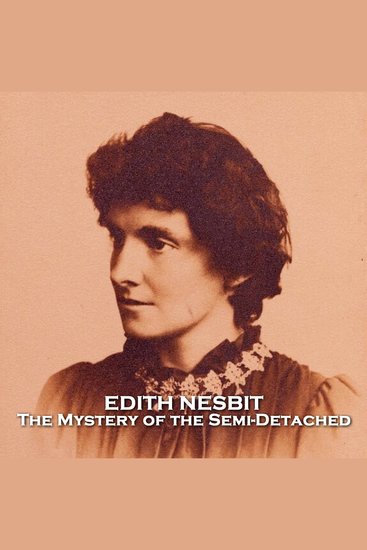
  • The Mystery of the Semi Detached - From their pens to your ears genius in every story - cover

    The Mystery of the Semi Detached...

    Edith Nesbit

    • 0
    • 0
    • 0
    Edith Nesbit was born on the 15th August 1858 in Kennington, then part of Surrey.   
    Due to the health issues and tuberculosis of her sister Mary, Nesbit’s early life was one of constant changes of house both in England and on the continent. 
    At age 17, Nesbit met Hubert Bland and they married three years later―whilst she was 7 months pregnant.  Bland also kept his affair with another woman going throughout their marriage and the two children of that relationship were raised by Nesbit as well as her own three with Bland. 
    Together they were founder members of the Fabian Society in 1884 naming their son Fabian in its honour.  They also edited the Society's journal; ‘Today’.  Nesbit was an active lecturer and prolific writer on socialism during those years but gradually her work for them dwindled as her career as a children’s writer grew.  Her most famous success was ‘The Railway Children’ but she was also very prolific and greatly accomplished in poetry, short stories―especially her macabre ghost and supernatural stories―and novels for adults.  
    In February 1917, some three years after the death of Bland she married Thomas ‘the Skipper’ Tucker in Woolwich, where he was a ship's engineer on the Woolwich Ferry. 
    Edith Nesbit died from lung cancer on the 4th May 1924 at her house ‘The Long Boat’ at Jesson, St Mary's Bay, New Romney in Kent.  She was 65.
    Show book
  • Passing - cover

    Passing

    Nella Larsen

    • 0
    • 0
    • 0
    'It's funny about passing... we disapprove of it and at the same time condone it. It excites our contempt and yet we rather admire it.'
    
    First published in 1929 and based upon Larsen's own experiences with colourism, Passing is a profound exploration of identity, race and sexuality.
    
    Old childhood friends – Clare Kendry and Irene Redfield – are thrown together once again after losing touch in their adulthood, forced to contend with the stark differences in their lifestyles. Clare, an ambitious, fair-skinned woman, is married to a racist white man who is unsuspecting of her black roots. Irene, meanwhile, sits on the committee for the 'Negro Welfare League', embracing her origins. Uncomfortable with Clare's attempts at 'passing' as white, Irene tries to cultivate distance between the two of them. But Clare is persistent, and begins to reintegrate herself into the black community to devastating consequences… Tragic, deeply moving and an incisive commentary on colourism, Passing established Larsen as a leading writer of the twentieth century.
    Nella Larsen (1891 – 1964) was an American novelist and short story writer. A prominent literary figure during the Harlem Renaissance and American modernist movement, Larsen's works have been lauded by contemporaries and critics alike. Today, she is remembered for her two novels, Quicksand and Passing, which explored race, identity and sexuality.
    Show book
  • Peter Jameson - A Modern Romance - cover

    Peter Jameson - A Modern Romance

    Gilbert Frankau

    • 0
    • 0
    • 0
    A London tobacco merchant goes to France in 1914 as a gunner, and the war takes the business, the marriage and the certainties one at a time. Gilbert Frankau served through Loos, the Somme and Ypres and wrote this in 1919 while it was all still raw. It is the fullest English novel about what the war did to a man's money as well as to his nerves. Fifty-eight plates of city streets, music halls and harbours by painters including Walter Sickert and Childe Hassam run from 1724 to 1927, matching the novel's passage from London commerce to the French coast and back.
    Show book
  • Selected short stories - cover

    Selected short stories

    Anton Chekhov

    • 0
    • 0
    • 0
    The famous phrase of the writer: "Brevity is the sister of talent", could not be more suited to the work of Anton Chekhov himself. One right stroke to mark the character, with apt word to say about the main thing, to precisely place accents and draw a bright three-dimensional picture in just a few minutes is the work of the wizard. No one is as amused as Chekhov, and no one is so sad as he. The collection includes selected stories and stories in which the classic, who entered the history of literature under the frivolous pseudonym Antosha Chekhonte, draws eternal characters that invariably amaze with their psychological nude.This audiobook includes:A Pink Stocking A Country CottageA Daughter of AlbionAn InquiryAt A Summer VillaFat and ThinNervesToo EarlyA Lottery TicketA Story Without An EndAbout LoveDifficult PeopleThe Doctor.
    Show book