Join us on a literary world trip!
Add this book to bookshelf
Grey
Write a new comment Default profile 50px
Grey
Subscribe to read the full book or read the first pages for free!
All characters reduced
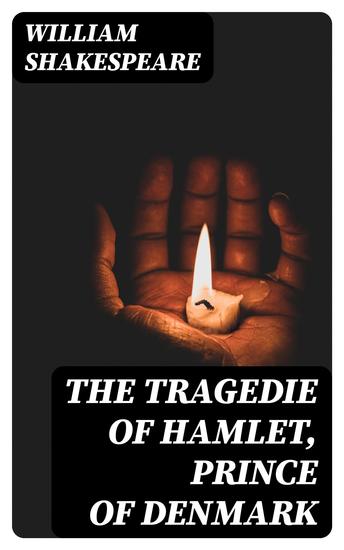
The Tragedie of Hamlet Prince of Denmark - A Study with the Text of the Folio of 1623 - cover

The Tragedie of Hamlet Prince of Denmark - A Study with the Text of the Folio of 1623

William Shakespeare

Publisher: DigiCat

  • 0
  • 0
  • 0

Summary

In "The Tragedie of Hamlet, Prince of Denmark," William Shakespeare masterfully explores themes of revenge, madness, and existential inquiry within a rich tapestry of poetic dialogue and dramatic complexity. This iconic tragedy, believed to be penned around 1600, employs a myriad of literary devices, including soliloquies and metaphor, to delve into the psyche of its protagonist, Prince Hamlet, as he grapples with the moral implications of avenging his father's murder. Set against a backdrop of political intrigue and familial betrayal, the play captures the zeitgeist of the Elizabethan era, reflecting the uncertainties and anxieties of a society transitioning towards modernity while echoing classical references that anchor its narrative depth. William Shakespeare, often hailed as the greatest playwright in the English language, drew on his extensive background in the theater and profound understanding of human nature to craft this timeless work. His own experiences in a socio-political landscape fraught with tension and the complexities of human emotion likely influenced his portrayal of Hamlet's internal conflict, enhancing the narrative's universal relevance. Shakespeare's exploration of mortality and ethical dilemmas resonates deeply with audiences throughout history, marking him as a profound observer of the human condition. "Hamlet" is an essential read for anyone seeking to understand the intricacies of human emotion and ethical quandaries. Its exploration of themes such as madness, revenge, and moral disillusionment offers valuable insights into the human psyche that remain pertinent today. Whether you're a seasoned scholar or a new reader, Shakespeare's rich characterizations and existential musings will leave you contemplating the depths of life long after the final curtain falls.
Available since: 09/16/2022.
Print length: 224 pages.

Other books that might interest you

  • Poets on Poetry - The most artistic and creative form of writing we have a selection of poems from those artistic and creative minds about poetry itself - cover

    Poets on Poetry - The most...

    Matthew Arnold, Sarojini Naidu,...

    • 0
    • 0
    • 0
    Who has not tried to write a poem?  The poetic form of words seems to be rather easy.  In its basic form, which we learn as children, the rhyming couplet is, in a child’s written and spoken words, pure joy - success!  In the hands of a Shakespeare it is magnificent with a reach and understanding that the rest of us enjoy but are far from even attempting.    
     
    As we listen to various poetic forms, schools and movements we can only react with wonder at how these innocent words are assembled to create symphonies of ideas, wonder and revelation.  The emotions they seek to invoke can be anything from happiness to sadness, from love to revulsion. 
     
    Arnold, Stevens, Keats, Akhmatova, Browning, Herrick, Hood, Killigrew are but a few of the roll-call of wordsmiths who with mere words create ravenous beauty that reveals tender lines and sensitive verse on how and why they are who they are. 
     
    01 - Poets on Poetry - An Introduction 
    02 - When I Write Poems by Anna Akhmatova 
    03 - Of My Poems by Thomas MacDonagh 
    04 - An Apology For Her Poetry by Duchess of Newcastle, Margaret Cavendish 
    05 - Sonnet 76 - Why is My Verse So Barren of New Pride by William Shakespeare 
    06 - The Austerity of Poetry by Matthew Arnold 
    07 - Of Modern Poetry by Wallace Stevens 
    08 - Poetry by Claude McKay 
    09 - The Poetry of Keats by George Meredith 
    10 - Future Poetry by Alice Meynell 
    11 - Sonnet 17 - Who Will Believe My Verse in Time to Come by William Shakespeare 
    12 - Poetic Eggs by Ezra Pound 
    13 - Poem by William Carlos Williams 
    14 - On the Grasshopper and Cricket by John Keats 
    15 - Ode on the Poetical Character by William Collins 
    16 - Introduction and Conclusion of a Long Poem by Alan Seeger 
    17 - A True Account of the Birth and Conception of a Late Famous Poem by Charles Sackville, Earl Of Dorset 
    18 - The Poem That Took the Place of a Mountain by Wallace Stevens 
    19 - The Poet and the Poem by Elizabeth Stuart Phelps 
    20 - Of English Verse by Edmund Waller 
    21 - Love, The Soul of Poetry by Anne Killigrew 
    22 - Why, If All Poets Crown Their Love with Verse by Emily Hickey 
    23 - Verse Making Was the Least of My Virtues by Robert Browning 
    24 - The Poet's Love-Song by Sarojini Naidu 
    25 - A Letter to a Brother of the Pen in Tribulation by Aphra Behn 
    26 - Not Every Day Fit for Verse by Robert Herrick 
    27 - On the Poetic Muse by George Moses Horton 
    28 - Sonnet - Written in Keats by Thomas Hood 
    29 - Sonnet 86 -Was It the Proud Full Sail of His Great Verse by William Shakespeare 
    30 - Song in Imitation of Shakespeare by James Beattie 
    31 - The High-toned Old Christian Woman by Wallace Stevens 
    32 - Poetry is a Destructive Force by Wallace Stevens 
    33 - To My Most Dearly Loved Friend Henry Reynolds Esquire of Poets and Poesie by Michael Drayton 
    34 - His Poetry His Pillar by Robert Herrick 
    35 - To Live Merrily and to Trust to Good Verses by Robert Herrick 
    36 - Poem for the End by Ivor Gurney
    Show book
  • Poetry of the senses - cover

    Poetry of the senses

    Lawrence Winkler

    • 0
    • 0
    • 0
    My love of poetry was always unrequited. As with all young boys, my English teachers forced me to memorize and recite unintelligible Shakespearean sonnets and turn bad blood into worse ink. For the next half-century, I never gave it a chance. 
    But at the age of 71, poetry came in search of me.  
    The theme of ‘senses’ made sense. As a physician and winemaker, I would try to turn exquisite impressions into exquisite expressions, solvents for the soul dipped in dyes of the heart.  
    There are 17 poems in this sense-ational collection, each with a different form, climbing higher on the sensory evolutionary ladder from the cranial nerves to the prefrontal cortex and beyond.  
    Writing them was like dropping a rose petal into an elevator shaft and waiting for the echo.  
    Read these short, jagged-edged lines as imaginary gardens of joy and pain and wonder, with a dash of dictionary.
    Show book
  • Geographical Locations - Sand Grains - cover

    Geographical Locations - Sand...

    Mike Blake

    • 0
    • 0
    • 0
    Geographical Locations: Sand GrainsA medium short poem.Apart from the obvious location of where you find yourself in the World,also the location you are seeking to find.*****MORE POEMS BY THE AUTHOR: **To see more Poems by the same Author please follow the link below: https://www.amazon.com/-/e/B00SG40RM8To contact the Author: Please add me Mike Miko on Facebook & then message me, thanks. https://www.facebook.com/mike.cco1I will then contact the Author your behalf. or on Twitter: miko_1_dollarInstagram:  wild_poetrys  //  wild.poetry.websTikTok: @Wild_Poetryswww.wild-poetry.comNew Poets Corner: https://www.facebook.com/New.Poets.Corner
    Show book
  • The Queen of Sorrow - cover

    The Queen of Sorrow

    Rachel Lawson

    • 0
    • 0
    • 0
    Sorrow 
    Astra Queen of Vampires was born of the union of two monsters a mad killer for a mother and a evil sorcerer for a father he mother was under a spell until she was born so sad was her mother by her marriage to the hated enemy of her people and bearing his child she named her child Sorrow. 
    The pair were murdered by a lunatic themselves when Sorrow was a baby. 
    Her uncle raise her with his own children who didn't have powers like their mother a fate from a parallel world and their father a necromancer and enchanter Sorrow's uncle. She later became not just a vampire but their queen. It was Sorrow's uncle who named her Astra as it was a better name for a child to forget her sad start in life with a new name her old name it was like a man being called Sue nothing a man could life down. 
    She later married a friend Max Starfire the Sun's King and had a child called- Astra known as Astry. She would never give her child a bad name like herself. Astry was a vampire/ werewolf like her mother and father. 
    Not alive or dead something in between. 
    They were day walkers Max, Astra and their daughter. 
    Strange creatures neither vampire nor werewolf they were 
    Includes stories with Sorrow or Astra Queen of Vampires from my the Magicians series 
    Narrated by the author and guest narrating Addison Fell as Alexa in Bad Omens
    Show book
  • Past Tense Future Imperfect - cover

    Past Tense Future Imperfect

    Jon Miller

    • 0
    • 0
    • 0
    In these rich and witty poems, we encounter a gallery of characters, voices and situations in various stages of emotional undress and bewilderment, fretting at just the wrong distance from reality in railway stations, ferries, restaurants, war zones and watery dystopias. They are filmic pieces that announce the arrival of an unusually gifted poet, in a short collection much bigger than its size – entertaining, disturbing and despite the odds curiously life-affirming.
    Here, the poet makes the seemingly mundane scenes and interactions extraordinary, with stunning language and unforgettable images. Whether the poet talks about 'My cousin with the sensitive ears / winces as he unbuckles his memory / listens to wallpaper peeling' or a Nativity play where 'Straw lies about as if someone has detonated a scarecrow', the poet showcases remarkable skills in exploring deep, human relationships. – Romalyn Ante, co-judge of the International Book & Pamphlet Competition
    Show book
  • Fire Horse (Metzengerstein) - cover

    Fire Horse (Metzengerstein)

    Filip Halo, Edgar Allan Poe

    • 0
    • 0
    • 0
    A baby is born in 1666, the year of "Fire Horse" according to Japanese tradition, at the House of Metzengerstein in an area between Royal Hungary and the territory inhabited by Transylvanian Saxons. Frederick von Metzengerstein is nurtured by his dependable servant Bela after the Baroness passes away shortly after giving birth to him. The youngster lives a pleasant life for many years until his ailing father Baron Gotfrid is forced to negotiate the future of the region with his mortal rival Baron Willhelm von Berlifitzing. Frederick experiences a nightmare inside that castle, which haunts him for years until his father's passing, at which point the young master assumes ultimate power at the age of 17. During the celebratory ceremonies for the transition of power, Baron Berlifizing dies as a result of a fire that started in the House of Berlifitzing at their stables. By some strange coincidence, that same night, a black stallion, a proper wild beast, is captured by the guards close to the Metzengerstein property. The boy falls in love with the gorgeous animal at first sight, which alteres his fate and mental state. The secret that was eating him alive since he was an infant needs to be revealed sooner than later... 
    The new version of this Edgar Allan Poe tale follows closely the events in the original, with countless added historic elements and details, not mentioned by Poe, but still in his spirit. It can speak to the modern reader or draw in new audience to the works of the great author and poet, since it is now "dirtier", sadder, more dramatic, and feels extremely realistic. The bonus features in this book are directly tied to the narrative, and the graphics will provide a glimpse into the worlds that the stories describe.
    Show book