Join us on a literary world trip!
Add this book to bookshelf
Grey
Write a new comment Default profile 50px
Grey
Subscribe to read the full book or read the first pages for free!
All characters reduced
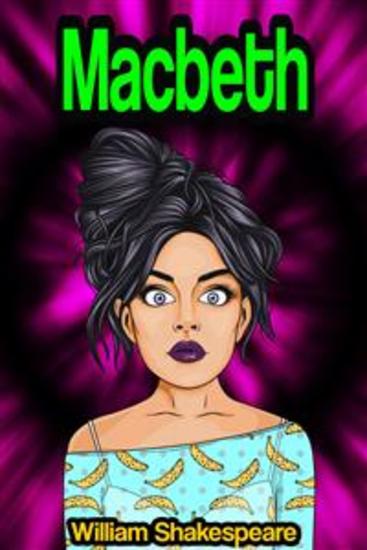
Macbeth: The Tragedie of Macbeth - cover

Macbeth: The Tragedie of Macbeth

William Shakespeare

Publisher: Memorable Classics eBooks

  • 0
  • 0
  • 0

Summary

Macbeth by William Shakespeare Macbeth (/məkˈbɛθ/, full title The Tragedie of Macbeth) is a tragedy by William Shakespeare. It is thought to have been first performed in 1606.[a] It dramatises the damaging physical and psychological effects of political ambition on those who seek power.

Of all the plays that Shakespeare wrote during the reign of James I, Macbeth most clearly reflects his relationship with King James, patron of Shakespeare's acting company. It was first published in the Folio of 1623, possibly from a prompt book, and is Shakespeare's shortest tragedy.

A brave Scottish general named Macbeth receives a prophecy from a trio of witches that one day he will become King of Scotland. Consumed by ambition and spurred to action by his wife, Macbeth murders King Duncan and takes the Scottish throne for himself. He is then wracked with guilt and paranoia.

Forced to commit more and more murders to protect himself from enmity and suspicion, he soon becomes a tyrannical ruler. The bloodbath and consequent civil war swiftly take Macbeth and Lady Macbeth into the realms of madness and death.

Shakespeare's source for the story is the account of Macbeth, King of Scotland, Macduff, and Duncan in Holinshed's Chronicles (1587), a history of England, Scotland, and Ireland familiar to Shakespeare and his contemporaries, although the events in the play differ extensively from the history of the real Macbeth. The events of the tragedy are usually associated with the execution of Henry Garnet for complicity in the Gunpowder Plot of 1605.
Available since: 06/01/2022.

Other books that might interest you

  • Reunion - cover

    Reunion

    Mark O'Rowe

    • 0
    • 0
    • 0
    A family gathers for a celebration on an island off the west coast of Ireland. When an unexpected visitor drops by, tensions begin to surface. Over the next twenty-four hours, scores will be settled, beliefs challenged and truths disclosed, ultimately jeopardising their entire future together.
    Mark O'Rowe turns his laser focus on the deep currents of family life with a masterfully orchestrated drama which resonates with biting humour, profound insights and extraordinary authenticity.
    An exhilarating, high-wire ensemble piece, Reunion was first produced by Landmark Productions and Galway International Arts Festival in 2024, directed by O'Rowe himself.
    Show book
  • The Poetry of Carl Sandburg - cover

    The Poetry of Carl Sandburg

    Carl Sandburg

    • 0
    • 0
    • 0
    Known as a "poet of the people," Carl Sandburg wrote verses infused with soulfulness and lyric grace, and his work was characterized with a love and compassion for the common man. Here is a collection of nearly 100 of his best poems, including "Chicago," "Fog," "To a Contemporary Bunkshooter," "Masses," and "The Great Hunt," as well as other verses featuring themes like love, war, death, loneliness, immigrant life, and the beauty of nature. These early poems— which earned him enormous popularity in the 1920s and '30s— are read here by Susan Anspach, Roscoe Lee Browne, Robert Foxworth, Elliott Gould, Joel Grey, Ernie Hudson, Arte Johnson, Melissa Manchester, Kevin McCarthy, Carl Reiner, Burt Reynolds, Jean Smart, Alfre Woodard, and Efrem Zimbalist, Jr.
    Show book
  • Home Burial - Poem about the challenges of everyday life from a Pulitzer prize winner - cover

    Home Burial - Poem about the...

    Robert Frost

    • 0
    • 0
    • 0
    Robert Lee Frost was born on the 26th March 1874 in San Francisco, California. 
    His father found providing for the family a constant challenge and he died, when Frost was 11, from tuberculosis and left an estate valued at only $8.  The family moved east to Lawrence, Massachusetts, and a better life with his grandfather. 
    After graduating from High School, and then a few months at Dartmouth college, he returned home to take on a variety of menial jobs to help support his mother.  Their drudgery and poor money encouraged him to move in a different direction: a career as a poet. 
    He sold his first poem in 1894 for $15.  With this milestone he proposed to his high school sweetheart who declined as she was still studying at university.  The following year she graduated and they married.  A year later the first of their six children arrived.   
    After a stint at Harvard for two years he received the gift of a farm from his ailing grandfather.  Frost worked the farm and wrote unpublished poetry for several years before turning to a teaching position. 
    Upon the death of one of his children the grief-stricken family decided to quit everything and live in England, moving across the Atlantic in 1912.  The following year he published his first poetry book and with it came critical acclaim.  He was now in his late thirties. 
    The onset of World War I saw Frost return to America with a glowing reputation, and here he launched himself into a career of writing, teaching and lecturing.  
    In 1924 he received the first of four Pulitzer Prizes, for his book ‘New Hampshire: A Poem with Notes and Grace Notes’.  He received a second Pulitzer in 1931 for ‘Collected Poems’.  A third Pulitzer Prize was presented in 1937 for ‘A Further Range’.  His fourth Pulitzer was awarded in 1943 for ‘A Witness Tree’. 
    Frost was also nominated for the Nobel Prize in Literature 31 times. 
    During these years personal tragedy had enveloped him.  A daughter had died in her late 20s from the effects of her puerperal fever at childbirth, his wife had died of breast cancer, and a son had committed suicide.  
    Then, at the age of 86, was asked to read his poem ‘The Gift Outright’ at President John F Kennedy’s inauguration on the 20th January, 1961.  
    Robert Frost died on the 29th January 1963 in Boston of complications arising from prostate surgery.  He was 88.
    Show book
  • Heroic Stanzas - The Age of Dryden' is a fitting marker for why he stood above all the others of his age - cover

    Heroic Stanzas - The Age of...

    John Dryden

    • 0
    • 0
    • 0
    John Dryden was born on August 9th, 1631 in the village rectory of Aldwincle near Thrapston in Northamptonshire. As a boy Dryden lived in the nearby village of Titchmarsh, Northamptonshire. In 1644 he was sent to Westminster School as a King's Scholar.  
    Dryden obtained his BA in 1654, graduating top of the list for Trinity College, Cambridge that year.  
    Returning to London during The Protectorate, Dryden now obtained work with Cromwell's Secretary of State, John Thurloe. 
     At Cromwell's funeral on 23 November 1658 Dryden was in the company of the Puritan poets John Milton and Andrew Marvell.  The setting was to be a sea change in English history. From Republic to Monarchy and from one set of lauded poets to what would soon become the Age of Dryden. 
    The start began later that year when Dryden published the first of his great poems, Heroic Stanzas (1658), a eulogy on Cromwell's death.  
    With the Restoration of the Monarchy in 1660 Dryden celebrated in verse with Astraea Redux, an authentic royalist panegyric. 
     With the re-opening of the theatres after the Puritan ban, Dryden began to also write plays. His first play, The Wild Gallant, appeared in 1663 but was not successful. From 1668 on he was contracted to produce three plays a year for the King's Company, in which he became a shareholder. During the 1660s and '70s, theatrical writing was his main source of income.  
    In 1667, he published Annus Mirabilis, a lengthy historical poem which described the English defeat of the Dutch naval fleet and the Great Fire of London in 1666. It established him as the pre-eminent poet of his generation, and was crucial in his attaining the posts of Poet Laureate (1668) and then historiographer royal (1670). 
    This was truly the Age of Dryden, he was the foremost English Literary figure in Poetry, Plays, translations and other forms. 
    In 1694 he began work on what would be his most ambitious and defining work as translator, The Works of Virgil (1697), which was published by subscription. It was a national event.  
    John Dryden died on May 12th, 1700, and was initially buried in St. Anne's cemetery in Soho, before being exhumed and reburied in Westminster Abbey ten days later.
    Show book
  • Kevin Goes to Japan 3 - Stories for Japanese Learners JLPT N5 to N3 - cover

    Kevin Goes to Japan 3 - Stories...

    Miwako Kiritani

    • 0
    • 0
    • 0
    Thank you for purchasing my book, "Kevin Goes to Japan 3: Stories for Japanese Learners, JLPT N5 to N1." Some of them would realize that the range of the level is more comprehensive than before. Because this book is just before the last book, I wanted to focus on telling the story. Therefore, some Japanese sentences would be complicated for early learners. However, reading many books is good practice to understand the language, and you need to have the skill to guess unknown words by seeing the context. The word lists are more than Kevin 2, showing many vocabularies, and I keep writing topics from each chapter. 
    But 15 JLPT sample questions come with each chapter, a total of 180 questions for N5 to N3. I believe that advanced learners need to read books that understand more natural Japanese. Instead of sample questions, please try to use expressions you can find a list, "Miscellaneous (Idioms, expressions, proverbs, etc.)." 
    Tomoko teaches Kevin Kanji radical that Japanese language questions include in this book in this story. JLPT wouldn't ask radical, but if you know the basic rules, it helps to give extra knowledge about this language and its origins. 
    In the story, Kevin wants Yukio to fall in love with Tomoko, and you can see how his love strategy works. However, the day Kevin's working holiday visa expires is coming, and he and Yumiko's relationship will be swirled. 
    I hope you enjoy this story as a bilingual novel as well. 
    Content 
    1. I'll Do Everything I Can for Yukio 
    2. How to Offer Incense at the Buddhist Altar 
    3. The Origin of Kanji 
    4. Are the British Really Gentlemen? 
    5. The Secret of the Smile 
    6. White Day 
    7. The Day After White Day 
    8. I Want to be Your Set Meal 
    9. More Than Friends, Less Than Lovers? 
    10. Definition of an Auntie 
    11. Wavering Female Heart 
    12. The Spirit of Women
    Show book
  • The Ruins of Nostalgia - cover

    The Ruins of Nostalgia

    Donna Stonecipher

    • 0
    • 0
    • 0
    What is it to feel nostalgia, to be skeptical of it yet cleave intently to the complex truths of feeling and thought? In a series of 64 gorgeous, ramifying, unsettling prose poems addressing late-twentieth- and twenty-first century experience and its discontents, The Ruins of Nostalgia offers a strikingly original exploration of the misunderstood phenomenon of nostalgia as both feeling-state and historical phenomenon. Each poem, also titled The Ruins of Nostalgia, is a kind of lyrical mini-essay, playful, passionate, analytic. Some poems take a location, memory, conceit, or object as their theme. Throughout the series, the poems recognize and celebrate the nostalgias they ironize, which are in turn celebrated and then ironized again. Written often in the fictional persona of the first-person plural, The Ruins of Nostalgia explores the rich territory where individual response meets a collective phenomenon.[sample poem]The Ruins of Nostalgia 13Where once there had been a low-end stationery store minded by an elderly beauty queen, there was now a store for high-end espresso machines minded by nobody. Where once there had been an illegal beer garden in a weedy lot, there was now a complex of luxury lofts with Parisian-style ivory façades. Where once there had been a bookstore and a bike shop and a bakery, there was now a wax museum for tourists. Where once there had been an empty lot there was now a building. Where once there had been an empty lot there was now a building. Where once there had been an empty lot there was now a building. Where once there had been an empty lot there was now a building. Where once there had been farms there were now subdivisions. Where once there had been subdivisions there were now sub-subdivisions. We lived in a sub-subdivision of a subdivision. We ourselves had become subdivided—where once we had merely been of two minds. * Where once there had been a river there was now a road. A vocal local group had started a movement to break up the road and "daylight" the river, which still flowed, in the dark, underneath the road. * Could we daylight the farms, the empty lots, the stationery store, the elderly beauty queen, the city we moved to? Was it still flowing somewhere, under the luxury lofts, deliquescing in the dark, inhabited by our luxury selves, not yet subdivided, because not yet whole? * Could we daylight the ruins of nostalgia?
    Show book