Join us on a literary world trip!
Add this book to bookshelf
Grey
Write a new comment Default profile 50px
Grey
Subscribe to read the full book or read the first pages for free!
All characters reduced
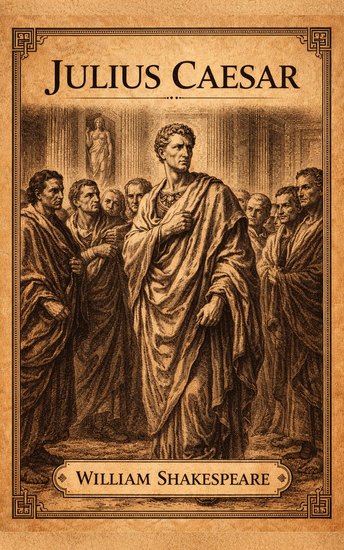
Julius Caesar - cover

Julius Caesar

William Shakespeare

Publisher: CLXBX

  • 0
  • 0
  • 0

Summary

Power, ambition, loyalty, and betrayal collide in William Shakespeare's gripping historical tragedy, Julius Caesar—a timeless exploration of politics and the fragile nature of honor.

Set in ancient Rome, the play follows the dramatic events surrounding the rise and assassination of Julius Caesar, a triumphant general whose growing influence sparks fear among the Roman elite. Though celebrated by the masses, Caesar's ascent to near-absolute authority alarms a group of senators who worry that the Republic is on the brink of tyranny. Among them is Brutus, a noble and respected statesman torn between his deep friendship with Caesar and his unwavering devotion to Rome.

Persuaded by the cunning and manipulative Cassius, Brutus joins a conspiracy to prevent Caesar's coronation. What follows is one of literature's most powerful depictions of political intrigue and moral conflict. The conspirators strike in the name of liberty—but their actions unleash chaos rather than stability. As Rome descends into unrest, alliances shift, loyalties fracture, and the cost of idealism becomes devastatingly clear.

Central to the drama are unforgettable speeches that continue to resonate through history, including Mark Antony's masterful funeral oration—"Friends, Romans, countrymen…"—a turning point that transforms public opinion and ignites civil war. Through these iconic moments, Shakespeare demonstrates the power of rhetoric to shape truth, manipulate emotion, and alter the course of history.

Beyond its political drama, Julius Caesar is a profound study of human character. Brutus emerges as a tragic figure, guided by honor yet undone by misjudgment. Caesar himself, though assassinated early in the play, remains a commanding presence, symbolizing both strength and vulnerability. Themes of fate versus free will, public duty versus private loyalty, and the consequences of unchecked ambition echo throughout the narrative.

Written in 1599, this masterpiece remains strikingly relevant, offering insight into leadership, democracy, and the volatility of public opinion. Shakespeare's rich language, complex characters, and penetrating understanding of human nature make Julius Caesar not only a cornerstone of dramatic literature but also a compelling reflection on the timeless struggle for power.

Bold, thought-provoking, and unforgettable, Julius Caesar continues to captivate readers and audiences with its exploration of political morality and the enduring question: when does the defense of freedom become an act of destruction?
Available since: 02/19/2026.
Print length: 96 pages.

Other books that might interest you

  • Untethered Love - cover

    Untethered Love

    Bobbie Isabel

    • 0
    • 0
    • 0
    What types of love can you feel when you're free from everything that binds you? In this poetry collection, Bobbie Isabel shares poems that speak to various types of love, such as love of a child and self love in addition to romantic and erotic love.
    Show book
  • Spirits of the Dead - cover

    Spirits of the Dead

    Edgar Allan Poe

    • 0
    • 0
    • 0
    Librivox volunteers bring you seven readings of Spirits of the Dead by Edgar Allen Poe. This was the weekly poetry project for October 19, 2014.
    Show book
  • The Fisher's Boy - cover

    The Fisher's Boy

    Henry David Thoreau

    • 0
    • 0
    • 0
    LibriVox volunteers bring you 11 different recordings of the Fisher’s Boy by Henry David Thoreau. This was the weekly poetry project for the week of May 13th, 2007.
    Show book
  • The Publisher - cover

    The Publisher

    C. J. Dennis

    • 0
    • 0
    • 0
    LibriVox volunteers bring you 19 recordings of The Publisher by C.J. Dennis. This was the weekly poetry project for June 28th, 2009.
    Show book
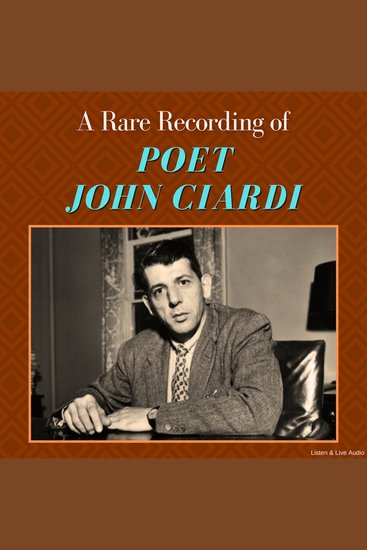
  • A Rare Recording of Poet John Ciardi - cover

    A Rare Recording of Poet John...

    John Ciardi

    • 0
    • 0
    • 0
    John Anthony Ciardi (June 24, 1916 - March 30, 1986) was an American poet, translator, and etymologist. While primarily known as a poet, Ciardi pursued etymology, contributed to the Saturday Review as a columnist and long-time poetry editor, directed the Bread Loaf Writers' Conference in Vermont, and recorded commentaries for National Public Radio. In 1959, Ciardi published a book on how to read, write, and teach poetry, How Does a Poem Mean?, which has proven to be among the most-used books of its kind. The following recording is from a speech Ciardi gave in 1965.
    Show book
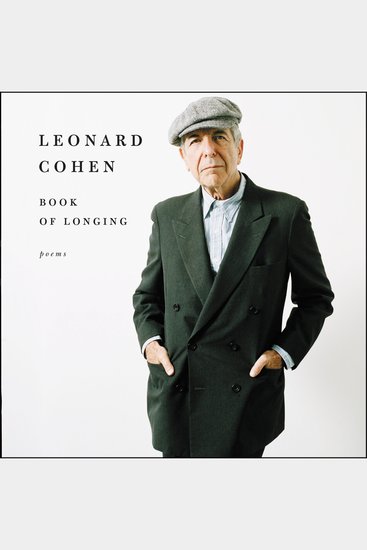
  • Book of Longing - cover

    Book of Longing

    Leonard Cohen

    • 0
    • 0
    • 0
    “Book of Longing has exceptional range. It is clear yet steamy, cosmic yet private, both playful and profound.”—New York Times 
    Leonard Cohen wrote the poems in Book of Longing—his first book of poetry in more than twenty years after 1984's Book of Mercy—during his five-year stay at a Zen monastery on Southern California's Mount Baldy, and in Los Angeles, Montreal, and Mumbai. This dazzling collection is enhanced by the author's playful and provocative drawings, which interact in exciting, unexpected ways on the page with poetry that is timeless, meditative, and often darkly humorous. 
    An international sensation, Book of Longing contains all the elements that have brought Cohen's artistry with language worldwide recognition.
    Show book